Trending Bestseller

Trivium in Practice

Robinson, Martin

No reviews yet Write a Review
Paperback / softback
15 June 2016
192 Pages
$50.99
Ships in 5–7 business days
Hurry up! Current stock:
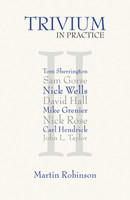
Trivium in Practice brings together a series of case studies written by educators who were inspired by Martin Robinson's first book, Trivium 21c. Taken together, these case studies reveal how, regardless of setting or sector, the trivium can deliver a truly great education for our children.

Great teaching has the three elements of the trivium at its centre. Grammar: foundational knowledge and skills. Dialectic: questioning, thinking and practising. Rhetoric: the ability to express oneself beautifully, persuasively and articulately in any form.

The trivium is a helpful way for a teacher to think about the art of teaching. Through the model of the trivium traditional values and progressive ideals can coexist; both knowledge and cultural capital matter and skills are interwoven with content. The trivium isn't a gimmick to be imposed on to a curriculum; it is a tried and tested approach to education. It is the key to great teaching and learning, as this group of educators discovered.

Tom Sherrington and a group of teachers from Highbury Grove School share examples of how they have used the trivium in English, maths, sociology and history, and detail how the trivium has helped them develop a whole school framework for teaching and learning, including a whole school approach to improving spoken English. Sam Gorse explains how the trivium has influenced curriculum planning at Turton School, discussing how it helped departments with differing pedagogical approaches to find common ground. The trivium has influenced them to rethink how they plan the curriculum and use the school space, creating zones where subjects can interact and influence each other. Nick Wells explains how his school used the trivium as a prism through which to view their continuing improvement. By using it to inform a mastery curriculum, he saw how it might help students to fly even higher than they have done in the past - not just in terms of their exam results, but also in terms of their understanding of, and ability to contribute to, the world around them. David Hall, Nigel Matthias and Nick Barnsley used the trivium as a framework to question what they really wanted education to be about a Bay House school. They discuss their approaches to curriculum planning and assessment, using their challenging new sixth form course and their Year 7 Developing Learning Programme as examples. Mike Grenier makes connections between the key tenets of the Slow Education movement and the evolving nature of the trivium: at the heart of both is a respect for the student-teacher relationship and a strong belief in the need for a balanced, yet challenging, curriculum. Nick Rose takes as his starting point the idea that we might be able to apply some of the principles of evolution through natural selection to the realm of culturally transmitted ideas. He gives a brief 'natural history' of education and examines how grammar, dialectic and rhetoric might be understood in light of the processes of inheritance, selection and variation which operate at the heart of evolutionary systems. Carl Hendrick explores how Mikhail Bakhtin's ideas of 'dialogic', 'carnival' and 'inauthenticity' can inform classroom practice and support the broader ambition of the trivium.

These educators have found that trivium education has brought a range of tangible benefits for their students. These include: greater confidence, enhanced development of rigorous analytical skills, improved oracy and confidence in speaking in front of audiences, an appreciation of the value of acquiring and applying knowledge, refined skills in questioning and debating, developed creativity, independence and critical thinking, the ability to form and express considered opinions and, importantly, the enjoyment of learning. Fundamentally, these educators have found that the trivium has helped them to define and deliver their ideas about the education they want for their students, helping them to become engaged, lifelong learners in the process.

There is no one 'right' way to 'do' the trivium: it is a tradition that can be adapted. It is the art of education and engages teachers in the art of being educators. Just as each great artist learns from a tradition and refashions it, adds to it, disrupts it, so do the teachers who have contributed to this book. On their canvas, in their school, each contributor is creating and re-creating trivium education in their own way. Discover the potential of the trivium and be inspired to do the same in your own classroom.

Suitable for teachers and leaders in any educational setting.

This product hasn't received any reviews yet. Be the first to review this product!

$50.99
Ships in 5–7 business days
Hurry up! Current stock:

Trivium in Practice

$50.99

Description

Trivium in Practice brings together a series of case studies written by educators who were inspired by Martin Robinson's first book, Trivium 21c. Taken together, these case studies reveal how, regardless of setting or sector, the trivium can deliver a truly great education for our children.

Great teaching has the three elements of the trivium at its centre. Grammar: foundational knowledge and skills. Dialectic: questioning, thinking and practising. Rhetoric: the ability to express oneself beautifully, persuasively and articulately in any form.

The trivium is a helpful way for a teacher to think about the art of teaching. Through the model of the trivium traditional values and progressive ideals can coexist; both knowledge and cultural capital matter and skills are interwoven with content. The trivium isn't a gimmick to be imposed on to a curriculum; it is a tried and tested approach to education. It is the key to great teaching and learning, as this group of educators discovered.

Tom Sherrington and a group of teachers from Highbury Grove School share examples of how they have used the trivium in English, maths, sociology and history, and detail how the trivium has helped them develop a whole school framework for teaching and learning, including a whole school approach to improving spoken English. Sam Gorse explains how the trivium has influenced curriculum planning at Turton School, discussing how it helped departments with differing pedagogical approaches to find common ground. The trivium has influenced them to rethink how they plan the curriculum and use the school space, creating zones where subjects can interact and influence each other. Nick Wells explains how his school used the trivium as a prism through which to view their continuing improvement. By using it to inform a mastery curriculum, he saw how it might help students to fly even higher than they have done in the past - not just in terms of their exam results, but also in terms of their understanding of, and ability to contribute to, the world around them. David Hall, Nigel Matthias and Nick Barnsley used the trivium as a framework to question what they really wanted education to be about a Bay House school. They discuss their approaches to curriculum planning and assessment, using their challenging new sixth form course and their Year 7 Developing Learning Programme as examples. Mike Grenier makes connections between the key tenets of the Slow Education movement and the evolving nature of the trivium: at the heart of both is a respect for the student-teacher relationship and a strong belief in the need for a balanced, yet challenging, curriculum. Nick Rose takes as his starting point the idea that we might be able to apply some of the principles of evolution through natural selection to the realm of culturally transmitted ideas. He gives a brief 'natural history' of education and examines how grammar, dialectic and rhetoric might be understood in light of the processes of inheritance, selection and variation which operate at the heart of evolutionary systems. Carl Hendrick explores how Mikhail Bakhtin's ideas of 'dialogic', 'carnival' and 'inauthenticity' can inform classroom practice and support the broader ambition of the trivium.

These educators have found that trivium education has brought a range of tangible benefits for their students. These include: greater confidence, enhanced development of rigorous analytical skills, improved oracy and confidence in speaking in front of audiences, an appreciation of the value of acquiring and applying knowledge, refined skills in questioning and debating, developed creativity, independence and critical thinking, the ability to form and express considered opinions and, importantly, the enjoyment of learning. Fundamentally, these educators have found that the trivium has helped them to define and deliver their ideas about the education they want for their students, helping them to become engaged, lifelong learners in the process.

There is no one 'right' way to 'do' the trivium: it is a tradition that can be adapted. It is the art of education and engages teachers in the art of being educators. Just as each great artist learns from a tradition and refashions it, adds to it, disrupts it, so do the teachers who have contributed to this book. On their canvas, in their school, each contributor is creating and re-creating trivium education in their own way. Discover the potential of the trivium and be inspired to do the same in your own classroom.

Suitable for teachers and leaders in any educational setting.

Customers Also Viewed

Buy Books Online at BookLoop

Discover your next great read at BookLoop, Australiand online bookstore offering a vast selection of titles across various genres and interests. Whether you're curious about what's trending or searching for graphic novels that captivate, thrilling crime and mystery fiction, or exhilarating action and adventure stories, our curated collections have something for every reader. Delve into imaginative fantasy worlds or explore the realms of science fiction that challenge the boundaries of reality. Fans of contemporary narratives will find compelling stories in our contemporary fiction section. Embark on epic journeys with our fantasy and science fiction titles,

Shop Trending Books and New Releases

Explore our new releases for the most recent additions in romance books, fantasy books, graphic novels, crime and mystery books, science fiction books as well as biographies, cookbooks, self help books, tarot cards, fortunetelling and much more. With titles covering current trends, booktok and bookstagram recommendations, and emerging authors, BookLoop remains your go-to local australian bookstore for buying books online across all book genres.

Shop Best Books By Collection

Stay updated with the literary world by browsing our trending books, featuring the latest bestsellers and critically acclaimed works. Explore titles from popular brands like Minecraft, Pokemon, Star Wars, Bluey, Lonely Planet, ABIA award winners, Peppa Pig, and our specialised collection of ADHD books. At BookLoop, we are committed to providing a diverse and enriching reading experience for all.

Buy Educational Books and Textbooks Online at BookLoop

Shop School Textbooks for Primary, Secondary, and Higher Education

At BookLoop, we make it easy to buy school textbooks online in Australia for every stage of learning. Our extensive textbook collection includes curriculum-aligned primary school books, secondary school books, and resources for TAFE courses, vocational training, and university studies. Each title is selected for accuracy, quality, and alignment with the Australian Curriculum, supporting teachers, students, and schools across the country. Whether you’re preparing for exams, classroom learning, or distance education, BookLoop’s range of educational books ensures your students have the right materials to succeed.

Teacher Resources, Classroom Tools and Professional Learning

Empower your teaching with teacher resources and classroom support materials from BookLoop. Our collection includes lesson planning guides, literacy and numeracy workbooks, STEM education resources, and assessment tools that help educators deliver engaging, effective learning experiences. We also stock a wide selection of preschool and early years education books tailored to early childhood development, classroom management, and student wellbeing. Teachers can access everything from professional development books to interactive classroom activities — all carefully curated to enhance teaching outcomes and student success.

Educational Books and Learning Resources for Every Subject

Find educational books for students across a variety of subjects including English, Mathematics, Science, History, Geography, and the Arts. BookLoop partners with trusted Australian publishers to provide up-to-date resources that meet classroom requirements and support independent learning. Whether you’re a school administrator sourcing bulk textbook orders, a parent preparing for the new term, or a teacher updating your classroom library, BookLoop is your one-stop online bookstore for all education and teaching materials.