Trending Bestseller

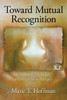
Toward Mutual Recognition

Relational Psychoanalysis and the Christian Narrative

Marie T. Hoffman

No reviews yet Write a Review
Paperback / softback
13 December 2010
$134.00
Ships in 3-5 business days
Hurry up! Current stock:

Ever since its nascent days, psychoanalysis has enjoyed an uneasy coexistence with religion. However, in recent decades, many analysts have been more interested in the healing potential of both psychoanalytic and religious experience and have explored how their respective narrative underpinnings may be remarkably similar.

In Toward Mutual Recognition, Marie T. Hoffman takes just such an approach. Coming from a Christian perspective, she suggests that the current relational turn in psychoanalysis has been influenced by numerous theorists - analysts and philosophers alike - who were themselves shaped by an embedded Christian narrative. As a result, the redemptive concepts of incarnation, crucifixion, and resurrection - central to the tenets of Christianity - can be traced to relational theories, emerging analogously in the transformative process of mutual recognition in the concepts of identification, surrender, and gratitude, a trilogy which she develops as forming the "path of recognition."  Each movement on this path of recognition is given thought-provoking, in-depth attention. Chapters dedicated to theoretical perspectives utilize the thinking of Benjamin, Hegel, and Ricoeur. In her historical perspectives, she explores the personal and professional histories of analysts such as Sullivan, Fairbairn, Winnicott, Erikson, Kohut, and Ferenczi, among others, who were influenced by the Christian narrative. Uniting it all together is the clinical perspective offered in the compelling extended case history of Mandy, a young lady whose treatment embodies and exemplifies each of the steps along the path of growth in both the psychoanalytic and Christian senses.

Throughout, a relational sensibility is deployed as a cooperative counterpart to the Christian narrative, working both as a consilient dialogue and a vehicle for further integrative exploration. As a result, the specter of psychoanalysis and religion as mutually exclusive gives way to the hope and redemption offered by their mutual recognition.

This product hasn't received any reviews yet. Be the first to review this product!

$134.00
Ships in 3-5 business days
Hurry up! Current stock:

Toward Mutual Recognition

$134.00

Description

Ever since its nascent days, psychoanalysis has enjoyed an uneasy coexistence with religion. However, in recent decades, many analysts have been more interested in the healing potential of both psychoanalytic and religious experience and have explored how their respective narrative underpinnings may be remarkably similar.

In Toward Mutual Recognition, Marie T. Hoffman takes just such an approach. Coming from a Christian perspective, she suggests that the current relational turn in psychoanalysis has been influenced by numerous theorists - analysts and philosophers alike - who were themselves shaped by an embedded Christian narrative. As a result, the redemptive concepts of incarnation, crucifixion, and resurrection - central to the tenets of Christianity - can be traced to relational theories, emerging analogously in the transformative process of mutual recognition in the concepts of identification, surrender, and gratitude, a trilogy which she develops as forming the "path of recognition."  Each movement on this path of recognition is given thought-provoking, in-depth attention. Chapters dedicated to theoretical perspectives utilize the thinking of Benjamin, Hegel, and Ricoeur. In her historical perspectives, she explores the personal and professional histories of analysts such as Sullivan, Fairbairn, Winnicott, Erikson, Kohut, and Ferenczi, among others, who were influenced by the Christian narrative. Uniting it all together is the clinical perspective offered in the compelling extended case history of Mandy, a young lady whose treatment embodies and exemplifies each of the steps along the path of growth in both the psychoanalytic and Christian senses.

Throughout, a relational sensibility is deployed as a cooperative counterpart to the Christian narrative, working both as a consilient dialogue and a vehicle for further integrative exploration. As a result, the specter of psychoanalysis and religion as mutually exclusive gives way to the hope and redemption offered by their mutual recognition.

Customers Also Viewed

Buy Books Online at BookLoop

Discover your next great read at BookLoop, Australiand online bookstore offering a vast selection of titles across various genres and interests. Whether you're curious about what's trending or searching for graphic novels that captivate, thrilling crime and mystery fiction, or exhilarating action and adventure stories, our curated collections have something for every reader. Delve into imaginative fantasy worlds or explore the realms of science fiction that challenge the boundaries of reality. Fans of contemporary narratives will find compelling stories in our contemporary fiction section. Embark on epic journeys with our fantasy and science fiction titles,

Shop Trending Books and New Releases

Explore our new releases for the most recent additions in romance books, fantasy books, graphic novels, crime and mystery books, science fiction books as well as biographies, cookbooks, self help books, tarot cards, fortunetelling and much more. With titles covering current trends, booktok and bookstagram recommendations, and emerging authors, BookLoop remains your go-to local australian bookstore for buying books online across all book genres.

Shop Best Books By Collection

Stay updated with the literary world by browsing our trending books, featuring the latest bestsellers and critically acclaimed works. Explore titles from popular brands like Minecraft, Pokemon, Star Wars, Bluey, Lonely Planet, ABIA award winners, Peppa Pig, and our specialised collection of ADHD books. At BookLoop, we are committed to providing a diverse and enriching reading experience for all.