In the post-cold war environment of shrinking budgets and uncertain threats, America can no longer politically, nor economically, afford strategies that rely on our traditional military strategy of annihilation and exhaustion. Furthermore, America's position as the single remaining superpower virtually guarantees that our vital interests will not be directly challenged. This means that the use of military force is becoming even more politicized. Despite military leaders' apparent adherence to Clausewitz's maxim that war is an extension of policy, they usually approach strategic planning as if the application of force can be planned separately from the political effort. The traditional American military brute-force strategy does not always meet our national needs in this new world order. Strategic Coercion offers one alternative to this brute-force approach. Simply stated, strategic coercion is the act of inducing or compelling an adversary to do something to which he is averse. It involves using force and threatening action to compel an adversary to cease his current activity, or coerce him to reverse actions already taken. Two contemporary theories of strategic coercion seem to offer promising alternatives to brute force. First, Robert Pape's Denial Theory is based on the assumption that states make decisions as if they are rational, unitary actors attempting to maximize the utility of their choices. Essentially, nations perform a cost-benefit evaluation to determine the best course of action. Theoretically, one may be able to coerce a target nation by raising the expected costs to a prohibitive level, but Pape advocates that this is generally ineffective in conventional conflicts. Instead, coercion requires that the target nation be denied the probability of achieving the sought-after benefits. Denial Theory proposes that the specific means for coercion is the opponent's military vulnerability: defeating an opponent's military strategy denies him the probability
In the post-cold war environment of shrinking budgets and uncertain threats, America can no longer politically, nor economically, afford strategies that rely on our traditional military strategy of annihilation and exhaustion. Furthermore, America's position as the single remaining superpower virtually guarantees that our vital interests will not be directly challenged. This means that the use of military force is becoming even more politicized. Despite military leaders' apparent adherence to Clausewitz's maxim that war is an extension of policy, they usually approach strategic planning as if the application of force can be planned separately from the political effort. The traditional American military brute-force strategy does not always meet our national needs in this new world order. Strategic Coercion offers one alternative to this brute-force approach. Simply stated, strategic coercion is the act of inducing or compelling an adversary to do something to which he is averse. It involves using force and threatening action to compel an adversary to cease his current activity, or coerce him to reverse actions already taken. Two contemporary theories of strategic coercion seem to offer promising alternatives to brute force. First, Robert Pape's Denial Theory is based on the assumption that states make decisions as if they are rational, unitary actors attempting to maximize the utility of their choices. Essentially, nations perform a cost-benefit evaluation to determine the best course of action. Theoretically, one may be able to coerce a target nation by raising the expected costs to a prohibitive level, but Pape advocates that this is generally ineffective in conventional conflicts. Instead, coercion requires that the target nation be denied the probability of achieving the sought-after benefits. Denial Theory proposes that the specific means for coercion is the opponent's military vulnerability: defeating an opponent's military strategy denies him the probability
For three decades the analysis of strategic coercion has been dominated by two landmark books: Tom Schelling's Arms and Influence and Alex George's Strategic Diplomacy, both of which addressed the...
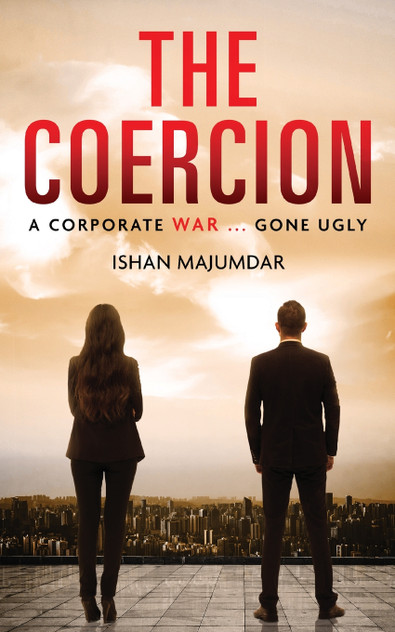
Two of India’s largest e-commerce corporates … on the brink of bankruptcyOne investment fund … who holds the key to saving only one of them in a completely dried out marketA corporate spy … with a...
Discover your next great read at BookLoop, Australiand online bookstore offering a vast selection of titles across various genres and interests. Whether you're curious about what's trending or searching for graphic novels that captivate, thrilling crime and mystery fiction, or exhilarating action and adventure stories, our curated collections have something for every reader. Delve into imaginative fantasy worlds or explore the realms of science fiction that challenge the boundaries of reality. Fans of contemporary narratives will find compelling stories in our contemporary fiction section. Embark on epic journeys with our fantasy and science fiction titles,
Shop Trending Books and New Releases
Explore our new releases for the most recent additions in romance books, fantasy books, graphic novels, crime and mystery books, science fiction books as well as biographies, cookbooks, self help books, tarot cards, fortunetelling and much more. With titles covering current trends, booktok and bookstagram recommendations, and emerging authors, BookLoop remains your go-to local australian bookstore for buying books online across all book genres.
Shop Best Books By Collection
Stay updated with the literary world by browsing our trending books, featuring the latest bestsellers and critically acclaimed works. Explore titles from popular brands like Minecraft, Pokemon, Star Wars, Bluey, Lonely Planet, ABIA award winners, Peppa Pig, and our specialised collection of ADHD books. At BookLoop, we are committed to providing a diverse and enriching reading experience for all.
Buy Educational Books and Textbooks Online at BookLoop
Shop School Textbooks for Primary, Secondary, and Higher Education
At BookLoop, we make it easy to buy school textbooks online in Australia for every stage of learning. Our extensive
textbook collection includes curriculum-aligned primary school books,
secondary school books, and resources for TAFE courses, vocational training, and university studies.
Each title is selected for accuracy, quality, and alignment with the Australian Curriculum, supporting teachers, students, and schools across the country. Whether you’re preparing for exams, classroom learning, or distance education, BookLoop’s range of educational books ensures your students have the right materials to succeed.
Teacher Resources, Classroom Tools and Professional Learning
Empower your teaching with teacher resources and classroom support materials from BookLoop.
Our collection includes lesson planning guides, literacy and numeracy workbooks, STEM education resources, and assessment tools that help educators deliver engaging, effective learning experiences.
We also stock a wide selection of preschool and early years education books tailored to early childhood development, classroom management, and student wellbeing.
Teachers can access everything from professional development books to interactive classroom activities — all carefully curated to enhance teaching outcomes and student success.
Educational Books and Learning Resources for Every Subject
Find educational books for students across a variety of subjects including English, Mathematics, Science, History, Geography, and the Arts.
BookLoop partners with trusted Australian publishers to provide up-to-date resources that meet classroom requirements and support independent learning.
Whether you’re a school administrator sourcing bulk textbook orders, a parent preparing for the new term, or a teacher updating your classroom library, BookLoop is your one-stop online bookstore for all education and teaching materials.
Sign In
your cart
Your cart is empty
Menu
Search
PRE-SALES
If you have any questions before making a purchase chat with our online operators to get more information.