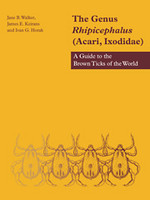
Ticks in the genus Rhipicephalus include many important vectors of animal and human pathogens, but many species are notoriously difficult to identify, particularly as immature stages. This reference volume provides identification keys for adult ticks from the Afrotropical regions and elsewhere. For the nymphs and larvae, unique plates have been compiled in which line drawings of the capitula of similar species are grouped together to facilitate identification. Brief well-illustrated descriptions of the known stages of every species are given, plus information on their hosts, distribution, and disease relationships. Tables providing data on host/parasite relationships and disease transmission are also included, making this the definitive reference source on this group for all those interested in acarology, veterinary or medical parasitology and entomology for many years to come.
One Life-history Strategies.- 1 The life strategies of mites.- 2 Life-history evolution of spider mites.- 3 Life-cycle strategies in unpredictably varying environments: genetic adaptations in a...
Madame Acarie: Etude Sur La Societe Religieuse Aux Seizieme Et Septieme Siecles (1863) est un livre �����crit par Barbe Acarie. Cette �����tude se concentre sur la soci�����t����� religieuse des XVIe...
At the International Space Agency HQ, Julia, Axel and M-07 realize they are being held prisoners, and no one seems to be willing to assist with M-07's deteriorating health conditions. Who can help...
Acarology is on the move! The growing interest from evolutionary and molecular biologists and from population and community ecologists in mites and ticks has a strong impetus on the field of...