Seminar paper from the year 2012 in the subject Didactics for the subject English - Literature, Works, grade: 1,3, University of Osnabrück, language: English, abstract: You shall not steal. You shall not lie, neither shall any man deceive his neighbour.(Leviticus 19, Douay-Rheims Bible) This concept has not only long been a convention for religion but also a canon for society. Children have always been taught early that stealing is illegal. Representations can be found in several literary works as for example in Aesop's fables. The issue of moral education was also a current subject during the Victorian era. Especially in the end of the century, when education was made available for nearly all social classes ("Children"), it came to special interest again. As Eric Hopkins argues, religious and moral education was needed "if the ever-growing numbers of boys and girls were to be disciplined and turned into conforming members of the new urban society" (Hopkins 37). Many books were used to convey a moral sense and works, which did not offer certain moral aspects or which dealt with "obscene" matters were censored or even banned (cp. Edelstein 1). Although there were no specified rules for censorship of all media, as Robert Justin Goldstein shows by the following quotation, "There are no principles that can be defined. I follow precedent." (Goldstein 274), the government went on censoring books if they rated them immoral.So far, most researchers, like Jane Darcy or Lois R. Kuznet, only deal with representations of nature or with nostalgia in Grahame's The Wind in the Willows and like David J. Earp with genetic engineering of plants in The Tale of Peter Rabbit. With my research I want to look from a different angle on his literary work. To investigate further in the research of moral education in books during the late Victorian era, I compare the stealing scene in The Wind in the Willows (Grahame 110-114) to The Tale of Peter Rabbit by Beatrix Potter since both extr
Seminar paper from the year 2012 in the subject Didactics for the subject English - Literature, Works, grade: 1,3, University of Osnabrück, language: English, abstract: You shall not steal. You shall not lie, neither shall any man deceive his neighbour.(Leviticus 19, Douay-Rheims Bible) This concept has not only long been a convention for religion but also a canon for society. Children have always been taught early that stealing is illegal. Representations can be found in several literary works as for example in Aesop's fables. The issue of moral education was also a current subject during the Victorian era. Especially in the end of the century, when education was made available for nearly all social classes ("Children"), it came to special interest again. As Eric Hopkins argues, religious and moral education was needed "if the ever-growing numbers of boys and girls were to be disciplined and turned into conforming members of the new urban society" (Hopkins 37). Many books were used to convey a moral sense and works, which did not offer certain moral aspects or which dealt with "obscene" matters were censored or even banned (cp. Edelstein 1). Although there were no specified rules for censorship of all media, as Robert Justin Goldstein shows by the following quotation, "There are no principles that can be defined. I follow precedent." (Goldstein 274), the government went on censoring books if they rated them immoral.So far, most researchers, like Jane Darcy or Lois R. Kuznet, only deal with representations of nature or with nostalgia in Grahame's The Wind in the Willows and like David J. Earp with genetic engineering of plants in The Tale of Peter Rabbit. With my research I want to look from a different angle on his literary work. To investigate further in the research of moral education in books during the late Victorian era, I compare the stealing scene in The Wind in the Willows (Grahame 110-114) to The Tale of Peter Rabbit by Beatrix Potter since both extr
In Moral Animals, Catherine Wilson develops a theory of morality based on two fundamental premises: first that moral progress implies the evolution of moral ideals involving restraint and sacrifice;...
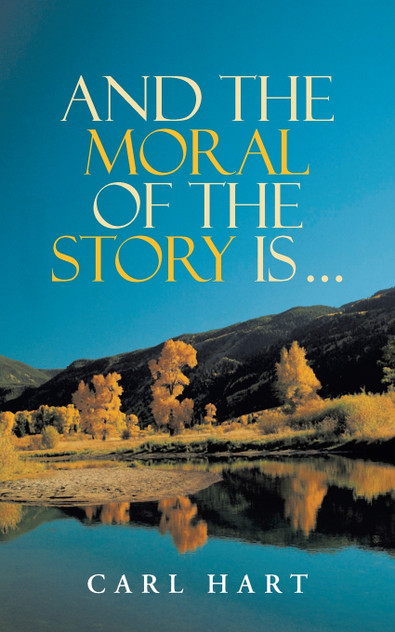
AND THE MORAL OF THE STORY IS . . .I saw a Korean woman walking along the road carrying a bundle of sticks on her back. I thought to myself, “Life is like that.” We all carry around bundles of...
This scarce antiquarian book is a facsimile reprint of the original. Due to its age, it may contain imperfections such as marks, notations, marginalia and flawed pages. Because we believe this work...
Discover your next great read at BookLoop, Australiand online bookstore offering a vast selection of titles across various genres and interests. Whether you're curious about what's trending or searching for graphic novels that captivate, thrilling crime and mystery fiction, or exhilarating action and adventure stories, our curated collections have something for every reader. Delve into imaginative fantasy worlds or explore the realms of science fiction that challenge the boundaries of reality. Fans of contemporary narratives will find compelling stories in our contemporary fiction section. Embark on epic journeys with our fantasy and science fiction titles,
Shop Trending Books and New Releases
Explore our new releases for the most recent additions in romance books, fantasy books, graphic novels, crime and mystery books, science fiction books as well as biographies, cookbooks, self help books, tarot cards, fortunetelling and much more. With titles covering current trends, booktok and bookstagram recommendations, and emerging authors, BookLoop remains your go-to local australian bookstore for buying books online across all book genres.
Shop Best Books By Collection
Stay updated with the literary world by browsing our trending books, featuring the latest bestsellers and critically acclaimed works. Explore titles from popular brands like Minecraft, Pokemon, Star Wars, Bluey, Lonely Planet, ABIA award winners, Peppa Pig, and our specialised collection of ADHD books. At BookLoop, we are committed to providing a diverse and enriching reading experience for all.
Sign In
your cart
Your cart is empty
Menu
Search
PRE-SALES
If you have any questions before making a purchase chat with our online operators to get more information.