Trending Bestseller

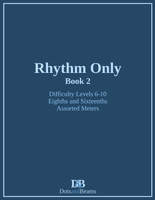
Rhythm Only - Book 2 - Eighths and Sixteenths - Assorted Meters

Nathan Petitpas

No reviews yet Write a Review
Paperback / softback
28 September 2019
$26.00
Ships in 3-5 business days
Hurry up! Current stock:

This collection presents the user with a series of increasingly difficult rhythms on a single pitch.

The rhythmic material in this series is organized into 10 difficulty levels. Each difficulty level contains four exercises in each of the following time signatures: 2/4, 3/4, 4/4, 6/8, 9/8, and 12/8. This gives exercises in 2, 3, and 4 beats per bar in both simple and compound meters. The first two exercises of each time signature have no ties while the remaining two exercises in each time signature include ties. In Book 1 of this series you’ll find difficulty levels 1 to 5, while Book 2 completes the set with levels 6 to 10.

To curate the difficulty levels I looked at all of the possible ways we can use eighth-notes and sixteenth-notes to subdivide a single beat without the use of tuplets. The lowest difficulty level is comprised of the easiest of these one-beat rhythmic groupings. Subsequent difficulty levels include more challenging groupings while continuing to use the easier ones from previous chapters. In this way the difficulty levels are cumulative: level 1 uses only the easiest groupings, but by level 9, all of the possible rhythmic groupings have been introduced. Level 10 increases the density of challenging groupings by omitting the easier ones. The introductory page of each chapter introduces the rhythmic groupings that will be added or omitted in that chapter. On some occasions rhythmic groupings are respelled; however, these new spellings are not formally introduced at the beginning of the chapter.

The exercises in this collection are intentionally random and difficult to internalize. In keeping the rhythmic material as unpredictable as possible the door is left open for the materials to be used in many ways. It also forces the user to process every rhythm as its own event without relying on pattern recognition for help.

Some suggestions for how to use this book include:

  • Practice sight-reading. The goal in practising sight-reading is not to learn the material but to develop the skill of reading new material. When practising sight-reading I encourage you to cycle through exercises quickly rather than mastering each one.
  • Use a metronome! The most important thing you can do with this material is learn how to read these rhythms and play them in time.
  • Advanced metronome work: Placing the metronome click on non-strong beats forces you to take responsibility for the time in a different way and trains you to hear how your rhythm relates to each subdivision of the beat. For example, instead of putting the metronome click on each quarter-note in 4/4, play the exercise with the metronome giving the second eighth note of each beat, or the last sixteenth note, or beats 2 and 4, or every third sixteenth note. Be creative with this one; the possibilities are limitless!
  • Develop independence between hands by playing a repeating pattern in one hand while reading an exercise in the other. Expand on this by adding patterns in hands and feet while reading a rhythm with a remaining limb. This is a great exercise for drummers and percussionists but any instrumentalist could benefit from coordination practice.
  • Use these rhythms to practice scales. Instead of playing scales in straight sixteenth-notes, try playing them in the rhythms given in these exercises.
  • Write in sticking patterns, dynamics, accents, phrase marks, or other articulations for you or your students to practice. If you’re not happy with the ties I included, feel free to add some of your own.
  • Combine the above exercises in any way that you think will be beneficial to your practice.

As with any of the Dots and Beams books, the uses for this particular collection are limited only by the imagination of the musician using it. I encourage anybody using this book to find as many uses for these exercises as possible.

This product hasn't received any reviews yet. Be the first to review this product!

$26.00
Ships in 3-5 business days
Hurry up! Current stock:

Rhythm Only - Book 2 - Eighths and Sixteenths - Assorted Meters

$26.00

Description

This collection presents the user with a series of increasingly difficult rhythms on a single pitch.

The rhythmic material in this series is organized into 10 difficulty levels. Each difficulty level contains four exercises in each of the following time signatures: 2/4, 3/4, 4/4, 6/8, 9/8, and 12/8. This gives exercises in 2, 3, and 4 beats per bar in both simple and compound meters. The first two exercises of each time signature have no ties while the remaining two exercises in each time signature include ties. In Book 1 of this series you’ll find difficulty levels 1 to 5, while Book 2 completes the set with levels 6 to 10.

To curate the difficulty levels I looked at all of the possible ways we can use eighth-notes and sixteenth-notes to subdivide a single beat without the use of tuplets. The lowest difficulty level is comprised of the easiest of these one-beat rhythmic groupings. Subsequent difficulty levels include more challenging groupings while continuing to use the easier ones from previous chapters. In this way the difficulty levels are cumulative: level 1 uses only the easiest groupings, but by level 9, all of the possible rhythmic groupings have been introduced. Level 10 increases the density of challenging groupings by omitting the easier ones. The introductory page of each chapter introduces the rhythmic groupings that will be added or omitted in that chapter. On some occasions rhythmic groupings are respelled; however, these new spellings are not formally introduced at the beginning of the chapter.

The exercises in this collection are intentionally random and difficult to internalize. In keeping the rhythmic material as unpredictable as possible the door is left open for the materials to be used in many ways. It also forces the user to process every rhythm as its own event without relying on pattern recognition for help.

Some suggestions for how to use this book include:

  • Practice sight-reading. The goal in practising sight-reading is not to learn the material but to develop the skill of reading new material. When practising sight-reading I encourage you to cycle through exercises quickly rather than mastering each one.
  • Use a metronome! The most important thing you can do with this material is learn how to read these rhythms and play them in time.
  • Advanced metronome work: Placing the metronome click on non-strong beats forces you to take responsibility for the time in a different way and trains you to hear how your rhythm relates to each subdivision of the beat. For example, instead of putting the metronome click on each quarter-note in 4/4, play the exercise with the metronome giving the second eighth note of each beat, or the last sixteenth note, or beats 2 and 4, or every third sixteenth note. Be creative with this one; the possibilities are limitless!
  • Develop independence between hands by playing a repeating pattern in one hand while reading an exercise in the other. Expand on this by adding patterns in hands and feet while reading a rhythm with a remaining limb. This is a great exercise for drummers and percussionists but any instrumentalist could benefit from coordination practice.
  • Use these rhythms to practice scales. Instead of playing scales in straight sixteenth-notes, try playing them in the rhythms given in these exercises.
  • Write in sticking patterns, dynamics, accents, phrase marks, or other articulations for you or your students to practice. If you’re not happy with the ties I included, feel free to add some of your own.
  • Combine the above exercises in any way that you think will be beneficial to your practice.

As with any of the Dots and Beams books, the uses for this particular collection are limited only by the imagination of the musician using it. I encourage anybody using this book to find as many uses for these exercises as possible.

Customers Also Viewed

Buy Books Online at BookLoop

Discover your next great read at BookLoop, Australiand online bookstore offering a vast selection of titles across various genres and interests. Whether you're curious about what's trending or searching for graphic novels that captivate, thrilling crime and mystery fiction, or exhilarating action and adventure stories, our curated collections have something for every reader. Delve into imaginative fantasy worlds or explore the realms of science fiction that challenge the boundaries of reality. Fans of contemporary narratives will find compelling stories in our contemporary fiction section. Embark on epic journeys with our fantasy and science fiction titles,

Shop Trending Books and New Releases

Explore our new releases for the most recent additions in romance books, fantasy books, graphic novels, crime and mystery books, science fiction books as well as biographies, cookbooks, self help books, tarot cards, fortunetelling and much more. With titles covering current trends, booktok and bookstagram recommendations, and emerging authors, BookLoop remains your go-to local australian bookstore for buying books online across all book genres.

Shop Best Books By Collection

Stay updated with the literary world by browsing our trending books, featuring the latest bestsellers and critically acclaimed works. Explore titles from popular brands like Minecraft, Pokemon, Star Wars, Bluey, Lonely Planet, ABIA award winners, Peppa Pig, and our specialised collection of ADHD books. At BookLoop, we are committed to providing a diverse and enriching reading experience for all.