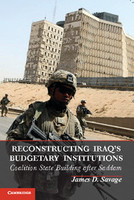
Consistent with the literature on state building, failed states, peacekeeping and foreign assistance, this book argues that budgeting is a core state activity necessary for the operation of a functional government. Employing a historical institutionalist approach, this book first explores the Ottoman, British and Ba'athist origins of Iraq's budgetary institutions. The book next examines American pre-war planning, the Coalition Provisional Authority's rule-making and budgeting following the invasion of Iraq in 2003, and the mixed success of the Coalition's capacity-building programs initiated throughout the occupation. This book sheds light on the problem of 'outsiders' building states, contributes to a more comprehensive evaluation of the Coalition in Iraq, addresses the question of why Iraqis took ownership of some Coalition-generated institutions, and helps explain the nature of institutional change.
During World War II, the U. S. military's extensive planning for the occupation of Germany was a major factor in achieving long-term strategic objectives after the war was won. More recent examples...
The Office of the Special Inspector General for Iraq Reconstruction (SIGIR) is the successor to the Coalition Provisional Authority Office of the Inspector General, and was created in October 2004 by...
The BiblioGov Project is an effort to expand awareness of the public documents and records of the U.S. Government via print publications. In broadening the public understanding of government and its...
The government of Iraq is successfully transitioning from combating an insurgency and rebuilding its infrastructure to a strong sovereign state that no longer requires U.S. government assistance. Key...