During World War II, the U. S. military's extensive planning for the occupation of Germany was a major factor in achieving long-term strategic objectives after the war was won. More recent examples of military operations also emphasize the challenges of post-conflict operations and the criticality of detailed planning and preparation. As the possibility of war with Iraq looms on the horizon, it is important to look beyond the conflict to the challenges of occupying the country.In October 2002, the U. S. Army War College's Strategic Studies Institute, in coordination with the Office of the Army Deputy Chief of Staff/G-3, initiated a study to analyze how American and coalition forces can best address the requirements that will necessarily follow operational victory in a war with Iraq. The objectives of the project were to determine and analyze probable missions for military forces in a post-Saddam Iraq; examine associated challenges; and formulate strategic recommendations for transferring responsibilities to coalition partners or civilian organizations, mitigating local animosity, and facilitating overall mission accomplishment in the war against terrorism.The Strategic Studies Institute organized an interdisciplinary team under the leadership of Dr. Conrad C. Crane and Dr. W. Andrew Terrill. The team's initial findings were vetted at a joint and interagency workshop conducted in December. The final report of the project consists of three parts: a discussion of historical insights from 20th century postwar occupations and post-conflict operations; an analysis of the unique challenges Iraq will present for an occupying power; and a mission matrix that lists 135 specific tasks that must be performed to build and sustain a state. The matrix arrays those tasks across four phases of occupation and designates whether coalition military forces or civilian agencies should perform them. The study has much to offer planners and executors of operations to occupy and reconstruct Iraq, but also has many insights that will apply to achieving strategic objectives in any conflict after hostilities are concluded.In recent decades, U. S. civilian and military leadership have shied away from nation-building. However, the current war against terrorism has highlighted the danger posed by failed and struggling states. If this nation and its coalition partners decide to undertake the mission to remove Saddam Hussein, they will also have to be prepared to dedicate considerable time, manpower, and money to the effort to reconstruct Iraq after the fighting is over. Otherwise, the success of military operations will be ephemeral, and the problems they were designed to eliminate could return or be replaced by new and more virulent difficulties.Douglas C. Lovelace, Jr.Director, Strategic Studies Institute
During World War II, the U. S. military's extensive planning for the occupation of Germany was a major factor in achieving long-term strategic objectives after the war was won. More recent examples of military operations also emphasize the challenges of post-conflict operations and the criticality of detailed planning and preparation. As the possibility of war with Iraq looms on the horizon, it is important to look beyond the conflict to the challenges of occupying the country.In October 2002, the U. S. Army War College's Strategic Studies Institute, in coordination with the Office of the Army Deputy Chief of Staff/G-3, initiated a study to analyze how American and coalition forces can best address the requirements that will necessarily follow operational victory in a war with Iraq. The objectives of the project were to determine and analyze probable missions for military forces in a post-Saddam Iraq; examine associated challenges; and formulate strategic recommendations for transferring responsibilities to coalition partners or civilian organizations, mitigating local animosity, and facilitating overall mission accomplishment in the war against terrorism.The Strategic Studies Institute organized an interdisciplinary team under the leadership of Dr. Conrad C. Crane and Dr. W. Andrew Terrill. The team's initial findings were vetted at a joint and interagency workshop conducted in December. The final report of the project consists of three parts: a discussion of historical insights from 20th century postwar occupations and post-conflict operations; an analysis of the unique challenges Iraq will present for an occupying power; and a mission matrix that lists 135 specific tasks that must be performed to build and sustain a state. The matrix arrays those tasks across four phases of occupation and designates whether coalition military forces or civilian agencies should perform them. The study has much to offer planners and executors of operations to occupy and reconstruct Iraq, but also has many insights that will apply to achieving strategic objectives in any conflict after hostilities are concluded.In recent decades, U. S. civilian and military leadership have shied away from nation-building. However, the current war against terrorism has highlighted the danger posed by failed and struggling states. If this nation and its coalition partners decide to undertake the mission to remove Saddam Hussein, they will also have to be prepared to dedicate considerable time, manpower, and money to the effort to reconstruct Iraq after the fighting is over. Otherwise, the success of military operations will be ephemeral, and the problems they were designed to eliminate could return or be replaced by new and more virulent difficulties.Douglas C. Lovelace, Jr.Director, Strategic Studies Institute
The BiblioGov Project is an effort to expand awareness of the public documents and records of the U.S. Government via print publications. In broadening the public understanding of government and its...
The Office of the Special Inspector General for Iraq Reconstruction (SIGIR) is the successor to the Coalition Provisional Authority Office of the Inspector General, and was created in October 2004 by...
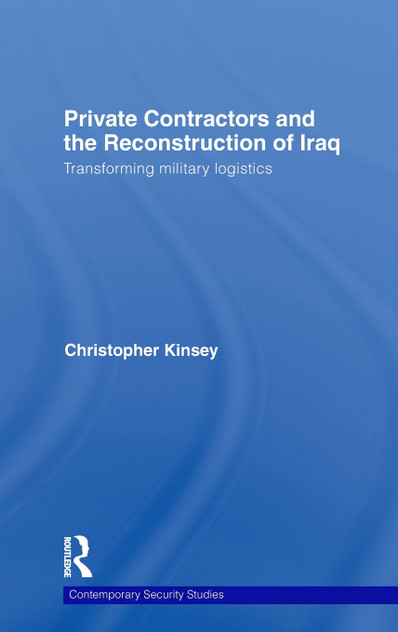
Private Contractors and the Reconstruction of Iraq examines the controversial role of military contractors in the reconstruction of Iraq. When 'Operation Iraqi Freedom' was launched in March 2003,...
Discover your next great read at BookLoop, Australiand online bookstore offering a vast selection of titles across various genres and interests. Whether you're curious about what's trending or searching for graphic novels that captivate, thrilling crime and mystery fiction, or exhilarating action and adventure stories, our curated collections have something for every reader. Delve into imaginative fantasy worlds or explore the realms of science fiction that challenge the boundaries of reality. Fans of contemporary narratives will find compelling stories in our contemporary fiction section. Embark on epic journeys with our fantasy and science fiction titles,
Shop Trending Books and New Releases
Explore our new releases for the most recent additions in romance books, fantasy books, graphic novels, crime and mystery books, science fiction books as well as biographies, cookbooks, self help books, tarot cards, fortunetelling and much more. With titles covering current trends, booktok and bookstagram recommendations, and emerging authors, BookLoop remains your go-to local australian bookstore for buying books online across all book genres.
Shop Best Books By Collection
Stay updated with the literary world by browsing our trending books, featuring the latest bestsellers and critically acclaimed works. Explore titles from popular brands like Minecraft, Pokemon, Star Wars, Bluey, Lonely Planet, ABIA award winners, Peppa Pig, and our specialised collection of ADHD books. At BookLoop, we are committed to providing a diverse and enriching reading experience for all.
Sign In
your cart
Your cart is empty
Menu
Search
PRE-SALES
If you have any questions before making a purchase chat with our online operators to get more information.