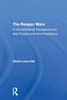
Reagan's War Stories examines the relationship between Ronald Reagan, the public and popular culture. From an overview of Reagan's youth and the pulp fiction he consumed, we get a sense of the future president's good/evil outlook. Carrying that over into Reagan's reading and choices as president, Griffin situates narrative at the center of Reagan's political formation and leadership providing a compelling account of both Reagan's life, his presidency, and a lens into non-traditional strategy formulation. Author Ben Griffin tells three stories about an American president who ushered in the end of the Cold War. A survey of Reagan's youth and the fiction he consumed and created as an announcer and actor, reveals how the future president's worldview developed. A look at the rise of fiction and popular culture rife with pro-Americanism in the 1980s details a uniquely symbiotic relationship between the chief executive and popular culture in framing the Cold War as a struggle with an "Evil Empire" in the Soviet Union. Finally, Griffin outlines how presidential personality and reading preferences shaped President Reagan's pursuit of the "Star Wars" initiative and belief in the transformative combination of freedom and technology. Griffin demonstrates that novels by Tom Clancy, Louis L'Amour, and science fiction influenced Reagan's view of 1980s geopolitics. His identification with fiction led Ronald Reagan to view European Cold War issues with more empathy but harmed the president's policymaking when the narrowness of his reading led him to apply a white-hat/black-hat framework that did not match the reality of conflict in Latin America. Reagan treated fictional portrayals seriously, believing they shaped public views and offered valid ways to think through geo-political issues. Seeking to shape the reading habits of the public, his administration sought to highlight authors who shared his worldview like Tom Clancy, Louis L'Amour, and Allen Drury over other popular writers like Robert Ludlum and John Le Carre who portrayed the Cold War in less stark moral terms. The administration's favored popular authors in turn intentionally incorporated Reagan-era policies into their work to advocate for them through fiction, thus reaching a broader audience than via official government releases and speeches. Showing how Reagan used narrative as both a consumer and a communicator, Griffin notes that Reagan identified with certain stories and they shaped him as a political leader and later and influenced his approach to complex issues. When handled deftly, incorporating fiction created a common language across the administration and provided a way to convey messages to the masses in a memorable fashion.
Reagan's War Stories examines the relationship between Ronald Reagan, the public and popular culture. From an overview of Reagan's youth and the pulp fiction he consumed, we get a sense of the future president's good/evil outlook. Carrying that over into Reagan's reading and choices as president, Griffin situates narrative at the center of Reagan's political formation and leadership providing a compelling account of both Reagan's life, his presidency, and a lens into non-traditional strategy formulation. Author Ben Griffin tells three stories about an American president who ushered in the end of the Cold War. A survey of Reagan's youth and the fiction he consumed and created as an announcer and actor, reveals how the future president's worldview developed. A look at the rise of fiction and popular culture rife with pro-Americanism in the 1980s details a uniquely symbiotic relationship between the chief executive and popular culture in framing the Cold War as a struggle with an "Evil Empire" in the Soviet Union. Finally, Griffin outlines how presidential personality and reading preferences shaped President Reagan's pursuit of the "Star Wars" initiative and belief in the transformative combination of freedom and technology. Griffin demonstrates that novels by Tom Clancy, Louis L'Amour, and science fiction influenced Reagan's view of 1980s geopolitics. His identification with fiction led Ronald Reagan to view European Cold War issues with more empathy but harmed the president's policymaking when the narrowness of his reading led him to apply a white-hat/black-hat framework that did not match the reality of conflict in Latin America. Reagan treated fictional portrayals seriously, believing they shaped public views and offered valid ways to think through geo-political issues. Seeking to shape the reading habits of the public, his administration sought to highlight authors who shared his worldview like Tom Clancy, Louis L'Amour, and Allen Drury over other popular writers like Robert Ludlum and John Le Carre who portrayed the Cold War in less stark moral terms. The administration's favored popular authors in turn intentionally incorporated Reagan-era policies into their work to advocate for them through fiction, thus reaching a broader audience than via official government releases and speeches. Showing how Reagan used narrative as both a consumer and a communicator, Griffin notes that Reagan identified with certain stories and they shaped him as a political leader and later and influenced his approach to complex issues. When handled deftly, incorporating fiction created a common language across the administration and provided a way to convey messages to the masses in a memorable fashion.
The Epic Story of His Forty-Year Struggle and Final Triumph Over CommunismReagan's War is the story of Ronald Reagan's personal and political journey as an anti-communist, from his early days as an...
Ronald Reagan's term in office was punctuated by four significant employments of military force: the deployment of Marines to Lebanon; the intervention in Grenada; the air strikes against Libya; and...
A riveting inside view of one man's efforts to literally save the world, Reagan's Secret War reveals how a president can, through the force of his deep convictions, bring about sweeping global change...
Discover your next great read at BookLoop, Australiand online bookstore offering a vast selection of titles across various genres and interests. Whether you're curious about what's trending or searching for graphic novels that captivate, thrilling crime and mystery fiction, or exhilarating action and adventure stories, our curated collections have something for every reader. Delve into imaginative fantasy worlds or explore the realms of science fiction that challenge the boundaries of reality. Fans of contemporary narratives will find compelling stories in our contemporary fiction section. Embark on epic journeys with our fantasy and science fiction titles,
Shop Trending Books and New Releases
Explore our new releases for the most recent additions in romance books, fantasy books, graphic novels, crime and mystery books, science fiction books as well as biographies, cookbooks, self help books, tarot cards, fortunetelling and much more. With titles covering current trends, booktok and bookstagram recommendations, and emerging authors, BookLoop remains your go-to local australian bookstore for buying books online across all book genres.
Shop Best Books By Collection
Stay updated with the literary world by browsing our trending books, featuring the latest bestsellers and critically acclaimed works. Explore titles from popular brands like Minecraft, Pokemon, Star Wars, Bluey, Lonely Planet, ABIA award winners, Peppa Pig, and our specialised collection of ADHD books. At BookLoop, we are committed to providing a diverse and enriching reading experience for all.
Sign In
your cart
Your cart is empty
Menu
Search
PRE-SALES
If you have any questions before making a purchase chat with our online operators to get more information.