System designers, computer scientists and engineers have c- tinuously invented and employed notations for modeling, speci- ing, simulating, documenting, communicating, teaching, verifying and controlling the designs of digital systems. Initially these s- tems were represented via electronic and fabrication details. F- lowing C. E. Shannon's revelation of 1948, logic diagrams and Boolean equations were used to represent digital systems in a fa- ion that de-emphasized electronic and fabrication detail while revealing logical behavior. A small number of circuits were made available to remove the abstraction of these representations when it was desirable to do so. As system complexity grew, block diagrams, timing charts, sequence charts, and other graphic and symbolic notations were found to be useful in summarizing the gross features of a system and describing how it operated. In addition, it always seemed necessary or appropriate to augment these documents with lengthy verbal descriptions in a natural language. While each notation was, and still is, a perfectly valid means of expressing a design, lack of standardization, conciseness, and f- mal definitions interfered with communication and the understa- ing between groups of people using different notations. This problem was recognized early and formal languages began to evolve in the 1950s when I. S. Reed discovered that flip-flop input equations were equivalent to a register transfer equation, and that xvi tor-like notation. Expanding these concepts Reed developed a no- tion that became known as a Register Transfer Language (RTL).
System designers, computer scientists and engineers have c- tinuously invented and employed notations for modeling, speci- ing, simulating, documenting, communicating, teaching, verifying and controlling the designs of digital systems. Initially these s- tems were represented via electronic and fabrication details. F- lowing C. E. Shannon's revelation of 1948, logic diagrams and Boolean equations were used to represent digital systems in a fa- ion that de-emphasized electronic and fabrication detail while revealing logical behavior. A small number of circuits were made available to remove the abstraction of these representations when it was desirable to do so. As system complexity grew, block diagrams, timing charts, sequence charts, and other graphic and symbolic notations were found to be useful in summarizing the gross features of a system and describing how it operated. In addition, it always seemed necessary or appropriate to augment these documents with lengthy verbal descriptions in a natural language. While each notation was, and still is, a perfectly valid means of expressing a design, lack of standardization, conciseness, and f- mal definitions interfered with communication and the understa- ing between groups of people using different notations. This problem was recognized early and formal languages began to evolve in the 1950s when I. S. Reed discovered that flip-flop input equations were equivalent to a register transfer equation, and that xvi tor-like notation. Expanding these concepts Reed developed a no- tion that became known as a Register Transfer Language (RTL).
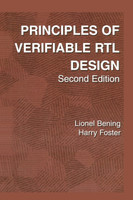
Since register transfer level (RTL) design is less about being a bright engineer, and more about knowing the downstream implications of your work, this book explains the impact of design decisions...
This work has been selected by scholars as being culturally important, and is part of the knowledge base of civilization as we know it.This work is in the "public domain in the United States of...
Discover your next great read at BookLoop, Australiand online bookstore offering a vast selection of titles across various genres and interests. Whether you're curious about what's trending or searching for graphic novels that captivate, thrilling crime and mystery fiction, or exhilarating action and adventure stories, our curated collections have something for every reader. Delve into imaginative fantasy worlds or explore the realms of science fiction that challenge the boundaries of reality. Fans of contemporary narratives will find compelling stories in our contemporary fiction section. Embark on epic journeys with our fantasy and science fiction titles,
Shop Trending Books and New Releases
Explore our new releases for the most recent additions in romance books, fantasy books, graphic novels, crime and mystery books, science fiction books as well as biographies, cookbooks, self help books, tarot cards, fortunetelling and much more. With titles covering current trends, booktok and bookstagram recommendations, and emerging authors, BookLoop remains your go-to local australian bookstore for buying books online across all book genres.
Shop Best Books By Collection
Stay updated with the literary world by browsing our trending books, featuring the latest bestsellers and critically acclaimed works. Explore titles from popular brands like Minecraft, Pokemon, Star Wars, Bluey, Lonely Planet, ABIA award winners, Peppa Pig, and our specialised collection of ADHD books. At BookLoop, we are committed to providing a diverse and enriching reading experience for all.
Sign In
your cart
Your cart is empty
Menu
Search
PRE-SALES
If you have any questions before making a purchase chat with our online operators to get more information.