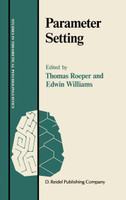
In May 1985 the University of Massachusetts held the first conference on the parameter setting model of grammar and acquisition. The conference was conceived in the belief that there is a new possibility of tightly connecting grammatical studies and language acquisition studies, and that this new possibility has grown out of the new generation of ideas about the relation of Universal Grammar to the grammar of particular languages. The papers in this volume are all concerned in one way or another with the 'parametric' model of grammar, and with its role in explaining the acquisition of language. Before summarizing the accompanying papers, I would like to sketch the intellectual background of these new ideas. It has long been the acknowledged goal of grammatical theorists to explicate the relation between the experience of the child and the knowledge of the adult. Somehow, the child selects a unique grammar (by assumption) compatible with a random partially unreliable sample of some language. In the earliest work in generative grammar, starting with Chomsky's Aspects, and extending to such works as Jackendoffs Lexicalist Syntax (1977), the model of this account was the formal evaluation metric, accompanied by a general rule writing system. The model of acquisition was the following: the child composed a grammar by writing rules in the rule writing system, under the constraint that the rules must be compatible with the data, and that the grammar must be the one most highly valued by the evaluation metric.
In May 1985 the University of Massachusetts held the first conference on the parameter setting model of grammar and acquisition. The conference was conceived in the belief that there is a new possibility of tightly connecting grammatical studies and language acquisition studies, and that this new possibility has grown out of the new generation of ideas about the relation of Universal Grammar to the grammar of particular languages. The papers in this volume are all concerned in one way or another with the 'parametric' model of grammar, and with its role in explaining the acquisition of language. Before summarizing the accompanying papers, I would like to sketch the intellectual background of these new ideas. It has long been the acknowledged goal of grammatical theorists to explicate the relation between the experience of the child and the knowledge of the adult. Somehow, the child selects a unique grammar (by assumption) compatible with a random partially unreliable sample of some language. In the earliest work in generative grammar, starting with Chomsky's Aspects, and extending to such works as Jackendoffs Lexicalist Syntax (1977), the model of this account was the formal evaluation metric, accompanied by a general rule writing system. The model of acquisition was the following: the child composed a grammar by writing rules in the rule writing system, under the constraint that the rules must be compatible with the data, and that the grammar must be the one most highly valued by the evaluation metric.
Over the past decade, generative grammarians have viewed language acquisition as a process of fixing option points or parameters defined in Universal Grammar. Here David Lightfoot addresses the...
Recent developments in linguistic theory have led to an important reorientation of research in related fields of linguistic inquiry as well as in linguistics itself. The developments I have in mind,...
During the period I have been working on this project I have received institutional support of several kinds, for which I am most grateful. I thank the Institute for Advanced Study at Stanford...
Discover your next great read at BookLoop, Australiand online bookstore offering a vast selection of titles across various genres and interests. Whether you're curious about what's trending or searching for graphic novels that captivate, thrilling crime and mystery fiction, or exhilarating action and adventure stories, our curated collections have something for every reader. Delve into imaginative fantasy worlds or explore the realms of science fiction that challenge the boundaries of reality. Fans of contemporary narratives will find compelling stories in our contemporary fiction section. Embark on epic journeys with our fantasy and science fiction titles,
Shop Trending Books and New Releases
Explore our new releases for the most recent additions in romance books, fantasy books, graphic novels, crime and mystery books, science fiction books as well as biographies, cookbooks, self help books, tarot cards, fortunetelling and much more. With titles covering current trends, booktok and bookstagram recommendations, and emerging authors, BookLoop remains your go-to local australian bookstore for buying books online across all book genres.
Shop Best Books By Collection
Stay updated with the literary world by browsing our trending books, featuring the latest bestsellers and critically acclaimed works. Explore titles from popular brands like Minecraft, Pokemon, Star Wars, Bluey, Lonely Planet, ABIA award winners, Peppa Pig, and our specialised collection of ADHD books. At BookLoop, we are committed to providing a diverse and enriching reading experience for all.
Sign In
your cart
Your cart is empty
Menu
Search
PRE-SALES
If you have any questions before making a purchase chat with our online operators to get more information.