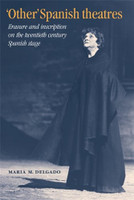
Challenges established opinions on modern Iberian theatre by considering the roles of contrasting figures and companies who have impacted upon both the practice and the perception of Spanish and European stages
This title challenges established opinions on modern Iberian theatre in considering the roles of contrasting figures and companies who have impacted upon both the practice and the perception of Spanish and European stages. In questioning the primacy of the dramatist, this pioneering study offers a new interpretation of a nation's theatrical culture that has been viewed primarily through the prisms of a select number of playwrights. Accordingly many of the conclusions reached are new ones, and the case for acknowledging the wide influence of Spanish practitioners on theatre in Europe and the Americas is made in persuasive terms. Through a bold documentation and interrogation of key productions and their reception both at home and abroad, this work focuses on the doing of performance, asking provocative questions around how performances are tested against the texts that remain. In a broad and detailed study Delgado selects six case studies which map out alternative readings of a nation's theatrical innovation through the 20th century.The first , Margarita Xirgu (1888-1969), was both muse and mentor to Garcia Lorca; actress, director, pedagogue and activist, she has languished in the shadow of her more famous European contemporaries, Eleanora Duse and Sarah Bernhardt. The second, Enrique Rambal (1889-1956), was an ambitious theatrical polymath and miracle-worker, much admired by Orson Welles, whose influence is still being calibrated. The third, tragedienne Maria Casares (1922-96) feted by Gordon Craig, Genet, Camus, Cocteau, and Koltes, is re-appropriated from the French theatre in which she is habitually viewed through the vectors of exile. The fourth, Nuria Espert (b.1935), recognised as the most celebrated Iberian actress of the second half of the century, by contrast, remained in Spain, reawakening international interest in Spanish theatre through her extraordinary collaborations with Victor Garc a and Jorge Lavelli. Espert's work was to inspire future generations of practitioners, including the book"s fifth case study Lluis Pasqual (b.1951), the Catalan co-founder of Barcelona"s Teatre Lliure who was to consolidate the place of "director's theatre" within Spain while bringing an international outlook to the Spanish stage. Barcelona is also the backdrop for the final chapter's protagonists, La Cubana, the company whose trajectory from street theatre to mainstream commercial success offers an insight into the sparkling dynamics of a vibrant post-Franco Catalan performance tradition.
This title challenges established opinions on modern Iberian theatre in considering the roles of contrasting figures and companies who have impacted upon both the practice and the perception of Spanish and European stages. In questioning the primacy of the dramatist, this pioneering study offers a new interpretation of a nation's theatrical culture that has been viewed primarily through the prisms of a select number of playwrights. Accordingly many of the conclusions reached are new ones, and the case for acknowledging the wide influence of Spanish practitioners on theatre in Europe and the Americas is made in persuasive terms. Through a bold documentation and interrogation of key productions and their reception both at home and abroad, this work focuses on the doing of performance, asking provocative questions around how performances are tested against the texts that remain. In a broad and detailed study Delgado selects six case studies which map out alternative readings of a nation's theatrical innovation through the 20th century.The first , Margarita Xirgu (1888-1969), was both muse and mentor to Garcia Lorca; actress, director, pedagogue and activist, she has languished in the shadow of her more famous European contemporaries, Eleanora Duse and Sarah Bernhardt. The second, Enrique Rambal (1889-1956), was an ambitious theatrical polymath and miracle-worker, much admired by Orson Welles, whose influence is still being calibrated. The third, tragedienne Maria Casares (1922-96) feted by Gordon Craig, Genet, Camus, Cocteau, and Koltes, is re-appropriated from the French theatre in which she is habitually viewed through the vectors of exile. The fourth, Nuria Espert (b.1935), recognised as the most celebrated Iberian actress of the second half of the century, by contrast, remained in Spain, reawakening international interest in Spanish theatre through her extraordinary collaborations with Victor Garc a and Jorge Lavelli. Espert's work was to inspire future generations of practitioners, including the book"s fifth case study Lluis Pasqual (b.1951), the Catalan co-founder of Barcelona"s Teatre Lliure who was to consolidate the place of "director's theatre" within Spain while bringing an international outlook to the Spanish stage. Barcelona is also the backdrop for the final chapter's protagonists, La Cubana, the company whose trajectory from street theatre to mainstream commercial success offers an insight into the sparkling dynamics of a vibrant post-Franco Catalan performance tradition.
Beginning with a reassessment of the 1920s and 30s, this text looks beyond a consideration of just the most successful Spanish playwrights of the time, and discusses also the work of directors,...
Written by one of the foremost American theater critics of the early 20th century, this collection of essays offers a compelling look at the contemporary theater scene. From Shakespearean drama to...
Discover your next great read at BookLoop, Australiand online bookstore offering a vast selection of titles across various genres and interests. Whether you're curious about what's trending or searching for graphic novels that captivate, thrilling crime and mystery fiction, or exhilarating action and adventure stories, our curated collections have something for every reader. Delve into imaginative fantasy worlds or explore the realms of science fiction that challenge the boundaries of reality. Fans of contemporary narratives will find compelling stories in our contemporary fiction section. Embark on epic journeys with our fantasy and science fiction titles,
Shop Trending Books and New Releases
Explore our new releases for the most recent additions in romance books, fantasy books, graphic novels, crime and mystery books, science fiction books as well as biographies, cookbooks, self help books, tarot cards, fortunetelling and much more. With titles covering current trends, booktok and bookstagram recommendations, and emerging authors, BookLoop remains your go-to local australian bookstore for buying books online across all book genres.
Shop Best Books By Collection
Stay updated with the literary world by browsing our trending books, featuring the latest bestsellers and critically acclaimed works. Explore titles from popular brands like Minecraft, Pokemon, Star Wars, Bluey, Lonely Planet, ABIA award winners, Peppa Pig, and our specialised collection of ADHD books. At BookLoop, we are committed to providing a diverse and enriching reading experience for all.
Sign In
your cart
Your cart is empty
Menu
Search
PRE-SALES
If you have any questions before making a purchase chat with our online operators to get more information.