Mental Institutions in America: Social Policy to 1875 examines how American society responded to complex problems arising out of mental illness in the nineteenth century. All societies have had to confront sickness, disease, and dependency, and have developed their own ways of dealing with these phenomena. The mental hospital became the characteristic institution charged with the responsibility of providing care and treatment for individuals seemingly incapable of caring for themselves during protracted periods of incapacitation.The services rendered by the hospital were of benefit not merely to the afflicted individual but to the community. Such an institution embodied a series of moral imperatives by providing humane and scientific treatment of disabled individuals, many of whose families were unable to care for them at home or to pay the high costs of private institutional care. Yet the mental hospital has always been more than simply an institution that offered care and treatment for the sick and disabled. Its structure and functions have usually been linked with a variety of external economic, political, social, and intellectual forces, if only because the way in which a society handled problems of disease and dependency was partly governed by its social structure and values.The definition of disease, the criteria for institutionalization, the financial and administrative structures governing hospitals, the nature of the decision-making process, differential care and treatment of various socio-economic groups were issues that transcended strictly medical and scientific considerations. Mental Institutions in America attempts to interpret the mental hospital as a social as well as a medical institution and to illuminate the evolution of policy toward dependent groups such as the mentally ill. This classic text brilliantly studies the past in depth and on its own terms.
Mental Institutions in America: Social Policy to 1875 examines how American society responded to complex problems arising out of mental illness in the nineteenth century. All societies have had to confront sickness, disease, and dependency, and have developed their own ways of dealing with these phenomena. The mental hospital became the characteristic institution charged with the responsibility of providing care and treatment for individuals seemingly incapable of caring for themselves during protracted periods of incapacitation.The services rendered by the hospital were of benefit not merely to the afflicted individual but to the community. Such an institution embodied a series of moral imperatives by providing humane and scientific treatment of disabled individuals, many of whose families were unable to care for them at home or to pay the high costs of private institutional care. Yet the mental hospital has always been more than simply an institution that offered care and treatment for the sick and disabled. Its structure and functions have usually been linked with a variety of external economic, political, social, and intellectual forces, if only because the way in which a society handled problems of disease and dependency was partly governed by its social structure and values.The definition of disease, the criteria for institutionalization, the financial and administrative structures governing hospitals, the nature of the decision-making process, differential care and treatment of various socio-economic groups were issues that transcended strictly medical and scientific considerations. Mental Institutions in America attempts to interpret the mental hospital as a social as well as a medical institution and to illuminate the evolution of policy toward dependent groups such as the mentally ill. This classic text brilliantly studies the past in depth and on its own terms.
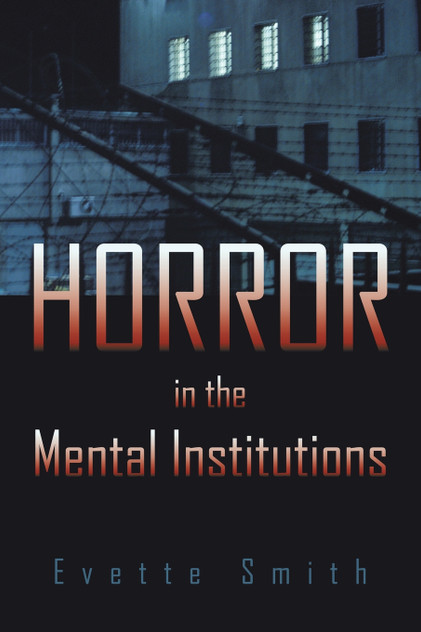
Horror in the mental institutions is based on a true story. It's looking into the life of the author who is a schizoaffective person with a mental illness and a substances abuse disorder. She wanted...
This book provides a comprehensive overview of mental health in rural America, with the goal of fostering urgently needed research and honest conversations about providing accessible, culturally...
This is a reproduction of a book published before 1923. This book may have occasional imperfections such as missing or blurred pages, poor pictures, errant marks,...
Discover your next great read at BookLoop, Australiand online bookstore offering a vast selection of titles across various genres and interests. Whether you're curious about what's trending or searching for graphic novels that captivate, thrilling crime and mystery fiction, or exhilarating action and adventure stories, our curated collections have something for every reader. Delve into imaginative fantasy worlds or explore the realms of science fiction that challenge the boundaries of reality. Fans of contemporary narratives will find compelling stories in our contemporary fiction section. Embark on epic journeys with our fantasy and science fiction titles,
Shop Trending Books and New Releases
Explore our new releases for the most recent additions in romance books, fantasy books, graphic novels, crime and mystery books, science fiction books as well as biographies, cookbooks, self help books, tarot cards, fortunetelling and much more. With titles covering current trends, booktok and bookstagram recommendations, and emerging authors, BookLoop remains your go-to local australian bookstore for buying books online across all book genres.
Shop Best Books By Collection
Stay updated with the literary world by browsing our trending books, featuring the latest bestsellers and critically acclaimed works. Explore titles from popular brands like Minecraft, Pokemon, Star Wars, Bluey, Lonely Planet, ABIA award winners, Peppa Pig, and our specialised collection of ADHD books. At BookLoop, we are committed to providing a diverse and enriching reading experience for all.
Sign In
your cart
Your cart is empty
Menu
Search
PRE-SALES
If you have any questions before making a purchase chat with our online operators to get more information.