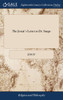
Jesuit Letters From China, 1583-84 was first published in 1986. Minnesota Archive Editions uses digital technology to make long-unavailable books once again accessible, and are published unaltered from the original University of Minnesota Press editions.The first eight letters from Jesuit missionaries on mainland China were written in 1583-84 and
Jesuit Letters From China, 1583-84 was first published in 1986. Minnesota Archive Editions uses digital technology to make long-unavailable books once again accessible, and are published unaltered from the original University of Minnesota Press editions.The first eight letters from Jesuit missionaries on mainland China were written in 1583-84 and published in Europe in 1586. M Howard Rienstra's translated marks their first appearance in English. The letters chronicle the patient efforts of Michele Ruggieri and the famed Matteo Ricci to learn Chinese, to gain acceptance in Chinese society, and to explain Christianity to a highly sophisticated non-Christian culture. They also described the China of the late Ming dynasty (1368-1644), a country whose immense size and population had excited the imagination of Europeans for generations.It was Francis Xavier's dream that this mighty kingdom and civilization be opened to the Christian gospel. His dream was at least tentatively fulfilled when Michele Ruggieri was granted residence first in Canton and then in Chao-ch'ing in 1583. Accompanied first by Francesco Pasio and later by Matteo Ricci, Ruggieri initiated the Christian mission in China. Their letters, published initially as an appendix to a volume of Jesuit letters from Japan, were abbreviated and censored by their European editor. In edited form, the letters appeared in 1586 in one French, on German, and three Italian editions.The China of Ruggieri and Matteo Ricci had remained, however, both suspicious of, and closed to, foreigners - a fact which the original letters do not gloss over. Rienstra was carefully compared the abbreviated and censored versions of these letters in their originals, still preserved in the Jesuit archives in Rome. The letters in general indicate how tenuous the Jesuits' situation was and note candidly that only two baptisms had been performed on the mainland during their stay. These results stand in marked contracts to the reports from Japan of tens of thousands of baptisms and to the reports from Portuguese Macao, where Chinese converts were compelled to wear European cloths and to take European names.Such Europeanization was thought to be inappropriate to a successful Christian mission in China. Though criticized at the time by their colleagues in Macao, Ruggieri, Pasio, and Ricci committed themselves to a program of cultural respect and accommodation. They learned both written and spoken Chinese, ingratiated themselves with the ruling classes by exhibiting their learning and courtesy, and appeared to have become Chinese themselves. When Matteo Ricci became Ruggieri's successor and his name became synonymous with the success of the Jesuit mission in China, it was to these methods that its success was owed. Unfortunately, the prevailing European ethnocentrism could not accept the concept of cultural accommodation. The editors thus censored the letters to convey the impression of a triumphant and culturally superior Christian mission in China.Jesuit Letters From China is a publication of the James Ford Bell Library at the University of Minnesota.
Jesuit Letters From China, 1583-84 was first published in 1986. Minnesota Archive Editions uses digital technology to make long-unavailable books once again accessible, and are published unaltered from the original University of Minnesota Press editions.The first eight letters from Jesuit missionaries on mainland China were written in 1583-84 and published in Europe in 1586. M Howard Rienstra's translated marks their first appearance in English. The letters chronicle the patient efforts of Michele Ruggieri and the famed Matteo Ricci to learn Chinese, to gain acceptance in Chinese society, and to explain Christianity to a highly sophisticated non-Christian culture. They also described the China of the late Ming dynasty (1368-1644), a country whose immense size and population had excited the imagination of Europeans for generations.It was Francis Xavier's dream that this mighty kingdom and civilization be opened to the Christian gospel. His dream was at least tentatively fulfilled when Michele Ruggieri was granted residence first in Canton and then in Chao-ch'ing in 1583. Accompanied first by Francesco Pasio and later by Matteo Ricci, Ruggieri initiated the Christian mission in China. Their letters, published initially as an appendix to a volume of Jesuit letters from Japan, were abbreviated and censored by their European editor. In edited form, the letters appeared in 1586 in one French, on German, and three Italian editions.The China of Ruggieri and Matteo Ricci had remained, however, both suspicious of, and closed to, foreigners - a fact which the original letters do not gloss over. Rienstra was carefully compared the abbreviated and censored versions of these letters in their originals, still preserved in the Jesuit archives in Rome. The letters in general indicate how tenuous the Jesuits' situation was and note candidly that only two baptisms had been performed on the mainland during their stay. These results stand in marked contracts to the reports from Japan of tens of thousands of baptisms and to the reports from Portuguese Macao, where Chinese converts were compelled to wear European cloths and to take European names.Such Europeanization was thought to be inappropriate to a successful Christian mission in China. Though criticized at the time by their colleagues in Macao, Ruggieri, Pasio, and Ricci committed themselves to a program of cultural respect and accommodation. They learned both written and spoken Chinese, ingratiated themselves with the ruling classes by exhibiting their learning and courtesy, and appeared to have become Chinese themselves. When Matteo Ricci became Ruggieri's successor and his name became synonymous with the success of the Jesuit mission in China, it was to these methods that its success was owed. Unfortunately, the prevailing European ethnocentrism could not accept the concept of cultural accommodation. The editors thus censored the letters to convey the impression of a triumphant and culturally superior Christian mission in China.Jesuit Letters From China is a publication of the James Ford Bell Library at the University of Minnesota.
The 18th century was a wealth of knowledge, exploration and rapidly growing technology and expanding record-keeping made possible by advances in the printing press. In its determination to preserve...
The 18th century was a wealth of knowledge, exploration and rapidly growing technology and expanding record-keeping made possible by advances in the printing press. In its determination to preserve...
These letters provide a fascinating insider's account of everyday life in China at a time when, although the country is rapidly undergoing change, it is still possible to "catch some of the old...
This book, from the series Primary Sources: Historical Books of the World (Asia and Far East Collection), represents an important historical artifact on Asian history and culture. Its contents come...
This book contains a series of twenty letters that reveal the truth about Popery and Jesuitism in Rome during the nineteenth century. Written by Luigi Francesco L. DeSanctis, an Italian lawyer and...
Discover your next great read at BookLoop, Australiand online bookstore offering a vast selection of titles across various genres and interests. Whether you're curious about what's trending or searching for graphic novels that captivate, thrilling crime and mystery fiction, or exhilarating action and adventure stories, our curated collections have something for every reader. Delve into imaginative fantasy worlds or explore the realms of science fiction that challenge the boundaries of reality. Fans of contemporary narratives will find compelling stories in our contemporary fiction section. Embark on epic journeys with our fantasy and science fiction titles,
Shop Trending Books and New Releases
Explore our new releases for the most recent additions in romance books, fantasy books, graphic novels, crime and mystery books, science fiction books as well as biographies, cookbooks, self help books, tarot cards, fortunetelling and much more. With titles covering current trends, booktok and bookstagram recommendations, and emerging authors, BookLoop remains your go-to local australian bookstore for buying books online across all book genres.
Shop Best Books By Collection
Stay updated with the literary world by browsing our trending books, featuring the latest bestsellers and critically acclaimed works. Explore titles from popular brands like Minecraft, Pokemon, Star Wars, Bluey, Lonely Planet, ABIA award winners, Peppa Pig, and our specialised collection of ADHD books. At BookLoop, we are committed to providing a diverse and enriching reading experience for all.
Sign In
your cart
Your cart is empty
Menu
Search
PRE-SALES
If you have any questions before making a purchase chat with our online operators to get more information.