Trending Bestseller

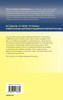
Inequality and Evolution

The Biological Determinants of Capitalism, Socialism and Income Inequality

Charles L. Ladner

No reviews yet Write a Review
Hardback
01 December 2020
$67.00
Ships in 3-5 business days
Hurry up! Current stock:
In 1976, there were 38 countries, comprising nearly 50% of the world's population that self-identified as socialist states, yet by 1991, only one remained. In 1976, the annual GDP per capita of the 38 socialist countries (in inflation adjusted dollars) averaged approximately $5 thousand. By 1990 it had grown to about $8 thousand. During that same period, the GDP per capita, in comparable numbers, for the United States grew from $24 thousand to $36 thousand. The socialist countries never grew their per capita income to more than 22% of the United States. Even China, which today has an economy almost as large as the United States, never saw its per capita GDP grow beyond $2 thousand per year during the twenty-eight year period as a socialist state under Mao Zedong. But, after the death of Mao, China converted its economy to the capitalist model with spectacular success, lifting a billion people out of poverty and challenging the United States for worldwide economic supremacy-an outcome that would have been unthinkable under socialism. Why has capitalism proven to be such an extraordinary success and socialism such a miserable failure?Charles Ladner argues that the success or failure of economic systems can be traced to the degree to which such systems are congruent with the primal force of evolutionary natural selection. This is the most fundamental need of every living thing to survive and reproduce. He encapsulate these forces into the term: selfishness. Capitalism, he finds, is grounded in such selfishness or self-interest, and therefore is fully congruent with the biological needs which provide the aspirational motivation that cause capitalism at all times and in every place, to be successful. Socialism, on other hand, requires and cannot function without, authoritarian rule to suppress expressions of self-interest. Its operation at the level of the state, serves to frustrate the biological needs and thereby will always produce poverty and failure. The historical record, he says, categorically demonstrates this. Capitalism, however, has a fatal flaw, and that is its inability to restrain the expression of selfishness, which ultimately leads to such extremes of wealth and income inequality that the system can self-destruct. In the final chapters, Ladner offers possible remedies for the United States, which he believes is already in the very early stages of such self-destruction.


This product hasn't received any reviews yet. Be the first to review this product!

$67.00
Ships in 3-5 business days
Hurry up! Current stock:

Inequality and Evolution

$67.00

Description

In 1976, there were 38 countries, comprising nearly 50% of the world's population that self-identified as socialist states, yet by 1991, only one remained. In 1976, the annual GDP per capita of the 38 socialist countries (in inflation adjusted dollars) averaged approximately $5 thousand. By 1990 it had grown to about $8 thousand. During that same period, the GDP per capita, in comparable numbers, for the United States grew from $24 thousand to $36 thousand. The socialist countries never grew their per capita income to more than 22% of the United States. Even China, which today has an economy almost as large as the United States, never saw its per capita GDP grow beyond $2 thousand per year during the twenty-eight year period as a socialist state under Mao Zedong. But, after the death of Mao, China converted its economy to the capitalist model with spectacular success, lifting a billion people out of poverty and challenging the United States for worldwide economic supremacy-an outcome that would have been unthinkable under socialism. Why has capitalism proven to be such an extraordinary success and socialism such a miserable failure?Charles Ladner argues that the success or failure of economic systems can be traced to the degree to which such systems are congruent with the primal force of evolutionary natural selection. This is the most fundamental need of every living thing to survive and reproduce. He encapsulate these forces into the term: selfishness. Capitalism, he finds, is grounded in such selfishness or self-interest, and therefore is fully congruent with the biological needs which provide the aspirational motivation that cause capitalism at all times and in every place, to be successful. Socialism, on other hand, requires and cannot function without, authoritarian rule to suppress expressions of self-interest. Its operation at the level of the state, serves to frustrate the biological needs and thereby will always produce poverty and failure. The historical record, he says, categorically demonstrates this. Capitalism, however, has a fatal flaw, and that is its inability to restrain the expression of selfishness, which ultimately leads to such extremes of wealth and income inequality that the system can self-destruct. In the final chapters, Ladner offers possible remedies for the United States, which he believes is already in the very early stages of such self-destruction.

Customers Also Viewed

Buy Books Online at BookLoop

Discover your next great read at BookLoop, Australiand online bookstore offering a vast selection of titles across various genres and interests. Whether you're curious about what's trending or searching for graphic novels that captivate, thrilling crime and mystery fiction, or exhilarating action and adventure stories, our curated collections have something for every reader. Delve into imaginative fantasy worlds or explore the realms of science fiction that challenge the boundaries of reality. Fans of contemporary narratives will find compelling stories in our contemporary fiction section. Embark on epic journeys with our fantasy and science fiction titles,

Shop Trending Books and New Releases

Explore our new releases for the most recent additions in romance books, fantasy books, graphic novels, crime and mystery books, science fiction books as well as biographies, cookbooks, self help books, tarot cards, fortunetelling and much more. With titles covering current trends, booktok and bookstagram recommendations, and emerging authors, BookLoop remains your go-to local australian bookstore for buying books online across all book genres.

Shop Best Books By Collection

Stay updated with the literary world by browsing our trending books, featuring the latest bestsellers and critically acclaimed works. Explore titles from popular brands like Minecraft, Pokemon, Star Wars, Bluey, Lonely Planet, ABIA award winners, Peppa Pig, and our specialised collection of ADHD books. At BookLoop, we are committed to providing a diverse and enriching reading experience for all.