


$449.00
Ships in 3-5 business days

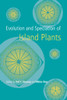
Evolution and Speciation in Plants
$449.00
Description
Plants are autotrophs and sessile, while animals are heterotrophs and motile. Sessility has imposed on plants 94% hermaphroditism, 23% selfing, 3% polyploidization and 39% clonality, in comparison to < 5% herma-phroditism, < 1% selfing and 2% clonality in motile animals. Whereas plants consist of 374,000 species but 1,664 variety/species, animals comprise 1,543,196 species and 210 variety/species. Hence, plants have undergone variety diversity, while animals have species diversity. In animals and plants, the species ratio is reduced from 4.1 animals : 1.0 plant to 1.4 for pollinating animals : 1.0 pollinated plants. In pollination, animals are benefited dietarily but plants are cross pollinated, generating new gene combinations - the raw material for evolution and speciation. For the reduced species diversity in plants, reasons are traced to 90% hermaphroditism, ~ 23% selfing and 39% clonality. Clonality decreases from 100% in 6-7 tissue typed sponges and 3 tissue typed algae drastically to 0.7% in 60 tissue typed worms but gradually to ~ 23% in 60 tissued typed angiosperms. About 12-15, 5-8 and 77-80% of all animal and plant species are distributed in marine, freshwater and terrestrial habitats, respectively. Animals have conserved the 'right' sequence of gametogenesis but plants have gone through a 'wrong' sequence prior to settling with right one albeit with double fertilization in angiosperms. Both animals and plants are 80% male heterogametics. Only 0.5% of them can afford semelparity. While 20 and 57% angiosperms are perennial trees and herbs, annual herbs make up 23% only. In all of them, 85, > 19 and < 1% are pollinated by fast flying animals, wind and water, respectively. Increasing pollen load enhances fruit- and seed-set. In contrast to animals, the life cycle of plants is direct but complicated. Unlike animals, plants have greatly contributed to weathering of rocks and the atmospheric gas composition during the geological past. From dormant spores and seeds of plants, life can be restored after thousands of years.
You May Like

Evolution and Speciation in Protozoa
The polyphyletic Protozoa have explored the possibility of performing almost all metazoan functions with a few subcellular organelles. Their unicellularity and structural simplicity have (i) limited...
$351.00
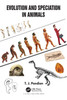
Evolution and Speciation in Animals
This book represents the first attempt to quantify environmental factors and life history traits that accelerate or decelerate species diversity in animals. About 15%, 8% and 77% of species are...
$163.00
Customers Also Viewed
Buy Books Online at BookLoop
Discover your next great read at BookLoop, Australiand online bookstore offering a vast selection of titles across various genres and interests. Whether you're curious about what's trending or searching for graphic novels that captivate, thrilling crime and mystery fiction, or exhilarating action and adventure stories, our curated collections have something for every reader. Delve into imaginative fantasy worlds or explore the realms of science fiction that challenge the boundaries of reality. Fans of contemporary narratives will find compelling stories in our contemporary fiction section. Embark on epic journeys with our fantasy and science fiction titles,
Shop Trending Books and New Releases
Explore our new releases for the most recent additions in romance books, fantasy books, graphic novels, crime and mystery books, science fiction books as well as biographies, cookbooks, self help books, tarot cards, fortunetelling and much more. With titles covering current trends, booktok and bookstagram recommendations, and emerging authors, BookLoop remains your go-to local australian bookstore for buying books online across all book genres.
Shop Best Books By Collection
Stay updated with the literary world by browsing our trending books, featuring the latest bestsellers and critically acclaimed works. Explore titles from popular brands like Minecraft, Pokemon, Star Wars, Bluey, Lonely Planet, ABIA award winners, Peppa Pig, and our specialised collection of ADHD books. At BookLoop, we are committed to providing a diverse and enriching reading experience for all.