Trending Bestseller

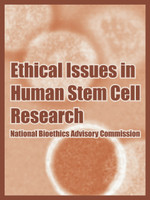
Ethical Issues in Human Stem Cell Research

National Bioethics Advisory Commission

No reviews yet Write a Review
Paperback / softback
27 November 2004
$42.00
Ships in 3-5 business days
Hurry up! Current stock:
In November 1998, President Clinton charged the National Bioethics Advisory Commission with the task of conducting a thorough review of the issues associated with human stem cell research, balancing all ethical and medical considerations. The President's request was made in response to three separate reports that brought to the fore the exciting scientific and clinical prospects of stem cell research while also raising a series of ethical controversies regarding federal sponsorship of scientific inquiry in this area. Scientific reports of the successful isolation and culture of these specialized cells have offered hope of new cures for debilitating and even fatal illness and at the same time have renewed an important national debate about the ethics of research involving human embryos and cadaveric fetal material.The stem cell is a unique and essential cell type found in animals. Many kinds of stem cells are found in the body, with some more differentiated, or committed, to a particular function than others. In other words, when stem cells divide, some of the progeny mature into cells of a specific type (e.g., heart, muscle, blood, or brain cells), while others remain stem cells, ready to repair some of the everyday wear and tear undergone by our bodies. These stem cells are capable of continually reproducing themselves and serve to renew tissue throughout an individual's life. For example, they constantly regenerate the lining of the gut, revitalize skin, and produce a whole range of blood cells. Although the term stem cell commonly is used to refer to the cells within the adult organism that renew tissue (e.g., hematopoietic stem cells, a type of cell found in the blood), the most fundamental and extraordinary of the stem cells are found in the early stage embryo. These embryonic stem (ES) cells, unlike the more differentiated adult stem cells or other cell types, retain the special ability to develop into nearly any cell type. Embryonic germ (EG) cells, which originate from the primordial reproductive cells of the developing fetus, have properties similar to ES cells.It is the potentially unique versatility of the ES and EG cells derived, respectively, from the early stage embryo and cadaveric fetal tissue that presents such unusual scientific and therapeutic promise. Indeed, scientists have long recognized the possibility of using such cells to generate more specialized cells or tissue, which could allow the generation of new cells to be used to treat injuries or diseases, such as Alzheimer's disease, Parkinson's disease, heart disease, and kidney failure. Likewise, scientists regard these cells as an important--- perhaps essential---means for understanding the earliest stages of human development and as an important tool in the development of life-saving drugs and cell-replacement therapies to treat disorders caused by early cell death or impairment.

This product hasn't received any reviews yet. Be the first to review this product!

$42.00
Ships in 3-5 business days
Hurry up! Current stock:

Ethical Issues in Human Stem Cell Research

$42.00

Description

In November 1998, President Clinton charged the National Bioethics Advisory Commission with the task of conducting a thorough review of the issues associated with human stem cell research, balancing all ethical and medical considerations. The President's request was made in response to three separate reports that brought to the fore the exciting scientific and clinical prospects of stem cell research while also raising a series of ethical controversies regarding federal sponsorship of scientific inquiry in this area. Scientific reports of the successful isolation and culture of these specialized cells have offered hope of new cures for debilitating and even fatal illness and at the same time have renewed an important national debate about the ethics of research involving human embryos and cadaveric fetal material.The stem cell is a unique and essential cell type found in animals. Many kinds of stem cells are found in the body, with some more differentiated, or committed, to a particular function than others. In other words, when stem cells divide, some of the progeny mature into cells of a specific type (e.g., heart, muscle, blood, or brain cells), while others remain stem cells, ready to repair some of the everyday wear and tear undergone by our bodies. These stem cells are capable of continually reproducing themselves and serve to renew tissue throughout an individual's life. For example, they constantly regenerate the lining of the gut, revitalize skin, and produce a whole range of blood cells. Although the term stem cell commonly is used to refer to the cells within the adult organism that renew tissue (e.g., hematopoietic stem cells, a type of cell found in the blood), the most fundamental and extraordinary of the stem cells are found in the early stage embryo. These embryonic stem (ES) cells, unlike the more differentiated adult stem cells or other cell types, retain the special ability to develop into nearly any cell type. Embryonic germ (EG) cells, which originate from the primordial reproductive cells of the developing fetus, have properties similar to ES cells.It is the potentially unique versatility of the ES and EG cells derived, respectively, from the early stage embryo and cadaveric fetal tissue that presents such unusual scientific and therapeutic promise. Indeed, scientists have long recognized the possibility of using such cells to generate more specialized cells or tissue, which could allow the generation of new cells to be used to treat injuries or diseases, such as Alzheimer's disease, Parkinson's disease, heart disease, and kidney failure. Likewise, scientists regard these cells as an important--- perhaps essential---means for understanding the earliest stages of human development and as an important tool in the development of life-saving drugs and cell-replacement therapies to treat disorders caused by early cell death or impairment.

Customers Also Viewed

Buy Books Online at BookLoop

Discover your next great read at BookLoop, Australiand online bookstore offering a vast selection of titles across various genres and interests. Whether you're curious about what's trending or searching for graphic novels that captivate, thrilling crime and mystery fiction, or exhilarating action and adventure stories, our curated collections have something for every reader. Delve into imaginative fantasy worlds or explore the realms of science fiction that challenge the boundaries of reality. Fans of contemporary narratives will find compelling stories in our contemporary fiction section. Embark on epic journeys with our fantasy and science fiction titles,

Shop Trending Books and New Releases

Explore our new releases for the most recent additions in romance books, fantasy books, graphic novels, crime and mystery books, science fiction books as well as biographies, cookbooks, self help books, tarot cards, fortunetelling and much more. With titles covering current trends, booktok and bookstagram recommendations, and emerging authors, BookLoop remains your go-to local australian bookstore for buying books online across all book genres.

Shop Best Books By Collection

Stay updated with the literary world by browsing our trending books, featuring the latest bestsellers and critically acclaimed works. Explore titles from popular brands like Minecraft, Pokemon, Star Wars, Bluey, Lonely Planet, ABIA award winners, Peppa Pig, and our specialised collection of ADHD books. At BookLoop, we are committed to providing a diverse and enriching reading experience for all.