Trending Bestseller

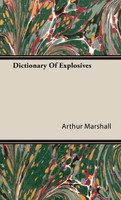
Dictionary Of Explosives

Arthur Marshall

No reviews yet Write a Review
Hardback
04 November 2008
$55.00
Ships in 3-5 business days
Hurry up! Current stock:
INTRODUCTION: IT is a generation since a dictionary of explosives has been published, and, in the meantime, many new explosives have been introduced. It is hoped, therefore, thatthis small volume, giving concise information about these special materials, may prove useful to those who have to deal with them. In Cundill and Thomsons Dictionary of Explosives, issued in 1895, there are many entries of the names of inventors and of mixtures which had been proposed but have never been used commercially, nor are likely to be. As modern explosives were then in their infancy, it was no doubt wise to insert all the available information whether it appeared to be important or not but now it seems to me better to restrict the scope of the dictionary so as to keep its size within moderate limits. Practically only explosives with special or proprietary names are therefore dealt with here. For information concerning chemical substances, such as the nitro-toluenes and other nitro -compounds, reference should be made to the text-books on explosives and chemistry. A few words may, however, be said here about the nitro - celluloses. These are made by treating cellulose with a mixture of nitric and sulphuric acids, and then purifying the product by washing it thoroughly with hot water. The variety of cellulose most used for this purpose is cotton, and the product obtained from it is frequently called nitrocotton, three special varieties of which are collodion cotton, pyrocollodion and guncotton q. r.. The only other form of cellulose which is nitrated on a commercial scale is chemical cellulose obtained by the treatment of wood or straw. Nitrated wood cellulose has long been used fo r the manufacture of smokeless powders for shot-guns, and during the War the Germans made powders for rifled fire-arms from it. No trouble has been spared to make the dictionary com- plete and accurate, but there must inevitably be omissions and errors in it, especially as regards the explosives of foreign countries. The author will be grateful for any additional information that may be sent him. Explosives may be classified in various ways, according to the purpose of the classification, but the great majority of them fall naturally into two main divisions propellants and high explosives. Propellants explode comparatively slowly, and are used to propel projectiles from fire-arms. High explosives are much more rapid in their action, and are used for bursting and shattering. Propellants are of two sorts, according as they are intended for use in shot-guns or rifled fire-arms. Those for shot-guns burn more rapidly than those for the latter, but both practically always contain a considerable proportion of nitrocellulose, gelatinised by means of such solvents as acetone or ether-alcohol, according as it is of high or low nitration. Some contain also nitroglycerine, and are then called nitroglycerine powders, whereas those that do not contain this substance are termed nitrocellulose powders. Many powders also contain other ingredients, as may be seen from the compositions given in this dictionary. Of high explosives an important class is used for charging shells and bombs. As a rule, but not necessarily, these are not the same as the explosives used for mining operations and other general blasting purposes. Another important class is that of the coal-mine explosives, which are designed to give only a short and comparatively cool flame so as to diminish the danger of igniting fire-damp and coal-dust. Nearly half the explosives in this dictionary are coal-mine explosives. The reason for this large number is that no finality has yet been reached as to the best and safest explosives to use in coal mines...

This product hasn't received any reviews yet. Be the first to review this product!

$55.00
Ships in 3-5 business days
Hurry up! Current stock:

Dictionary Of Explosives

$55.00

Description

INTRODUCTION: IT is a generation since a dictionary of explosives has been published, and, in the meantime, many new explosives have been introduced. It is hoped, therefore, thatthis small volume, giving concise information about these special materials, may prove useful to those who have to deal with them. In Cundill and Thomsons Dictionary of Explosives, issued in 1895, there are many entries of the names of inventors and of mixtures which had been proposed but have never been used commercially, nor are likely to be. As modern explosives were then in their infancy, it was no doubt wise to insert all the available information whether it appeared to be important or not but now it seems to me better to restrict the scope of the dictionary so as to keep its size within moderate limits. Practically only explosives with special or proprietary names are therefore dealt with here. For information concerning chemical substances, such as the nitro-toluenes and other nitro -compounds, reference should be made to the text-books on explosives and chemistry. A few words may, however, be said here about the nitro - celluloses. These are made by treating cellulose with a mixture of nitric and sulphuric acids, and then purifying the product by washing it thoroughly with hot water. The variety of cellulose most used for this purpose is cotton, and the product obtained from it is frequently called nitrocotton, three special varieties of which are collodion cotton, pyrocollodion and guncotton q. r.. The only other form of cellulose which is nitrated on a commercial scale is chemical cellulose obtained by the treatment of wood or straw. Nitrated wood cellulose has long been used fo r the manufacture of smokeless powders for shot-guns, and during the War the Germans made powders for rifled fire-arms from it. No trouble has been spared to make the dictionary com- plete and accurate, but there must inevitably be omissions and errors in it, especially as regards the explosives of foreign countries. The author will be grateful for any additional information that may be sent him. Explosives may be classified in various ways, according to the purpose of the classification, but the great majority of them fall naturally into two main divisions propellants and high explosives. Propellants explode comparatively slowly, and are used to propel projectiles from fire-arms. High explosives are much more rapid in their action, and are used for bursting and shattering. Propellants are of two sorts, according as they are intended for use in shot-guns or rifled fire-arms. Those for shot-guns burn more rapidly than those for the latter, but both practically always contain a considerable proportion of nitrocellulose, gelatinised by means of such solvents as acetone or ether-alcohol, according as it is of high or low nitration. Some contain also nitroglycerine, and are then called nitroglycerine powders, whereas those that do not contain this substance are termed nitrocellulose powders. Many powders also contain other ingredients, as may be seen from the compositions given in this dictionary. Of high explosives an important class is used for charging shells and bombs. As a rule, but not necessarily, these are not the same as the explosives used for mining operations and other general blasting purposes. Another important class is that of the coal-mine explosives, which are designed to give only a short and comparatively cool flame so as to diminish the danger of igniting fire-damp and coal-dust. Nearly half the explosives in this dictionary are coal-mine explosives. The reason for this large number is that no finality has yet been reached as to the best and safest explosives to use in coal mines...

Customers Also Viewed

Buy Books Online at BookLoop

Discover your next great read at BookLoop, Australiand online bookstore offering a vast selection of titles across various genres and interests. Whether you're curious about what's trending or searching for graphic novels that captivate, thrilling crime and mystery fiction, or exhilarating action and adventure stories, our curated collections have something for every reader. Delve into imaginative fantasy worlds or explore the realms of science fiction that challenge the boundaries of reality. Fans of contemporary narratives will find compelling stories in our contemporary fiction section. Embark on epic journeys with our fantasy and science fiction titles,

Shop Trending Books and New Releases

Explore our new releases for the most recent additions in romance books, fantasy books, graphic novels, crime and mystery books, science fiction books as well as biographies, cookbooks, self help books, tarot cards, fortunetelling and much more. With titles covering current trends, booktok and bookstagram recommendations, and emerging authors, BookLoop remains your go-to local australian bookstore for buying books online across all book genres.

Shop Best Books By Collection

Stay updated with the literary world by browsing our trending books, featuring the latest bestsellers and critically acclaimed works. Explore titles from popular brands like Minecraft, Pokemon, Star Wars, Bluey, Lonely Planet, ABIA award winners, Peppa Pig, and our specialised collection of ADHD books. At BookLoop, we are committed to providing a diverse and enriching reading experience for all.