Seminar paper from the year 2011 in the subject English Language and Literature Studies - Linguistics, grade: 1,7, University of Bamberg (Lehrstuhl für Englische Sprachwissenschaft ), course: English Etymology, language: English, abstract: "Nothing is perfectly static. Every word, every grammatical element, every locution, every sound and accent is a slowly changing configuration, molded by the invisible and impersonal drift that is the life of language." (Sapir 1949: 171)Reading this quote, in which Edward Sapir describes the nature of language, there are two important points, which I would like to use as a starting point for this paper. The first point is that language undergoes a continuous change and is never "perfectly static". This is especially true for semantics as Ullmann states: "Of all linguistic elements caught up in this drift, meaning is probably the least resistant to change." (Ullmann 1977: 193) The meaning of words is in a constant process of alteration.The second point is that the change mentioned above is done by "the invisible and impersonal drift" or to put it in simple words: The change in language in general and in meaning in particular happens unconsciously to the speakers. This fact poses the following questions: Why do speakers change the meaning of a word if they are not aware of it? What are the forces behind this process, how does this process look like and what are the most relevant types of change? Or in general: What is semantic change?To give answers to exactly these major questions about semantic change, will be the aim of this paper. The basis for this paper will be the theories of Andreas Blank, who even though being a Romanist, developed a precise, extensive and still very comprehensive theoretical work on semantic change, which is "[...] recommendable for historical semanticists of all languages." (Grzega 2000: 233)
Seminar paper from the year 2011 in the subject English Language and Literature Studies - Linguistics, grade: 1,7, University of Bamberg (Lehrstuhl für Englische Sprachwissenschaft ), course: English Etymology, language: English, abstract: "Nothing is perfectly static. Every word, every grammatical element, every locution, every sound and accent is a slowly changing configuration, molded by the invisible and impersonal drift that is the life of language." (Sapir 1949: 171)Reading this quote, in which Edward Sapir describes the nature of language, there are two important points, which I would like to use as a starting point for this paper. The first point is that language undergoes a continuous change and is never "perfectly static". This is especially true for semantics as Ullmann states: "Of all linguistic elements caught up in this drift, meaning is probably the least resistant to change." (Ullmann 1977: 193) The meaning of words is in a constant process of alteration.The second point is that the change mentioned above is done by "the invisible and impersonal drift" or to put it in simple words: The change in language in general and in meaning in particular happens unconsciously to the speakers. This fact poses the following questions: Why do speakers change the meaning of a word if they are not aware of it? What are the forces behind this process, how does this process look like and what are the most relevant types of change? Or in general: What is semantic change?To give answers to exactly these major questions about semantic change, will be the aim of this paper. The basis for this paper will be the theories of Andreas Blank, who even though being a Romanist, developed a precise, extensive and still very comprehensive theoretical work on semantic change, which is "[...] recommendable for historical semanticists of all languages." (Grzega 2000: 233)
This book is a cross-linguistic exploration of semantic and functional change in modal markers. With a focus on Japanese and to a lesser extent Chinese the book is a countercheck to hypotheses built...
This book presents valuable insights on a vast array of topics in the field of environmental studies. The works published in the book were presented within the scope of the 2013 Sopot Forum of Young...
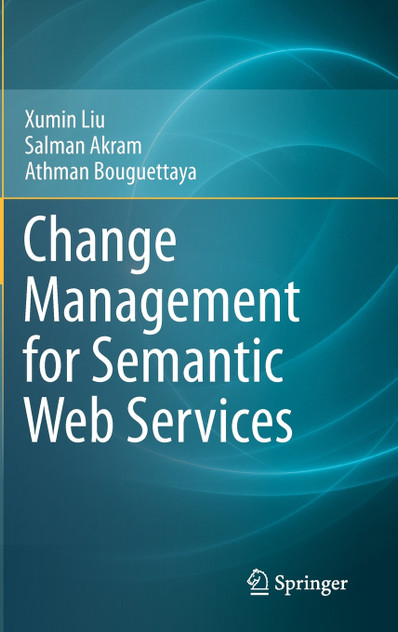
Change Management for Semantic Web Services provides a thorough analysis of change management in the lifecycle of services for databases and workflows, including changes that occur at the ...
Discover your next great read at BookLoop, Australiand online bookstore offering a vast selection of titles across various genres and interests. Whether you're curious about what's trending or searching for graphic novels that captivate, thrilling crime and mystery fiction, or exhilarating action and adventure stories, our curated collections have something for every reader. Delve into imaginative fantasy worlds or explore the realms of science fiction that challenge the boundaries of reality. Fans of contemporary narratives will find compelling stories in our contemporary fiction section. Embark on epic journeys with our fantasy and science fiction titles,
Shop Trending Books and New Releases
Explore our new releases for the most recent additions in romance books, fantasy books, graphic novels, crime and mystery books, science fiction books as well as biographies, cookbooks, self help books, tarot cards, fortunetelling and much more. With titles covering current trends, booktok and bookstagram recommendations, and emerging authors, BookLoop remains your go-to local australian bookstore for buying books online across all book genres.
Shop Best Books By Collection
Stay updated with the literary world by browsing our trending books, featuring the latest bestsellers and critically acclaimed works. Explore titles from popular brands like Minecraft, Pokemon, Star Wars, Bluey, Lonely Planet, ABIA award winners, Peppa Pig, and our specialised collection of ADHD books. At BookLoop, we are committed to providing a diverse and enriching reading experience for all.
Sign In
your cart
Your cart is empty
Menu
Search
PRE-SALES
If you have any questions before making a purchase chat with our online operators to get more information.