SECTION 1. INTRODUCTION TO ENZYMES 1. INTRODUCTION TO ENZYMES 1.1 INTRODUCTION 1.1.1 Why Are Enzymes Needed? 1.1.2 Allosteric Enzymes 1.2 THE STRUCTURES AND CONFORMATIONS OF PROTEINS 1.2.1 Protein Conformations 1.2.2 Protein Structures 1.2.3 Multi-domain Proteins 1.2.3.1 Evolution of Multi-domain Proteins 1.2.3.2 Interaction Between Domains 1.2.3.3 Alternate Oligomer Structures for the Same Enzyme 1.3 NORMAL VALUES FOR CONCENTRATIONS AND RATES 1.3.1 Concentrations of Enzymes 1.3.2 How Fast Are Enzymes? 1.4 BRIEF HISTORY OF ENZYMES 1.5 USEFUL RESOURCES 1.5.1 Websites 1.5.2 Reference Books 1.5.2.1 General Enzymology 1.5.2.2 Allosteric Enzymes 1.5.2.3 Enzyme Kinetics 1.5.2.4 Ligand Binding and Energetics 1.5.2.5 Enzyme Chemistry and Mechanisms 1.5.2.6 Enzymes in Metabolism 1.5.2.7 History of Enzymology 1.5.2.8 Hemoglobin 2. THE LIMITS FOR LIFE DEFINE THE LIMITS FOR ENZYMES 2.1 NATURAL CONSTRAINTS THAT ARE LIMITING 2.1.1 The Possible Concentration of Enzymes is Most Likely to be Limiting 2.1.2 The Rate for Enzymatic Steps Must Be Faster than Natural, but Undesired and Harmful Reactions 2.1.2.1 Oxygen Radicals 2.1.2.2 Metabolic Acidity 2.1.2.3 Ultraviolet Radiation 2.1.3 DNA Modifyng Enzymes: Accuracy Is More Important Than Speed 2.1.4 Signaling Systems: Why Very Slow Rates Can Be Good 2.1.5 What Is the Meaning of the Many Enzymes for Which Slow Rates Have Been Published? 2.2 PARAMETERS FOR BINDING CONSTANTS 2.2.1 The Importance of Being Good Enough 2.2.2 The Range of Binding Constants 2.3 Enzyme specificity: kcat/Km 2.3.1 A Constant kcat/Km May Permit Appropriate Changes for Enzymes With the Same Enzyme Mechanism 2.3.2 The Specificity Constant May Apply to Only One of the Two Substrates for a Group of Enzymes With the Same Mechanism 2.3.3 The Same Enzyme Can Maintain Constant Specificity While Adapting to Changes 2.3.4 The Limits to kcat/Km 2.2.5 Ribozymes and the RNA World? 3. ENZYME KINETICS 3.1 TIME FRAMES FOR MEASURING ENZYME PROPERTIES 3.2 STEADY STATE KINETICS 3.2.1 The Meaning of v and kcat 3.3 The Most Common Graphic Plots 3.3.1 The Michaelis-Menten Plot 3.3.2 The Lineweaver-Burk Plot 3.3.3 The Eadie-Hofstee Plot 3.3.4 The Hill Plot 3.4 Interpreting Binding Constants 3.5 ENERGETICS OF ENZYME REACTIONS 3.5.1 Michaelis-Menten Model 3.5.2 Briggs-Haldane Model 3.5.3 Additional Intermediates Model 4. PROPERTIES AND EVOLUTION OF ALLOSTERIC ENZYMES 4.1 DIFFERENT PROCESSES FOR CONTROLLING THE ACTIVITY OF AN ENZYMATIC REACTION 4.1.1 Modifying the Activity of an Existing Enzyme 4.1.2 Modifying activity by ligand binding 4.1.3 Modifying activity by covalent modification 4.1.4 Modifying activity by altered gene transcription 4.1.5 Modifying activity by proteolysis 4.2 EVOLVING ALLOSTERIC ENZYMES 4.2.1 Allostric Regulation by Stabilizing the Appropriate Species in an Ensemble 4.2.2 Evolution of Allosteric Enzymes 4.3 URACIL PHOPHORIBOSYLTRANSFERASE: DIFFERENT REGULATORY STRATEGIES FOR THE SAME ENZYME 5.
SECTION 1. INTRODUCTION TO ENZYMES 1. INTRODUCTION TO ENZYMES 1.1 INTRODUCTION 1.1.1 Why Are Enzymes Needed? 1.1.2 Allosteric Enzymes 1.2 THE STRUCTURES AND CONFORMATIONS OF PROTEINS 1.2.1 Protein Conformations 1.2.2 Protein Structures 1.2.3 Multi-domain Proteins 1.2.3.1 Evolution of Multi-domain Proteins 1.2.3.2 Interaction Between Domains 1.2.3.3 Alternate Oligomer Structures for the Same Enzyme 1.3 NORMAL VALUES FOR CONCENTRATIONS AND RATES 1.3.1 Concentrations of Enzymes 1.3.2 How Fast Are Enzymes? 1.4 BRIEF HISTORY OF ENZYMES 1.5 USEFUL RESOURCES 1.5.1 Websites 1.5.2 Reference Books 1.5.2.1 General Enzymology 1.5.2.2 Allosteric Enzymes 1.5.2.3 Enzyme Kinetics 1.5.2.4 Ligand Binding and Energetics 1.5.2.5 Enzyme Chemistry and Mechanisms 1.5.2.6 Enzymes in Metabolism 1.5.2.7 History of Enzymology 1.5.2.8 Hemoglobin 2. THE LIMITS FOR LIFE DEFINE THE LIMITS FOR ENZYMES 2.1 NATURAL CONSTRAINTS THAT ARE LIMITING 2.1.1 The Possible Concentration of Enzymes is Most Likely to be Limiting 2.1.2 The Rate for Enzymatic Steps Must Be Faster than Natural, but Undesired and Harmful Reactions 2.1.2.1 Oxygen Radicals 2.1.2.2 Metabolic Acidity 2.1.2.3 Ultraviolet Radiation 2.1.3 DNA Modifyng Enzymes: Accuracy Is More Important Than Speed 2.1.4 Signaling Systems: Why Very Slow Rates Can Be Good 2.1.5 What Is the Meaning of the Many Enzymes for Which Slow Rates Have Been Published? 2.2 PARAMETERS FOR BINDING CONSTANTS 2.2.1 The Importance of Being Good Enough 2.2.2 The Range of Binding Constants 2.3 Enzyme specificity: kcat/Km 2.3.1 A Constant kcat/Km May Permit Appropriate Changes for Enzymes With the Same Enzyme Mechanism 2.3.2 The Specificity Constant May Apply to Only One of the Two Substrates for a Group of Enzymes With the Same Mechanism 2.3.3 The Same Enzyme Can Maintain Constant Specificity While Adapting to Changes 2.3.4 The Limits to kcat/Km 2.2.5 Ribozymes and the RNA World? 3. ENZYME KINETICS 3.1 TIME FRAMES FOR MEASURING ENZYME PROPERTIES 3.2 STEADY STATE KINETICS 3.2.1 The Meaning of v and kcat 3.3 The Most Common Graphic Plots 3.3.1 The Michaelis-Menten Plot 3.3.2 The Lineweaver-Burk Plot 3.3.3 The Eadie-Hofstee Plot 3.3.4 The Hill Plot 3.4 Interpreting Binding Constants 3.5 ENERGETICS OF ENZYME REACTIONS 3.5.1 Michaelis-Menten Model 3.5.2 Briggs-Haldane Model 3.5.3 Additional Intermediates Model 4. PROPERTIES AND EVOLUTION OF ALLOSTERIC ENZYMES 4.1 DIFFERENT PROCESSES FOR CONTROLLING THE ACTIVITY OF AN ENZYMATIC REACTION 4.1.1 Modifying the Activity of an Existing Enzyme 4.1.2 Modifying activity by ligand binding 4.1.3 Modifying activity by covalent modification 4.1.4 Modifying activity by altered gene transcription 4.1.5 Modifying activity by proteolysis 4.2 EVOLVING ALLOSTERIC ENZYMES 4.2.1 Allostric Regulation by Stabilizing the Appropriate Species in an Ensemble 4.2.2 Evolution of Allosteric Enzymes 4.3 URACIL PHOPHORIBOSYLTRANSFERASE: DIFFERENT REGULATORY STRATEGIES FOR THE SAME ENZYME 5.
The aim of this monograph is to summarize the essential features which characterize the behavior of regulatory systems. Firstly we discuss the laws which govern ligand binding in thermodynamic terms...
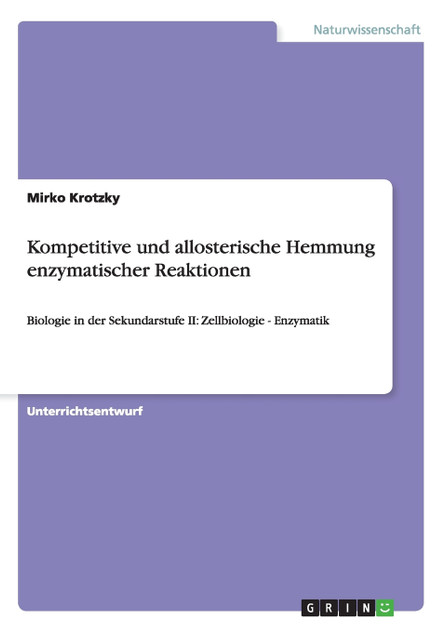
Unterrichtsentwurf aus dem Jahr 2013 im Fachbereich Didaktik - Biologie, Note: 1,3, , Veranstaltung: Verbeamtung auf Lebenszeit, Sprache: Deutsch, Abstract: Die vorliegende Unterrichtsreihe "Die...
Discover your next great read at BookLoop, Australiand online bookstore offering a vast selection of titles across various genres and interests. Whether you're curious about what's trending or searching for graphic novels that captivate, thrilling crime and mystery fiction, or exhilarating action and adventure stories, our curated collections have something for every reader. Delve into imaginative fantasy worlds or explore the realms of science fiction that challenge the boundaries of reality. Fans of contemporary narratives will find compelling stories in our contemporary fiction section. Embark on epic journeys with our fantasy and science fiction titles,
Shop Trending Books and New Releases
Explore our new releases for the most recent additions in romance books, fantasy books, graphic novels, crime and mystery books, science fiction books as well as biographies, cookbooks, self help books, tarot cards, fortunetelling and much more. With titles covering current trends, booktok and bookstagram recommendations, and emerging authors, BookLoop remains your go-to local australian bookstore for buying books online across all book genres.
Shop Best Books By Collection
Stay updated with the literary world by browsing our trending books, featuring the latest bestsellers and critically acclaimed works. Explore titles from popular brands like Minecraft, Pokemon, Star Wars, Bluey, Lonely Planet, ABIA award winners, Peppa Pig, and our specialised collection of ADHD books. At BookLoop, we are committed to providing a diverse and enriching reading experience for all.
Sign In
your cart
Your cart is empty
Menu
Search
PRE-SALES
If you have any questions before making a purchase chat with our online operators to get more information.