I. Additives Which Modify Physical Properties.- 1 Plasticizers.- 1.1 Thermodynamic Basis of Macromolecular Mixtures.- 1.1.1 Solubility of Polymers in Solvents.- 1.1.2 Flory-Huggins Interaction Parameter.- 1.1.3 Solubility Parameter.- 1.1.4 Phase Separation Phenomena.- 1.2 Reversible Gelation.- 1.3 Theory of Plasticization.- 1.3.1 Effect of Plasticizers on Thermal Mechanical Deformation of Rigid Polymeric Chains.- 1.3.2 Effect of Plasticizers on Tb and Tg Values.- 1.3.3 The Free Volume in Amorphous Polymers.- 1.3.4 Primary and Secondary Plasticizers.- 1.4. Classification of Plasticizers.- 1.4.1 Polar Aromatic and Polar Aliphatic Plasticizers.- 1.4.2 Characteristics of Plasticizers According to Their Chemical Structure.- 1.5. Plasticizer Anomalies and Antiplasticization.- 1.6. Loss of Plasticizers.- References.- 2 Lubricants and Mold-Release Agents.- 2.1 Lubricants.- 2.1.1 Principles of Their Action.- 2.1.2 Classification of PVC Lubricants According to Their Specific Action.- 2.1.3 Classification of PVC Lubricants According to Their Chemical Structure.- 2.1.4 Lubricants for Polyolefins.- 2.1.5 Basic Properties Necessary for Lubricants.- 2.2 Mold-Release Agents.- 2.2.1 Principles of Action.- 2.2.2 Some Examples of Mold-Release Agents.- References.- 3 Macromolecular Modifiers.- 3.1 Introduction.- 3.2 Homogenization of Polymer-Polymer Systems.- 3.3 Two-Phase Microheterogeneous Polymer-Polymer Systems.- 3.3.1 Effect of Glassy Polymer Matrix Phase on Impact Strength.- 3.3.2 Effect of Rubbery Phase Dispersed in Glassy Matrix on Impact Strength.- 3.3.3 Theory on Toughness of Microheterogeneous Two-Phase Polymer-Polymer Blends.- 3.4 Impact Modifiers for Glassy Polymers.- 3.4.1 Chlorinated Polyethylene (CPE).- 3.4.2 Ethylene-(Vinyl Acetate) Copolymers (EVA).- 3.4.3 Acrylic and Methacrylic Elastomers and MBS and ABS Terpolymers.- 3.4.4 Rubbers.- 3.5 Macromolecular Modifiers Used as Polymer Processing Aids.- References.- 4 Reinforcing Fillers, Reinforcing Agents, and Coupling Agents.- 4.1 Fillers.- 4.1.1 General Characteristics of Fillers and Composites.- 4.1.2 Fillers for Thermosetting Resins.- 4.1.3 Fillers for Plastomers.- 4.1.3.1 Polymer Reinforcement Factors.- 4.1.3.2 Classification of Fillers for Plastomers According to Their Reinforcement Activity.- 4.2 Reinforcing Agents for Laminates.- 4.2.1 Effect of Fillers or Reinforcing Agents on Basic Physical Properties of Composites.- 4.3 The Different Types of Fillers and Reinforcing Agents.- 4.3.1 Glass Fillers and Reinforcing Agents.- 4.3.1.1 Glass Fibers.- 4.3.1.2 Glass Microspheres.- 4.3.1.3 Glass Flakes.- 4.3.2 Fillers and Reinforcing Agents Made of Other Materials.- 4.3.2.1 Fibrous and Flaky Fillers and Fibrous Reinforcing Agents.- 4.3.2.2 Whiskers, Microfibers, and Powdered Fillers.- 4.3.3 Effect of Content and Size of Fillers on Composite Properties.- 4.4 Coupling Agents.- 4.4.1 Silane Coupling Agents.- 4.4.1.1 Action Mechanism.- 4.4.2 Organotitanate Coupling Agents.- 4.4.2.1 Action Mechanism.- 4.4.3 Other Types of Coupling Agents.- 4.4.4 Application Modes for Coupling Agents.- 4.4.5 Recommendations on the Use of Fillers and Filling Methods.- References.- 5 Colorants and Brightening Agents.- 5.1 Colorants.- 5.1.1 Inorganic Pigments.- 5.1.2 Organic Pigments.- 5.1.3 Criteria for Selection of Pigments.- 5.2 Brightening Agents.- 5.3 Methods Used for the Coloration of Plastics.- 5.3.1 Some Examples of Methods Used for the Coloration of Most Important Plastics.- References.- 6 Chemical and Physical Blowing Agents.- 6.1 Chemical Blowing Agents.- 6.1.1 Inorganic Agents.- 6.1.2 Organic Agents.- 6.1.2.1 Characteristics.- 6.1.3 Factors Acting on Blowing.- 6.2 Physical Blowing Agents.- References.- 7 Antistatic Agents.- 7.1 Introduction.- 7.2 Efficiency and Mechanism of Antistatic Agent Action.- 7.3 The Use of Antistatic Agents.- 7.3.1 Antistatic Agents Containing Nitrogen.- 7.3.2 Antistatic Agents Containing Phosphorus.- 7.3.3 Antistatic Agents Containing Sulfur.- 7.3.4 Betaine-Type Antist...
I. Additives Which Modify Physical Properties.- 1 Plasticizers.- 1.1 Thermodynamic Basis of Macromolecular Mixtures.- 1.1.1 Solubility of Polymers in Solvents.- 1.1.2 Flory-Huggins Interaction Parameter.- 1.1.3 Solubility Parameter.- 1.1.4 Phase Separation Phenomena.- 1.2 Reversible Gelation.- 1.3 Theory of Plasticization.- 1.3.1 Effect of Plasticizers on Thermal Mechanical Deformation of Rigid Polymeric Chains.- 1.3.2 Effect of Plasticizers on Tb and Tg Values.- 1.3.3 The Free Volume in Amorphous Polymers.- 1.3.4 Primary and Secondary Plasticizers.- 1.4. Classification of Plasticizers.- 1.4.1 Polar Aromatic and Polar Aliphatic Plasticizers.- 1.4.2 Characteristics of Plasticizers According to Their Chemical Structure.- 1.5. Plasticizer Anomalies and Antiplasticization.- 1.6. Loss of Plasticizers.- References.- 2 Lubricants and Mold-Release Agents.- 2.1 Lubricants.- 2.1.1 Principles of Their Action.- 2.1.2 Classification of PVC Lubricants According to Their Specific Action.- 2.1.3 Classification of PVC Lubricants According to Their Chemical Structure.- 2.1.4 Lubricants for Polyolefins.- 2.1.5 Basic Properties Necessary for Lubricants.- 2.2 Mold-Release Agents.- 2.2.1 Principles of Action.- 2.2.2 Some Examples of Mold-Release Agents.- References.- 3 Macromolecular Modifiers.- 3.1 Introduction.- 3.2 Homogenization of Polymer-Polymer Systems.- 3.3 Two-Phase Microheterogeneous Polymer-Polymer Systems.- 3.3.1 Effect of Glassy Polymer Matrix Phase on Impact Strength.- 3.3.2 Effect of Rubbery Phase Dispersed in Glassy Matrix on Impact Strength.- 3.3.3 Theory on Toughness of Microheterogeneous Two-Phase Polymer-Polymer Blends.- 3.4 Impact Modifiers for Glassy Polymers.- 3.4.1 Chlorinated Polyethylene (CPE).- 3.4.2 Ethylene-(Vinyl Acetate) Copolymers (EVA).- 3.4.3 Acrylic and Methacrylic Elastomers and MBS and ABS Terpolymers.- 3.4.4 Rubbers.- 3.5 Macromolecular Modifiers Used as Polymer Processing Aids.- References.- 4 Reinforcing Fillers, Reinforcing Agents, and Coupling Agents.- 4.1 Fillers.- 4.1.1 General Characteristics of Fillers and Composites.- 4.1.2 Fillers for Thermosetting Resins.- 4.1.3 Fillers for Plastomers.- 4.1.3.1 Polymer Reinforcement Factors.- 4.1.3.2 Classification of Fillers for Plastomers According to Their Reinforcement Activity.- 4.2 Reinforcing Agents for Laminates.- 4.2.1 Effect of Fillers or Reinforcing Agents on Basic Physical Properties of Composites.- 4.3 The Different Types of Fillers and Reinforcing Agents.- 4.3.1 Glass Fillers and Reinforcing Agents.- 4.3.1.1 Glass Fibers.- 4.3.1.2 Glass Microspheres.- 4.3.1.3 Glass Flakes.- 4.3.2 Fillers and Reinforcing Agents Made of Other Materials.- 4.3.2.1 Fibrous and Flaky Fillers and Fibrous Reinforcing Agents.- 4.3.2.2 Whiskers, Microfibers, and Powdered Fillers.- 4.3.3 Effect of Content and Size of Fillers on Composite Properties.- 4.4 Coupling Agents.- 4.4.1 Silane Coupling Agents.- 4.4.1.1 Action Mechanism.- 4.4.2 Organotitanate Coupling Agents.- 4.4.2.1 Action Mechanism.- 4.4.3 Other Types of Coupling Agents.- 4.4.4 Application Modes for Coupling Agents.- 4.4.5 Recommendations on the Use of Fillers and Filling Methods.- References.- 5 Colorants and Brightening Agents.- 5.1 Colorants.- 5.1.1 Inorganic Pigments.- 5.1.2 Organic Pigments.- 5.1.3 Criteria for Selection of Pigments.- 5.2 Brightening Agents.- 5.3 Methods Used for the Coloration of Plastics.- 5.3.1 Some Examples of Methods Used for the Coloration of Most Important Plastics.- References.- 6 Chemical and Physical Blowing Agents.- 6.1 Chemical Blowing Agents.- 6.1.1 Inorganic Agents.- 6.1.2 Organic Agents.- 6.1.2.1 Characteristics.- 6.1.3 Factors Acting on Blowing.- 6.2 Physical Blowing Agents.- References.- 7 Antistatic Agents.- 7.1 Introduction.- 7.2 Efficiency and Mechanism of Antistatic Agent Action.- 7.3 The Use of Antistatic Agents.- 7.3.1 Antistatic Agents Containing Nitrogen.- 7.3.2 Antistatic Agents Containing Phosphorus.- 7.3.3 Antistatic Agents Containing Sulfur.- 7.3.4 Betaine-Type Antist...
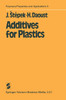
Although plastics are extremely successful commercially, they would never reach acceptable performance standards either in properties or processing without the incorporation of additives. With the...
Title: with additions.Publisher: British Library, Historical Print EditionsThe British Library is the national library of the United Kingdom. It is one of the world's largest research libraries...
Discover your next great read at BookLoop, Australiand online bookstore offering a vast selection of titles across various genres and interests. Whether you're curious about what's trending or searching for graphic novels that captivate, thrilling crime and mystery fiction, or exhilarating action and adventure stories, our curated collections have something for every reader. Delve into imaginative fantasy worlds or explore the realms of science fiction that challenge the boundaries of reality. Fans of contemporary narratives will find compelling stories in our contemporary fiction section. Embark on epic journeys with our fantasy and science fiction titles,
Shop Trending Books and New Releases
Explore our new releases for the most recent additions in romance books, fantasy books, graphic novels, crime and mystery books, science fiction books as well as biographies, cookbooks, self help books, tarot cards, fortunetelling and much more. With titles covering current trends, booktok and bookstagram recommendations, and emerging authors, BookLoop remains your go-to local australian bookstore for buying books online across all book genres.
Shop Best Books By Collection
Stay updated with the literary world by browsing our trending books, featuring the latest bestsellers and critically acclaimed works. Explore titles from popular brands like Minecraft, Pokemon, Star Wars, Bluey, Lonely Planet, ABIA award winners, Peppa Pig, and our specialised collection of ADHD books. At BookLoop, we are committed to providing a diverse and enriching reading experience for all.
Sign In
your cart
Your cart is empty
Menu
Search
PRE-SALES
If you have any questions before making a purchase chat with our online operators to get more information.