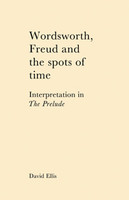
The passages in Wordsworth's Prelude known as the 'spots of time' have always been regarded as important and impressive but have seldom been satisfactorily explained. Whilst there is general agreement about how well they are written, there is none at all about what they might mean. David Ellis sets out to resolve this paradox and, since the passages which concern him deal with very private moments in Wordsworth's life and have an interest which is largely psychological, he considers how far a knowledge of Freud might be relevant to their understanding. His attempt to clarify what is at once the most intriguing and baffling aspect of Wordsworth's great autobiographical poem leads Ellis to make challenging suggestions about how the whole work should be read. This is a book for the student and general reader of Wordsworth as well as for specialists. It should also appeal to those with an interest in the nature of autobiography or the use (and the misuse) of psych-analytic concepts in literary interpretation.
Time and timelessness are fundamental principles of psychoanalysis yet Freud does not present a consolidated theory of temporality. In this book Kelly Noel-Smith pieces together Freud's...
This original study is the first fully to acknowledge the impact of early grief on Wordsworth's poetry and to integrate it into a critical account of how his art developed from 1787 to 1813.
...
This work has been selected by scholars as being culturally important, and is part of the knowledge base of civilization as we know it.This work is in the "public domain in the United States of...