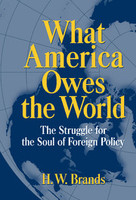
For two hundred years, Americans have believed that they have an obligation to improve the lot of humanity. This belief has consistently shaped US foreign policy. Yet within this consensus, two schools of thought have contended: the 'exemplarist' school (Brands' term) which holds that what America chiefly owes the world is the benign example of a well-functioning democracy, and the 'vindicationist' school which argues that force must sometimes supplement a good example. In this book, H. W. Brands traces the evolution of these two schools as they emerged in the thinking and writing of the most important public thinkers of the last two centuries. This book, first published in 1998, is both an intellectual and moral history of US foreign policy and a guide to the fundamental question of America's relations with the rest of the world - a question more pressing than ever in the confusion that has succeeded the Cold War: What does America owe the world?
In this book, the author explores the impact of Martin Luther and the Reformation on the world at large. He argues that Luther's ideas and actions were instrumental in shaping modern society and that...
This work has been selected by scholars as being culturally important, and is part of the knowledge base of civilization as we know it.This work is in the "public domain in the United States of...
'The weight of judgement and restraint faded from Emma. This was a different type of numbness; her suppressed feelings rose to the surface, but she was indifferent. She was separate. Anaesthesia...
The study of news and news practice is rich in examinations of what journalists owe to society. However, this book looks at what journalists can expect from society: what roles ownership structures,...