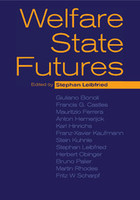
The welfare state is in hard times, according to today's consensus. The deterioration of exceptional economic performance - the basis for the 'Golden Age' of welfare capitalism - seems irreversible: this has slowed down welfare state expansion and radically shifted the ground for discussion on the future of the welfare state. This volume takes stock of 'the state of the welfare state': how can we build a theory of the welfare state? How did the post-World War II welfare state relate to economic development? How do welfare states change? How did the reforms of pension systems - a key welfare state sector - develop in OECD countries? How did the most developed 'Nordic welfare state' fare? How viable are today's advanced welfare states in the international economy? How may we recast the European welfare states for the twenty-first century?
This volume presents a thought provoking analysis of key welfare state issues engaging policy makers across the globe. It provides a unique and comprehensive evaluation of the state of welfare...
This book argues that the welfare state cannot be understood purely as a set of social policy arrangements, but must be seen as a political institution, intended to achieve certain political...