Seminar paper from the year 2008 in the subject American Studies - Literature, grade: 1,0, Dresden Technical University (Institut für Anglistik/Amerikanistik), course: The 1950s and 1960s in American Literature, language: English, abstract: 1 IntroductionSylvia Plath ended her Life by gassing herself in a stove on February 11th in 1963. This is not the most important fact about the poet and yet the best known detail of her life. Since her death, Plath's work and her life have been irrevocably interblended. Thus, she is either interpreted as a courageous but suppressed female writer or as a dark and mentally disordered summoner of death. In either case she had been mystified as a kind of tragic hero and some critics continue with this kind of blind "Plathophilia" (Bachner 2008) until today. Although her artistic work is mainly composed of poems, her only novel will be the object for the following interpretation of the protagonist's alienation in comparison to respective events in the author's life.Being so closely connected it is impossible to reflect on the novel without factoring her life into the described events of alienation in The Bell Jar. Thus, after introducing the influencing social circumstances of her time, the paper concentrates on Sylvia Plath's degree of authenticity in her writing. On the basis of these findings, two different stages of the protagonist's alienation are to be developed and afterwards her ambivalent relation towards the opposite sex is being discussed as a major consequence to her schizoid attitudes towards her desired social status. Finally, the analysis deals with Plath's strong symbolism, in which the mirror serves as frequent metaphoric means to illustrate estrangement not only from the outside world, but also from her inner self. Another one, the fig-tree, stands for the inability to decide for a certain way of life. Both are crucial problems of the protagonist Esther Greenwood and it is to examine, in how far they reflect on
Seminar paper from the year 2008 in the subject American Studies - Literature, grade: 1,0, Dresden Technical University (Institut für Anglistik/Amerikanistik), course: The 1950s and 1960s in American Literature, language: English, abstract: 1 IntroductionSylvia Plath ended her Life by gassing herself in a stove on February 11th in 1963. This is not the most important fact about the poet and yet the best known detail of her life. Since her death, Plath's work and her life have been irrevocably interblended. Thus, she is either interpreted as a courageous but suppressed female writer or as a dark and mentally disordered summoner of death. In either case she had been mystified as a kind of tragic hero and some critics continue with this kind of blind "Plathophilia" (Bachner 2008) until today. Although her artistic work is mainly composed of poems, her only novel will be the object for the following interpretation of the protagonist's alienation in comparison to respective events in the author's life.Being so closely connected it is impossible to reflect on the novel without factoring her life into the described events of alienation in The Bell Jar. Thus, after introducing the influencing social circumstances of her time, the paper concentrates on Sylvia Plath's degree of authenticity in her writing. On the basis of these findings, two different stages of the protagonist's alienation are to be developed and afterwards her ambivalent relation towards the opposite sex is being discussed as a major consequence to her schizoid attitudes towards her desired social status. Finally, the analysis deals with Plath's strong symbolism, in which the mirror serves as frequent metaphoric means to illustrate estrangement not only from the outside world, but also from her inner self. Another one, the fig-tree, stands for the inability to decide for a certain way of life. Both are crucial problems of the protagonist Esther Greenwood and it is to examine, in how far they reflect on
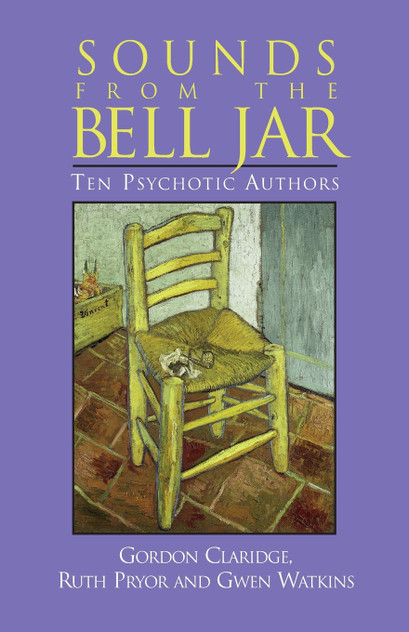
This groundbreaking work is a unique collaboration between an Oxford University psychologist and two literary critics. It explores the lives and works of 10 authors - among them Virginia Woolf and...
This work has been selected by scholars as being culturally important, and is part of the knowledge base of civilization as we know it. This work was reproduced from the original artifact, and...
Under a Glass Bell is one of Nin's finest collections of stories. First published in 1944, it attracted the attention of Edmond Wilson, who reviewed the collection in The New Yorker. It was in these...
Bachelor Thesis from the year 2019 in the subject American Studies - Literature, grade: 2,3, University of Dusseldorf "Heinrich Heine", language: English, abstract: The purpose of this thesis is to...
Discover your next great read at BookLoop, Australiand online bookstore offering a vast selection of titles across various genres and interests. Whether you're curious about what's trending or searching for graphic novels that captivate, thrilling crime and mystery fiction, or exhilarating action and adventure stories, our curated collections have something for every reader. Delve into imaginative fantasy worlds or explore the realms of science fiction that challenge the boundaries of reality. Fans of contemporary narratives will find compelling stories in our contemporary fiction section. Embark on epic journeys with our fantasy and science fiction titles,
Shop Trending Books and New Releases
Explore our new releases for the most recent additions in romance books, fantasy books, graphic novels, crime and mystery books, science fiction books as well as biographies, cookbooks, self help books, tarot cards, fortunetelling and much more. With titles covering current trends, booktok and bookstagram recommendations, and emerging authors, BookLoop remains your go-to local australian bookstore for buying books online across all book genres.
Shop Best Books By Collection
Stay updated with the literary world by browsing our trending books, featuring the latest bestsellers and critically acclaimed works. Explore titles from popular brands like Minecraft, Pokemon, Star Wars, Bluey, Lonely Planet, ABIA award winners, Peppa Pig, and our specialised collection of ADHD books. At BookLoop, we are committed to providing a diverse and enriching reading experience for all.
Sign In
your cart
Your cart is empty
Menu
Search
PRE-SALES
If you have any questions before making a purchase chat with our online operators to get more information.