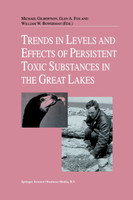
Trends in Levels and Effects of Persistent Toxic Substances in the Great Lakes
Articles from the Workshop on Environmental Results, hosted in Windsor, Ontario, by the Great Lakes Science Advisory Board of the International Joint Commission,
`Are the Great Lakes getting better or worse?' This is the question that the public, scientists and managers are asking the International Joint Commission after a quarter-century of cooperative action by the United States and Canadian governments to clean up the Great Lakes. This volume contains papers from the workshop on Environmental Results, hosted in Windsor, Ontario, by the Great Lakes Science Advisory Board of the International Joint Commission, on September 12 and 13, 1996. The Great Lakes have been through almost a century of severe pollution from the manufacture, use and disposal of chemicals. In the 1960s wildlife biologists started to investigate the outbreaks of reproductive failure in fish-eating birds and ranch mink and to link these to exposure to organochlorine compounds. Human health researchers in the 1980s and 1990s linked growth retardation, behavioral anomalies and deficits in cognitive development with maternal consumption of Great Lakes fish prior to pregnancy. The Great Lakes became the laboratory where the theory of endocrine disruptors was first formulated. Now a group of Great Lakes scientists, hosted by the International Joint Commission, has compiled the story of the trends in the concentrations and effects of persistent toxic substances on wildlife and humans. The technical papers review the suitability of various organisms as indicators, and present the results of long-term monitoring of the concentrations and of the incidence of effects. The evidence shows that there was an enormous improvement in the late 1970s, but that in the late 1990s there are still concentrations of some persistent toxic substances that have stubbornly remained at levels that continue to cause toxicological effects.
Trends in Levels and Effects of Persistent Toxic Substances in the Great Lakes
RRP:
$335.00
Description
`Are the Great Lakes getting better or worse?' This is the question that the public, scientists and managers are asking the International Joint Commission after a quarter-century of cooperative action by the United States and Canadian governments to clean up the Great Lakes. This volume contains papers from the workshop on Environmental Results, hosted in Windsor, Ontario, by the Great Lakes Science Advisory Board of the International Joint Commission, on September 12 and 13, 1996. The Great Lakes have been through almost a century of severe pollution from the manufacture, use and disposal of chemicals. In the 1960s wildlife biologists started to investigate the outbreaks of reproductive failure in fish-eating birds and ranch mink and to link these to exposure to organochlorine compounds. Human health researchers in the 1980s and 1990s linked growth retardation, behavioral anomalies and deficits in cognitive development with maternal consumption of Great Lakes fish prior to pregnancy. The Great Lakes became the laboratory where the theory of endocrine disruptors was first formulated. Now a group of Great Lakes scientists, hosted by the International Joint Commission, has compiled the story of the trends in the concentrations and effects of persistent toxic substances on wildlife and humans. The technical papers review the suitability of various organisms as indicators, and present the results of long-term monitoring of the concentrations and of the incidence of effects. The evidence shows that there was an enormous improvement in the late 1970s, but that in the late 1990s there are still concentrations of some persistent toxic substances that have stubbornly remained at levels that continue to cause toxicological effects.
This Comprehensive Guide to the Registry of Toxic Effects of Chemical Substances (RTECS®) describes the types of data, and their format, contained in the January 1997 update of the RTECS®. Since this...
This supplement contains the papers submitted at EUROTOX 88, the joint Congress of the European Society of Toxicology and the Federation of the European Societies of Toxicology. The theme was one of...
This pioneering study explores the effects of wind and barometric pressure on the hydrology of the Great Lakes, laying the groundwork for future research in this important field. With detailed...
Discover your next great read at BookLoop, Australiand online bookstore offering a vast selection of titles across various genres and interests. Whether you're curious about what's trending or searching for graphic novels that captivate, thrilling crime and mystery fiction, or exhilarating action and adventure stories, our curated collections have something for every reader. Delve into imaginative fantasy worlds or explore the realms of science fiction that challenge the boundaries of reality. Fans of contemporary narratives will find compelling stories in our contemporary fiction section. Embark on epic journeys with our fantasy and science fiction titles,
Shop Trending Books and New Releases
Explore our new releases for the most recent additions in romance books, fantasy books, graphic novels, crime and mystery books, science fiction books as well as biographies, cookbooks, self help books, tarot cards, fortunetelling and much more. With titles covering current trends, booktok and bookstagram recommendations, and emerging authors, BookLoop remains your go-to local australian bookstore for buying books online across all book genres.
Shop Best Books By Collection
Stay updated with the literary world by browsing our trending books, featuring the latest bestsellers and critically acclaimed works. Explore titles from popular brands like Minecraft, Pokemon, Star Wars, Bluey, Lonely Planet, ABIA award winners, Peppa Pig, and our specialised collection of ADHD books. At BookLoop, we are committed to providing a diverse and enriching reading experience for all.
Sign In
your cart
Your cart is empty
Menu
Search
PRE-SALES
If you have any questions before making a purchase chat with our online operators to get more information.