


Translating Happiness
Delivery estimate
Please enter a valid 4-digit Australian postcode.
to ·
Delivery estimate
Please enter a valid 4-digit Australian postcode.
to ·
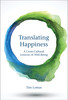
Translating Happiness
Description
Western psychology is rooted in the philosophies and epistemologies of Western culture. But what of concepts and insights from outside this frame of reference? Certain terms not easily translatable into English-for example, nirvaṇa (from Sanskrit), or agapē (from Classical Greek), or turangawaewae (from Maori)-are rich with meaning but largely unavailable to English-speaking students and seekers of wellbeing. In this book, Tim Lomas argues that engaging with "untranslatable" terms related to well-being can enrich not only our understanding but also our experience. We can use these words, Lomas suggests, to understand and express feelings and experiences that were previously inexpressible.
Lomas examines 400 words from 80 languages, arranges them thematically, and develops a theoretical framework that highlights the varied dimensions of well-being and traces the connections between them. He identifies three basic dimensions of well-being-feelings, relationships, and personal development-and then explores each in turn through untranslatable words. nanda, for example, usually translated as bliss, can have spiritual associations in Buddhist and Hindu contexts; kefi in Greek expresses an intense emotional state-often made more intense by alcohol. The Japanese concept of koi no yokan means a premonition or presentiment of love, capturing the elusive and vertiginous feeling of being about to fall for someone, imbued with melancholy and uncertainty; the Yiddish term mensch has been borrowed from its Judaic and religious connotations to describe an all-around good human being; and Finnish offers sisu-inner determination in the face of adversity.
Expanding the lexicon of well-being in this way showcases the richness of cultural diversity while reminding us powerfully of our common humanity. Lomas's website, www.drtimlomas.com/lexicography, allows interested readers to contribute their own words and interpretations.
How embracing untranslatable terms for well-being-from the Finnish sisu to the Yiddish mensch-can enrich our emotional understanding and experience.
Western psychology is rooted in the philosophies and epistemologies of Western culture. But what of concepts and insights from outside this frame of reference? Certain terms not easily translatable into English-for example, nirvaṇa (from Sanskrit), or agapē (from Classical Greek), or turangawaewae (from Maori)-are rich with meaning but largely unavailable to English-speaking students and seekers of wellbeing. In this book, Tim Lomas argues that engaging with "untranslatable" terms related to well-being can enrich not only our understanding but also our experience. We can use these words, Lomas suggests, to understand and express feelings and experiences that were previously inexpressible.
Lomas examines 400 words from 80 languages, arranges them thematically, and develops a theoretical framework that highlights the varied dimensions of well-being and traces the connections between them. He identifies three basic dimensions of well-being-feelings, relationships, and personal development-and then explores each in turn through untranslatable words. nanda, for example, usually translated as bliss, can have spiritual associations in Buddhist and Hindu contexts; kefi in Greek expresses an intense emotional state-often made more intense by alcohol. The Japanese concept of koi no yokan means a premonition or presentiment of love, capturing the elusive and vertiginous feeling of being about to fall for someone, imbued with melancholy and uncertainty; the Yiddish term mensch has been borrowed from its Judaic and religious connotations to describe an all-around good human being; and Finnish offers sisu-inner determination in the face of adversity.
Expanding the lexicon of well-being in this way showcases the richness of cultural diversity while reminding us powerfully of our common humanity. Lomas's website, www.drtimlomas.com/lexicography, allows interested readers to contribute their own words and interpretations.
Shipping & Processing
This item is in stock with our supplier and usually ships within 3–5 business days.
Processing times
- In stock: Items marked “In Stock” are on our shelves. We pick, pack and ship them within 1–2 business days.
- In stock with our supplier: Items not marked “In Stock” are held by one of our Australian or overseas suppliers. We order them in for you and they usually dispatch within 2–5 business days (3–5 for some suppliers). The estimate next to the price is for this item.
- Special orders: Some supplier items, such as specialist and imported items, titles awaiting reprint and print-on-demand titles, take longer to arrive. If your order includes one, we’ll update you as soon as we hear from our supplier.
- Supplier delays: Occasionally a supplier is delayed, or their stock information turns out to be inaccurate. We’ll keep your order open for up to 60 days. If an item hasn’t shipped or isn’t on its way to us by then, we’ll cancel that item and refund it.
How accurate is availability?
Availability is based on the stock levels our suppliers tell us they hold, and we update it regularly. If a supplier issue affects your order, we’ll let you know with an updated estimate.
Delivery
- As soon as your order ships you’ll get an email with tracking.
- Australia Post usually delivers within 2–10 business days of shipping (around 4 in metro areas and around 6 in regional areas).
- If your order has more than one item, we hold the in-stock items until everything is ready, so we can ship your whole order together in one parcel.
- Shipping cost: Free on orders over $100 within Australia, otherwise $9.95 flat rate per order however many items you buy. Free shipping applies to Australian addresses only; delivery to New Zealand is $14.95 per order.
- Check your address: If an order goes to an incorrect address you gave us, or isn’t collected and Australia Post returns it to us, you’ll need to pay the postage to send it again.
Cancellations
Need to change or cancel an order? Contact us as soon as possible at contact@bookloop.com.au or through our contact page.
- Within 30 minutes: You can change or cancel your order for a full refund within 30 minutes of placing it.
- After 30 minutes: Your order is already being processed, so it can no longer be changed or cancelled. If we can accept a late cancellation, we may offer store credit instead of a refund.
- Items in transit: Once an item is on its way, either from our supplier to us or from us to you, it can’t be cancelled. If you no longer want it once it arrives, you can return it as a change of mind, with return postage at your cost. See Returns.
- Separate orders can’t be combined once they’ve been placed, and adding or swapping items can change the delivery estimate.
- Supplier delays: Occasionally a supplier is delayed, or their stock information turns out to be inaccurate. We’ll keep your order open for up to 60 days. If an item hasn’t shipped or isn’t on its way to us by then, we’ll cancel that item and refund it.
Faulty or damaged items are always covered. See Returns.
Returns
Damaged or incorrect items (within 30 days)
If an item arrives damaged or isn’t what you ordered, contact us within 30 days of delivery. We may ask for a photo, and if we need the item back we’ll send a prepaid return label, so it costs you nothing. You’ll receive a replacement or refund, as guaranteed under the Australian Consumer Law.
Change of mind (within 30 days)
We offer a refund or store credit for change of mind within 30 days of purchase when:
- you have your proof of purchase;
- the item is unused and in its original condition and packaging;
- it isn’t a sale item, special order, custom item or gift voucher.
You pay the postage to return change-of-mind items. Change-of-mind returns aren’t available for print-on-demand titles or bulk orders with special pricing.
Returned to sender
If an order is sent to an incorrect address you gave us, or isn’t collected and Australia Post returns it to us, you’ll need to pay the postage to send it again.