Trending Bestseller

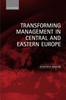
Transforming Management in Central and Eastern Europe

No reviews yet Write a Review
Transforming Management in Central and Eastern Europe provides an overview of the changing business environment in seven Central and Eastern European countries, linking macro and micro developments, exploring the differing institutional and regional contexts, and the changing role of western companies and their management practices. The book will be an important resource for students on the growing number of MBA and graduate programmes now covering developments in Central and Eastern Europe.
Hardback
09-December-1999
226 Pages
RRP: $477.00
$270.00
Ships in 3-5 business days
Hurry up! Current stock:
Transforming Management in Central and Eastern Europe analyses changes in enterprises in seven European countries since 1989 - Bulgaria, the Czech Republic, Hungary, Poland, Romania, Russia, and Slovakia. Economic trends have differed vastly between these countries, but nevertheless, there are common objectives, common problems, and significant similarities in developments. This book shows the continuities, as well as the discontinuities, between the Socialist and the post-Socialist periods. It argues that Central and Eastern European countries are developing a distinctive, hybrid form of post-Socialist economic system, largely dominated by enterprise managers in alliance with state administrationsDSpoliticized managerial capitalism. Privatization has not transformed management practices, competition has.
This product hasn't received any reviews yet. Be the first to review this product!

RRP: $477.00
$270.00
Ships in 3-5 business days
Hurry up! Current stock:

Transforming Management in Central and Eastern Europe

RRP: $477.00
$270.00

Description

Transforming Management in Central and Eastern Europe analyses changes in enterprises in seven European countries since 1989 - Bulgaria, the Czech Republic, Hungary, Poland, Romania, Russia, and Slovakia. Economic trends have differed vastly between these countries, but nevertheless, there are common objectives, common problems, and significant similarities in developments. This book shows the continuities, as well as the discontinuities, between the Socialist and the post-Socialist periods. It argues that Central and Eastern European countries are developing a distinctive, hybrid form of post-Socialist economic system, largely dominated by enterprise managers in alliance with state administrationsDSpoliticized managerial capitalism. Privatization has not transformed management practices, competition has.

Customers Also Viewed