The goal of the present volume is to discuss the notion of a 'conceptual framework' or 'conceptual scheme', which has been dominating much work in the analysis and justification of knowledge in recent years. More specifi cally, this volume is designed to clarify the contrast between two competing approaches in the area of problems indicated by this notion: On the one hand, we have the conviction, underlying much present-day work in the philosophy of science, that the best we can hope for in the justifi cation of empirical knowledge is to reconstruct the conceptual means actually employed by science, and to develop suitable models for analyzing conceptual change involved in the progress of science. This view involves the assumption that we should stop taking foundational questions of epistemology seriously and discard once and for all the quest for uncontrovertible truth. The result ing program of justifying epistemic claims by subsequently describing patterns of inferentially connected concepts as they are at work in actual science is closely connected with the idea of naturalizing epistemology, with concep tual relativism, and with a pragmatic interpretation of knowledge. On the other hand, recent epistemology tends to claim that no subsequent reconstruction of actually employed conceptual frameworks is sufficient for providing epistemic justification for our beliefs about the world. This second claim tries to resist the naturalistic and pragmatic approach to epistemology and insists on taking the epistemological sceptic seriously.
The goal of the present volume is to discuss the notion of a 'conceptual framework' or 'conceptual scheme', which has been dominating much work in the analysis and justification of knowledge in recent years. More specifi cally, this volume is designed to clarify the contrast between two competing approaches in the area of problems indicated by this notion: On the one hand, we have the conviction, underlying much present-day work in the philosophy of science, that the best we can hope for in the justifi cation of empirical knowledge is to reconstruct the conceptual means actually employed by science, and to develop suitable models for analyzing conceptual change involved in the progress of science. This view involves the assumption that we should stop taking foundational questions of epistemology seriously and discard once and for all the quest for uncontrovertible truth. The result ing program of justifying epistemic claims by subsequently describing patterns of inferentially connected concepts as they are at work in actual science is closely connected with the idea of naturalizing epistemology, with concep tual relativism, and with a pragmatic interpretation of knowledge. On the other hand, recent epistemology tends to claim that no subsequent reconstruction of actually employed conceptual frameworks is sufficient for providing epistemic justification for our beliefs about the world. This second claim tries to resist the naturalistic and pragmatic approach to epistemology and insists on taking the epistemological sceptic seriously.
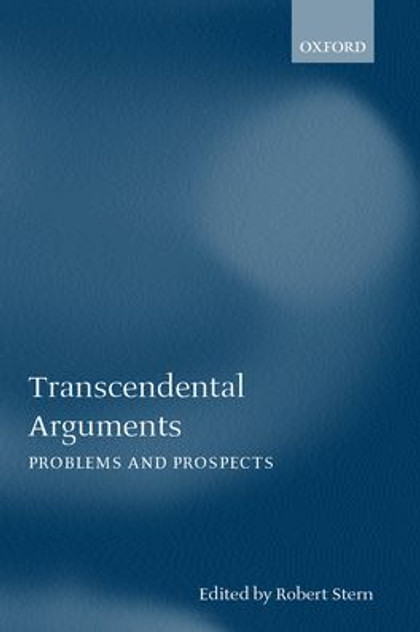
Fourteen new essays by a distinguished team of authors offer a broad and stimulating re-examination of transcendental arguments. This is the philosophical method of arguing that what is doubted or...
Robert Stern investigates how scepticism can be countered by using transcendental arguments concerning the necessary conditions for the possibility of experience, language, or thought. He shows that...
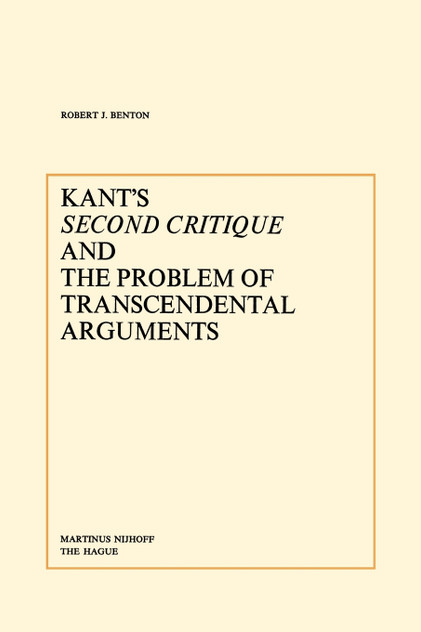
This work is in no way intended as a commentary on the second Cri tique, or even on the Analytic of that book. Instead I have limited myself to the attempt to extract the essential structure of the...
The essays collected in this volume and authored by Sami Pihlström emphasize that our relation to the world we live in and seek to represent and get to know better through our practices of...
Discover your next great read at BookLoop, Australiand online bookstore offering a vast selection of titles across various genres and interests. Whether you're curious about what's trending or searching for graphic novels that captivate, thrilling crime and mystery fiction, or exhilarating action and adventure stories, our curated collections have something for every reader. Delve into imaginative fantasy worlds or explore the realms of science fiction that challenge the boundaries of reality. Fans of contemporary narratives will find compelling stories in our contemporary fiction section. Embark on epic journeys with our fantasy and science fiction titles,
Shop Trending Books and New Releases
Explore our new releases for the most recent additions in romance books, fantasy books, graphic novels, crime and mystery books, science fiction books as well as biographies, cookbooks, self help books, tarot cards, fortunetelling and much more. With titles covering current trends, booktok and bookstagram recommendations, and emerging authors, BookLoop remains your go-to local australian bookstore for buying books online across all book genres.
Shop Best Books By Collection
Stay updated with the literary world by browsing our trending books, featuring the latest bestsellers and critically acclaimed works. Explore titles from popular brands like Minecraft, Pokemon, Star Wars, Bluey, Lonely Planet, ABIA award winners, Peppa Pig, and our specialised collection of ADHD books. At BookLoop, we are committed to providing a diverse and enriching reading experience for all.
Sign In
your cart
Your cart is empty
Menu
Search
PRE-SALES
If you have any questions before making a purchase chat with our online operators to get more information.