William Wells Brown (1814?-84) was uncertain of his own birthday because he was born a slave, near Lexington, Kentucky. He managed to escape to Ohio, a free state, in 1834. Obtaining work on steamboats, he assisted many other slaves to escape across Lake Erie to Canada. In 1849, having achieved prominence in the American anti-slavery movement, he left for Europe, both to lecture against slavery and also to gain an education for his daughters. He stayed in Europe until 1854, since the Fugitive Slave Act of 1850 had made it possible that he could be taken back into slavery if he returned. Meanwhile, he had begun to write both fiction and non-fiction, and this account of his travels in Europe, prefaced by a short biography, was published in 1852. Brown was able to return to the United States in 1854, when British friends paid for his freedom.
In this fascinating travelogue, Romesh Chunder Dutt offers a firsthand account of his three years traversing Europe in the late 19th century. From historical landmarks to bustling cities to...
Title: Three Years in Europe, 1868 to 1871. With an account of a second visit to Europe in 1886 ... Third edition.Publisher: British Library, Historical Print EditionsThe British Library is the...
This work has been selected by scholars as being culturally important, and is part of the knowledge base of civilization as we know it. This work was reproduced from the original artifact, and...
How can a scientifically-minded person approach the healings and miracles of the Gospels, including such events as the raising of Lazarus and the Resurrection itself? Emil Bock rediscovers the...
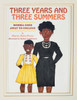
THREE YEARS AND THREE SUMMERS gives children a way to read about how family decisions can lead to moving to a new school and moving to a new house in a far away city. The book is written from the...