Medieval thinkers were both puzzled and fascinated by the capacity of human beings to do what is morally wrong. In this book, Colleen McCluskey offers the first comprehensive examination of Thomas Aquinas' explanation for moral wrongdoing. Her discussion takes in Aquinas' theory of human nature and action, and his explanation of wrong action in terms of defects in human capacities including the intellect, the will, and the passions of the sensory appetite. She also looks at the notion of privation, which underlies Aquinas' account of wrongdoing, as well as his theory of the vices, which intersects with his basic account. The result is a thorough exploration of Aquinas' psychology which is both accessible and illuminating, and will be of interest to a wide range of readers in Aquinas studies, medieval philosophy, the history of theology, and the history of ideas.
Through a radical reinterpretation of classical philosophy as an organizational psychology, The Moral Psychology of St. Thomas: An Introduction to Ragamuffin Ethics just as radically...
Aquinas ethicus, or, The moral teaching of St. Thomas is an unchanged, high-quality reprint of the original edition of 1896.Hansebooks is editor of the literature on different topic areas such as...
In his highly-regarded Thomas Aquinas: A Historical and Philosophical Profile, while grasping fully that by profession and self-understanding Thomas Aquinas was formally a Christian theologian for...
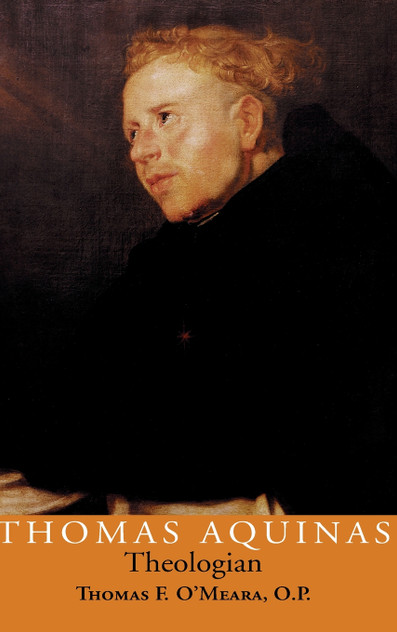
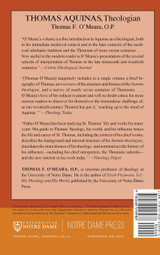
In Thomas Aquinas, Theologian Thomas O'Meara considers Aquinas the theologian and his influence, past and present. O'Meara focuses on Aquinas as teacher and preacher, and theology as the subject of...