sale
Trending Bestseller

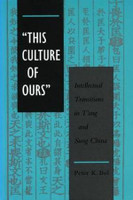
This Culture of Ours'

Peter Bol

No reviews yet Write a Review
Hardback
534 Pages
RRP: $248.50
$176.00
Ships in 3-5 business days
Hurry up! Current stock:
Addressing one of the great themes in pre-modern Chinese history, this book traces the transformation of the shared culture of the Chinese learned elite from the seventh to the twelfth centuries. It places the redefinition of "This Culture of Ours" in the context of social change: the decline of the aristocratic clans of the T'ang dynasty (618-907) and the rise of the scholar-officials and literati local elites of the Sung dynasty (960-1279).
The early T'ang aristocratic definition of "our culture" brought together literary and scholarly traditions from the previous five centuries. The Neo-Confucian movement of the late Sung provided a new definition of that culture, one that would not be fundamentally challenged until the seventeenth century. The primary concern of this book is the transition between these two definitions of elite culture and values over seven centuries. The transitional period was marked by extraordinary diversity and creativity in literary, philosophical, and political thought, and the author treats fully both the most influential scholars during these centuries and many lesser figures who contributed to intellectual change.
The author argues that the T'ang-Sung transition can best be understood as a transition from a literary view of culture--in which literary accomplishment and mastery of traditional forms were regarded as essential to moral and scholarly responsibility--to the ethical orientation of Neo-Confucianism, in which the cultivation of a human being's innate ability to behave ethically was regarded as the goal of learning. In the process, the author offers a new interpretation of the rise of Neo-Confucianism. He shows that the Neo-Confucian movement began as a response to the cultural-literary orientation of elite learning and was not, as is commonly held, initially a response to the challenge of Buddhism.
This is the first study of the T'ang-Sung period to relate intellectual change directly to the social transformation of the elite. The author shows how the transformation accompanied the collapse of the T'ang order and the restoration of a centralized empire under the Sung, underscoring the connection between elite formation and political institutions during a crucial period of Chinese history.

This product hasn't received any reviews yet. Be the first to review this product!

RRP: $248.50
$176.00
Ships in 3-5 business days
Hurry up! Current stock:

This Culture of Ours'

RRP: $248.50
$176.00

Description

Addressing one of the great themes in pre-modern Chinese history, this book traces the transformation of the shared culture of the Chinese learned elite from the seventh to the twelfth centuries. It places the redefinition of "This Culture of Ours" in the context of social change: the decline of the aristocratic clans of the T'ang dynasty (618-907) and the rise of the scholar-officials and literati local elites of the Sung dynasty (960-1279).
The early T'ang aristocratic definition of "our culture" brought together literary and scholarly traditions from the previous five centuries. The Neo-Confucian movement of the late Sung provided a new definition of that culture, one that would not be fundamentally challenged until the seventeenth century. The primary concern of this book is the transition between these two definitions of elite culture and values over seven centuries. The transitional period was marked by extraordinary diversity and creativity in literary, philosophical, and political thought, and the author treats fully both the most influential scholars during these centuries and many lesser figures who contributed to intellectual change.
The author argues that the T'ang-Sung transition can best be understood as a transition from a literary view of culture--in which literary accomplishment and mastery of traditional forms were regarded as essential to moral and scholarly responsibility--to the ethical orientation of Neo-Confucianism, in which the cultivation of a human being's innate ability to behave ethically was regarded as the goal of learning. In the process, the author offers a new interpretation of the rise of Neo-Confucianism. He shows that the Neo-Confucian movement began as a response to the cultural-literary orientation of elite learning and was not, as is commonly held, initially a response to the challenge of Buddhism.
This is the first study of the T'ang-Sung period to relate intellectual change directly to the social transformation of the elite. The author shows how the transformation accompanied the collapse of the T'ang order and the restoration of a centralized empire under the Sung, underscoring the connection between elite formation and political institutions during a crucial period of Chinese history.
Customers Also Viewed