Many twentieth and twenty-first century composers have written music with rhythmic structures that must be understood through a framework distinct from even, periodic meter, which has been a salient musical feature of Western classical music for centuries. This Element's analytical system outlines structure and phrasing in sections of music without even perceptible meter. Instead of entrainment to meter, Bryan Hayslett theorizes that listeners perceive rhythm in similar ways to how they perceive the rhythm of language. With gesture as the smallest organizational grouping unit, his analytical system combines Fred Lerdahl and Ray Jackendoff's generative theory of tonal music with Bruce Hayes's metrical stress theory from linguistics. The listener perceives the shape of a gesture according to the structure of its constituents, and larger-level phrasing is perceived through the hierarchical relationship of gestures. After developing a set of rules, the author provides analyses that outline temporal structure according to perceptual prominence.
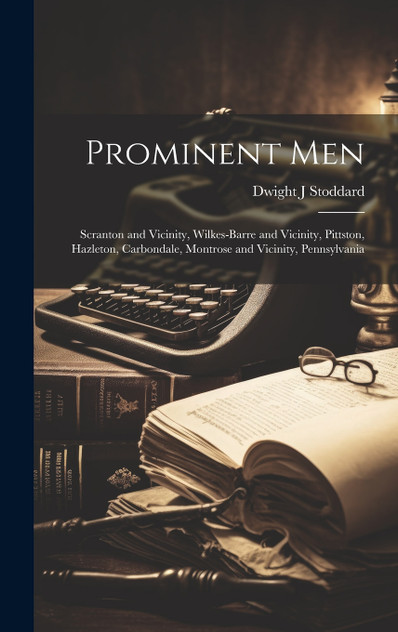
A richly illustrated guide to the prominent men of northeastern Pennsylvania, including Scranton, Wilkes-Barre, and numerous other towns and cities. Author Dwight J Stoddard profiles dozens of...
This is a reproduction of a book published before 1923. This book may have occasional imperfections such as missing or blurred pages, poor pictures, errant marks,...
The Liberator Fleet from Angel Bay crosses the ocean searching for a place to settle and restock. With thousands of lives to protect, they find a new land with both allies and enemies waiting for...
The cognitive concept of prominence is increasingly seen as key to understanding the organisation of grammar. This volume explores the encoding of prominence in languages from across the Austronesian...
Koreans are known for their keen interest in genealogy and inherited ancestral status. Yet today's ordinary Korean would be hard pressed to explain the whereabouts of ancestors before the twentieth...