Studienarbeit aus dem Jahr 2005 im Fachbereich Didaktik - Englisch - Pädagogik, Sprachwissenschaft, Note: 1,0, Westfälische Wilhelms-Universität Münster, Sprache: Deutsch, Abstract: Linguistic politeness is an important subcategory of pragmatics, as it is essential for the success of communication, which in turn is a central aspect of pragmatics. It is not a fixed and defined category because it differs from one speech community to another and can be realised by different means, such as lexical or phrasal ones. This term paper considers both by analysing the directness and the modality markers used in three situations eliciting complaints. A questionnaire was handed out to members of the following four groups: native speakers of English, young German learners of English, advanced German learners of English, all writing in English, and native speakers of German writing in German.We analyse the hypothesis of House and Kasper (1981, p. 162) stating that native speakers of German are more direct than native speakers of English. However, it has to be mentioned that their survey was based on spoken language. A second aspect of our study is the analysis of learner language. We want to examine if L2-learners are more direct and thus less polite than native speakers of the target language. The influence of their competence in the second language and the impact of their mother tongue on second language acquisition are taken into account here. Wolfson (1989, pp. 129-139) showed that social distance between the interlocutors has influence on politeness regarding invitations and compliments. This term paper examines if this Bulge Theory is also valid for other speech acts such as complaints and requests. After an overview on linguistic approaches on politeness, the questionnaire and the criteria of our analysis are presented. The next chapter deals with the evaluation and interpretation of the data and focuses on the aspects mentioned above. A short conclusion sums up the ma
The use of modality markers and directness levels in cross-cultural and learner-centred perspectives
RRP:
$110.00
Description
Studienarbeit aus dem Jahr 2005 im Fachbereich Didaktik - Englisch - Pädagogik, Sprachwissenschaft, Note: 1,0, Westfälische Wilhelms-Universität Münster, Sprache: Deutsch, Abstract: Linguistic politeness is an important subcategory of pragmatics, as it is essential for the success of communication, which in turn is a central aspect of pragmatics. It is not a fixed and defined category because it differs from one speech community to another and can be realised by different means, such as lexical or phrasal ones. This term paper considers both by analysing the directness and the modality markers used in three situations eliciting complaints. A questionnaire was handed out to members of the following four groups: native speakers of English, young German learners of English, advanced German learners of English, all writing in English, and native speakers of German writing in German.We analyse the hypothesis of House and Kasper (1981, p. 162) stating that native speakers of German are more direct than native speakers of English. However, it has to be mentioned that their survey was based on spoken language. A second aspect of our study is the analysis of learner language. We want to examine if L2-learners are more direct and thus less polite than native speakers of the target language. The influence of their competence in the second language and the impact of their mother tongue on second language acquisition are taken into account here. Wolfson (1989, pp. 129-139) showed that social distance between the interlocutors has influence on politeness regarding invitations and compliments. This term paper examines if this Bulge Theory is also valid for other speech acts such as complaints and requests. After an overview on linguistic approaches on politeness, the questionnaire and the criteria of our analysis are presented. The next chapter deals with the evaluation and interpretation of the data and focuses on the aspects mentioned above. A short conclusion sums up the ma
Is learner-centred education appropriate for all societies and classrooms?Learner-centred education (LCE) is a travelling policy, widely promoted by international agencies and national governments...
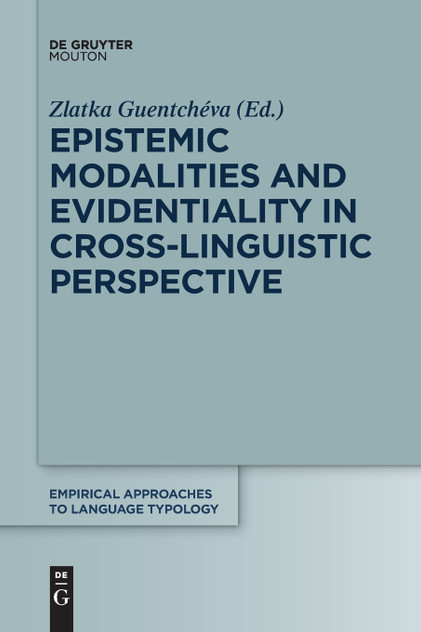
This volume explores phenomena which come under the heading of epistemic modalities and evidentiality in more or less well-known languages (Germanic, Romance, Balto-Slavic, Hungarian, Tibetan,...
The contributors evaluate educational changes relating to inclusion and analyse the interactions of persons involved in real-life education. The book provides data on the quality of life of pupils...
Discover your next great read at BookLoop, Australiand online bookstore offering a vast selection of titles across various genres and interests. Whether you're curious about what's trending or searching for graphic novels that captivate, thrilling crime and mystery fiction, or exhilarating action and adventure stories, our curated collections have something for every reader. Delve into imaginative fantasy worlds or explore the realms of science fiction that challenge the boundaries of reality. Fans of contemporary narratives will find compelling stories in our contemporary fiction section. Embark on epic journeys with our fantasy and science fiction titles,
Shop Trending Books and New Releases
Explore our new releases for the most recent additions in romance books, fantasy books, graphic novels, crime and mystery books, science fiction books as well as biographies, cookbooks, self help books, tarot cards, fortunetelling and much more. With titles covering current trends, booktok and bookstagram recommendations, and emerging authors, BookLoop remains your go-to local australian bookstore for buying books online across all book genres.
Shop Best Books By Collection
Stay updated with the literary world by browsing our trending books, featuring the latest bestsellers and critically acclaimed works. Explore titles from popular brands like Minecraft, Pokemon, Star Wars, Bluey, Lonely Planet, ABIA award winners, Peppa Pig, and our specialised collection of ADHD books. At BookLoop, we are committed to providing a diverse and enriching reading experience for all.
Sign In
your cart
Your cart is empty
Menu
Search
PRE-SALES
If you have any questions before making a purchase chat with our online operators to get more information.