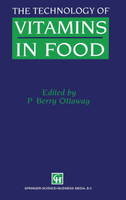
The Technology of Vitamins in Food
Ships in 5–7 business days
Hurry up! Current stock:
1 Biological functions of vitamins.- 1.1 Introduction.- 1.2 Retinol (vitamin A) and the provitamin carotenoids.- 1.3 Vitamin D.- 1.4 Vitamin E (tocopherol).- 1.5 Vitamin K.- 1.6 Thiamin.- 1.7 Riboflavin.- 1.8 Pyridoxin.- 1.9 Niacin.- 1.10 Vitamin B12.- 1.11 Folates.- 1.12 Pantothenic acid.- 1.13 Biotin.- 1.14 Taurine and choline.- 1.15 Carnitine.- 1.16 Ascorbic acid.- 1.17 Other organic trace constituents of food.- 1.18 Vitamins and 'free radical' damage.- Further reading.- 2 Natural occurrence of vitamins in food.- 2.1 Fat soluble vitamins and carotenoids.- 2.1.1 Vitamin A and the carotenoids.- 2.1.2 Determination of vitamin A in foods.- 2.1.3 Natural sources of retinoids and carotenoids.- 2.1.4 Vitamin D.- 2.1.5 Vitamin E.- 2.1.6 Vitamin K.- 2.2 Water soluble vitamins.- 2.2.1 Thiamin.- 2.2.2 Riboflavin.- 2.2.3 Niacin.- 2.2.4 Vitamin B6.- 2.2.5 Vitamin B12.- 2.2.6 Pantothenic acid.- 2.2.7 Biotin.- 2.2.8 Folic acid.- 2.2.9 Vitamin C.- References.- 3 Nutritional aspects of vitamins.- 3.1 Vitamin deficiency diseases.- 3.1.1 Introduction.- 3.1.2 Fat soluble vitamins.- 3.1.3 Water soluble vitamins: the vitamin B-complex.- 3.1.4 Water soluble vitamins: vitamin C.- 3.2 Recommended daily allowances.- 3.2.1 Introduction.- 3.2.2 International concepts of the function of RDAs/RDIs.- 3.3 Safety.- 3.3.1 Introduction.- 3.3.2 Issues.- 3.3.3 Attitudes.- 3.3.4 Need.- 3.3.5 Adventitious acquisition.- 3.3.6 Safety and RDAs (DRVs).- 3.3.7 Need and consumption.- 3.3.8 Possible guidelines for safety.- References.- 4 Industrial production.- 4.1 Introduction.- 4.1.1 History.- 4.1.2 Current situation.- 4.1.3 Future production.- 4.2 Vitamin production.- 4.2.1 Vitamin A.- 4.2.2 Provitamin A: ß-carotene.- 4.2.3 Vitamin B1: thiamine.- 4.2.4 Vitamin B2: riboflavin.- 4.2.5 Niacin.- 4.2.6 Pantothenic acid.- 4.2.7 Vitamin B6: pyridoxine.- 4.2.8 Folic acid.- 4.2.9 Vitamin B12.- 4.2.10 Vitamin C.- 4.2.11 Vitamin D.- 4.2.12 Vitamin E: ?-tocopherols.- 4.2.13 Vitamin F group.- 4.2.14 Biotin (vitamin H).- 4.2.15 Vitamin K.- References.- 5 Stability of vitamins in food.- 5.1 Introduction.- 5.2 Fat soluble vitamins.- 5.2.1 Vitamin A.- 5.2.2 Vitamin E.- 5.2.3 Vitamin D.- 5.2.4 Vitamin K.- 5.2.5 ?-carotene (provitamin A).- 5.3 Water soluble vitamins.- 5.3.1 Thiamin (vitamin B1).- 5.3.2 Riboflavin (vitamin B2).- 5.3.3 Niacin.- 5.3.4 Pantothenic acid.- 5.3.5 Folic acid.- 5.3.6 Pyridoxine (vitamin B6).- 5.3.7 Vitamin B12.- 5.3.8 Biotin.- 5.3.9 Vitamin C.- 5.4 Vitamin-vitamin interactions.- 5.4.1 Ascorbic acid-folic acid.- 5.4.2 Ascorbic acid-vitamin B12.- 5.4.3 Thiamin-folic acid.- 5.4.4 Thiamin-vitamin B12.- 5.4.5 Riboflavin-thiamin.- 5.4.6 Riboflavin-folic acid.- 5.4.7 Riboflavin-ascorbic acid.- 5.4.8 Other interactions.- 5.5 Processing losses.- 5.5.1 Vegetables and fruits.- 5.5.2 Meat.- 5.5.3 Milk.- 5.6 Irradiation.- 5.7 Food product shelf life.- 5.8 Protection of vitamins.- References.- 6 Vitamin fortification of foods (specific applications).- 6.1 Addition of vitamins to foods.- 6.1.1 Introduction.- 6.2 Beverages.- 6.2.1 Vitiminisation of instant beverages.- 6.2.2 Vitiminisation of concentrates, nectars and juice drinks.- 6.2.3 Vitamin stability.- 6.2.4 Vitamin incorporation.- 6.3 Cereal products.- 6.3.1 Breakfast cereals.- 6.3.2 Bread.- 6.3.3 Pasta.- 6.4 Dairy products.- 6.4.1 Milk.- 6.4.2 Yoghurt.- 6.4.3 Ice cream.- 6.4.4 Margarine.- 6.5 Confectionery.- 6.5.1 Hard boiled candies.- 6.5.2 Chocolate.- 6.5.3 Fondant.- 6.5.4 Marshmallows.- 6.5.5 Pectin jellies.- 6.5.6 Starchjellies.- 6.5.7 Chewing gum.- References.- 7 Vitamins as food additives.- 7.1 Ascorbic acid (vitamin C).- 7.1.1 Properties.- 7.1.2 Fruit, vegetables and fruit juices.- 7.1.3 Soft drinks.- 7.1.4 Beer.- 7.1.5 Wine.- 7.1.6 Flour and bread.- 7.1.7 Pasta.- 7.1.8 Meat processing.- 7.2 Carotenoids (provitamins A).- 7.2.1 Properties.- 7.2.2 Fat based foods.- 7.2.3 Water based foods.- 7.3 Riboflavin (vitamin B2).- 7.4 Niacin.- 7.5 dl-?-tocopherol (vitamin E).- 7.5.1 Oils and fats.- References.- 8 Vitamin an
This product hasn't received any reviews yet. Be the first to review this product!
Ships in 5–7 business days
Hurry up! Current stock:
The Technology of Vitamins in Food
Description
1 Biological functions of vitamins.- 1.1 Introduction.- 1.2 Retinol (vitamin A) and the provitamin carotenoids.- 1.3 Vitamin D.- 1.4 Vitamin E (tocopherol).- 1.5 Vitamin K.- 1.6 Thiamin.- 1.7 Riboflavin.- 1.8 Pyridoxin.- 1.9 Niacin.- 1.10 Vitamin B12.- 1.11 Folates.- 1.12 Pantothenic acid.- 1.13 Biotin.- 1.14 Taurine and choline.- 1.15 Carnitine.- 1.16 Ascorbic acid.- 1.17 Other organic trace constituents of food.- 1.18 Vitamins and 'free radical' damage.- Further reading.- 2 Natural occurrence of vitamins in food.- 2.1 Fat soluble vitamins and carotenoids.- 2.1.1 Vitamin A and the carotenoids.- 2.1.2 Determination of vitamin A in foods.- 2.1.3 Natural sources of retinoids and carotenoids.- 2.1.4 Vitamin D.- 2.1.5 Vitamin E.- 2.1.6 Vitamin K.- 2.2 Water soluble vitamins.- 2.2.1 Thiamin.- 2.2.2 Riboflavin.- 2.2.3 Niacin.- 2.2.4 Vitamin B6.- 2.2.5 Vitamin B12.- 2.2.6 Pantothenic acid.- 2.2.7 Biotin.- 2.2.8 Folic acid.- 2.2.9 Vitamin C.- References.- 3 Nutritional aspects of vitamins.- 3.1 Vitamin deficiency diseases.- 3.1.1 Introduction.- 3.1.2 Fat soluble vitamins.- 3.1.3 Water soluble vitamins: the vitamin B-complex.- 3.1.4 Water soluble vitamins: vitamin C.- 3.2 Recommended daily allowances.- 3.2.1 Introduction.- 3.2.2 International concepts of the function of RDAs/RDIs.- 3.3 Safety.- 3.3.1 Introduction.- 3.3.2 Issues.- 3.3.3 Attitudes.- 3.3.4 Need.- 3.3.5 Adventitious acquisition.- 3.3.6 Safety and RDAs (DRVs).- 3.3.7 Need and consumption.- 3.3.8 Possible guidelines for safety.- References.- 4 Industrial production.- 4.1 Introduction.- 4.1.1 History.- 4.1.2 Current situation.- 4.1.3 Future production.- 4.2 Vitamin production.- 4.2.1 Vitamin A.- 4.2.2 Provitamin A: ß-carotene.- 4.2.3 Vitamin B1: thiamine.- 4.2.4 Vitamin B2: riboflavin.- 4.2.5 Niacin.- 4.2.6 Pantothenic acid.- 4.2.7 Vitamin B6: pyridoxine.- 4.2.8 Folic acid.- 4.2.9 Vitamin B12.- 4.2.10 Vitamin C.- 4.2.11 Vitamin D.- 4.2.12 Vitamin E: ?-tocopherols.- 4.2.13 Vitamin F group.- 4.2.14 Biotin (vitamin H).- 4.2.15 Vitamin K.- References.- 5 Stability of vitamins in food.- 5.1 Introduction.- 5.2 Fat soluble vitamins.- 5.2.1 Vitamin A.- 5.2.2 Vitamin E.- 5.2.3 Vitamin D.- 5.2.4 Vitamin K.- 5.2.5 ?-carotene (provitamin A).- 5.3 Water soluble vitamins.- 5.3.1 Thiamin (vitamin B1).- 5.3.2 Riboflavin (vitamin B2).- 5.3.3 Niacin.- 5.3.4 Pantothenic acid.- 5.3.5 Folic acid.- 5.3.6 Pyridoxine (vitamin B6).- 5.3.7 Vitamin B12.- 5.3.8 Biotin.- 5.3.9 Vitamin C.- 5.4 Vitamin-vitamin interactions.- 5.4.1 Ascorbic acid-folic acid.- 5.4.2 Ascorbic acid-vitamin B12.- 5.4.3 Thiamin-folic acid.- 5.4.4 Thiamin-vitamin B12.- 5.4.5 Riboflavin-thiamin.- 5.4.6 Riboflavin-folic acid.- 5.4.7 Riboflavin-ascorbic acid.- 5.4.8 Other interactions.- 5.5 Processing losses.- 5.5.1 Vegetables and fruits.- 5.5.2 Meat.- 5.5.3 Milk.- 5.6 Irradiation.- 5.7 Food product shelf life.- 5.8 Protection of vitamins.- References.- 6 Vitamin fortification of foods (specific applications).- 6.1 Addition of vitamins to foods.- 6.1.1 Introduction.- 6.2 Beverages.- 6.2.1 Vitiminisation of instant beverages.- 6.2.2 Vitiminisation of concentrates, nectars and juice drinks.- 6.2.3 Vitamin stability.- 6.2.4 Vitamin incorporation.- 6.3 Cereal products.- 6.3.1 Breakfast cereals.- 6.3.2 Bread.- 6.3.3 Pasta.- 6.4 Dairy products.- 6.4.1 Milk.- 6.4.2 Yoghurt.- 6.4.3 Ice cream.- 6.4.4 Margarine.- 6.5 Confectionery.- 6.5.1 Hard boiled candies.- 6.5.2 Chocolate.- 6.5.3 Fondant.- 6.5.4 Marshmallows.- 6.5.5 Pectin jellies.- 6.5.6 Starchjellies.- 6.5.7 Chewing gum.- References.- 7 Vitamins as food additives.- 7.1 Ascorbic acid (vitamin C).- 7.1.1 Properties.- 7.1.2 Fruit, vegetables and fruit juices.- 7.1.3 Soft drinks.- 7.1.4 Beer.- 7.1.5 Wine.- 7.1.6 Flour and bread.- 7.1.7 Pasta.- 7.1.8 Meat processing.- 7.2 Carotenoids (provitamins A).- 7.2.1 Properties.- 7.2.2 Fat based foods.- 7.2.3 Water based foods.- 7.3 Riboflavin (vitamin B2).- 7.4 Niacin.- 7.5 dl-?-tocopherol (vitamin E).- 7.5.1 Oils and fats.- References.- 8 Vitamin an
Buy Books Online at BookLoop
Discover your next great read at BookLoop , Australiand online bookstore offering a vast selection of titles across various genres and interests. Whether you're curious about what's trending or searching for graphic novels crime and mystery fiction action and adventure stories fantasy worlds science fiction contemporary fiction fantasy science fiction
Shop Trending Books and New Releases
Explore our new releases BookLoop remains your go-to local australian bookstore for buying books online across all book genres.
Shop Best Books By Collection
Stay updated with the literary world by browsing our trending books Minecraft Pokemon Star Wars Bluey Lonely Planet ABIA award winners Peppa Pig ADHD books