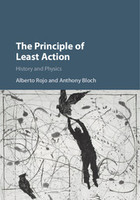

The principle of least action originates in the idea that, if nature has a purpose, it should follow a minimum or critical path. This simple principle, and its variants and generalizations, applies to optics, mechanics, electromagnetism, relativity, and quantum mechanics, and provides an essential guide to understanding the beauty of physics. This unique text provides an accessible introduction to the action principle across these various fields of physics, and examines its history and fundamental role in science. It includes - with varying levels of mathematical sophistication - explanations from historical sources, discussion of classic papers, and original worked examples. The result is a story that is understandable to those with a modest mathematical background, as well as to researchers and students in physics and the history of physics.
This groundbreaking work of theoretical physics explores the principle of least action and its implications for understanding the physical world. Libby's book is a must-read for anyone interested in...
""General Principles of the Method of Least Squares: With Applications"" is a book written by Dana Prescott Bartlett and published in 1915. The book is a comprehensive guide to the method of least...
Statically Indeterminate Structures and the Principle of Least Work is an unchanged, high-quality reprint of the original edition of 1895.Hansebooks is editor of the literature on different topic...