In this much-expanded edition of his classic study, John Vasquez examines the power of the power politics perspective to dominate inquiry, and evaluates its ability to provide accurate explanations of the fundamental forces underlying world politics. Part I of the book reprints the original 1983 text of The Power of Power Politics. It examines classical realism and quantitative international politics, providing an intellectual history of the discipline and an evaluation of statistical research guided by the realist paradigm. The second part provides six new chapters covering neorealism, post-modernism, the neotraditional research program on balancing, Mearsheimer's analysis of multipolarity and institutionalism, the debate on the end of the Cold War, and neoliberalism. Through the use of comparative case studies these chapters analyse the extent to which the realist paradigm has been progressive (or degenerating), empirically accurate, and remains a relevant and explanatorily powerful theoretical approach for our current era.
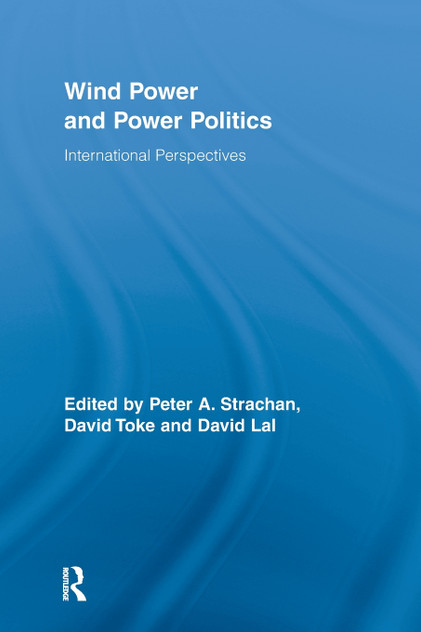
The aim of the book is to analyse the factors that have influenced wind power outcomes in a range of countries which have featured significant wind power deployment programmes. A central theme is the...
A groundbreaking meditation on sexual politics, love, and human tenacity from the world-renowned pioneer of feminist writing and prophetic author of The Handmaid's Tale, Margaret Atwood.When it first...
In the turbulent years of the 1960s and 1970s, France, like other European countries and the United States, was rocked by a new wave of social movements. The early development of a strong antinuclear...