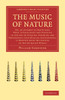
The English composer and concert producer William Gardiner (1770-1853) published this work in 1832 in order to explain the 'true principles of musical taste and expression' by listening to the 'germs of melody' in nature. Here he musically notates the sounds of oxen, a Newfoundland dog, a blackbird, a cooing dove and even an angry child in an attempt to combine natural history, personal observation and historical anecdotes with his passion for music. Notable for introducing Beethoven's music to Britain, Gardiner sets out his general beliefs about the adaptability of the human ear, the differences between noise and sound, singing and oratory, and the musicality of ordinary language. He also discusses many noted singers of his day and delves into the different techniques used by singers and instrumentalists to elicit emotion in their audiences.
An important book that answers how music affects your mood and how music affects your brainMusic has a profound influence on our lives; affecting how we think, how we act, how we feel-even who we are...
The Nature of Nordic Music explores two distinctive yet complementary understandings of the term 'nature': the inherent features, characters and qualities of contemporary Nordic music, and how the...
For anyone interested in learning the basics of music theory and practice, this primer offers a comprehensive overview. With clear explanations of notation, rhythm, harmony, and melody, users will...
An exploration of the intersections between art, music, and nature, bringing together essays by artist and pastor David Swing and musicologist Mary E. Pratt. Through poetic prose and insightful...