The Modern Philosophical Revolution breaks new ground by demonstrating the continuity of European philosophy from Kant to Derrida. Much of the literature on European philosophy has emphasised the breaks that have occurred in the course of two centuries of thinking. But as David Walsh argues, such a reading overlooks the extent to which Kant, Hegel, and Schelling were already engaged in the turn toward existence as the only viable mode of philosophising. Where many similar studies summarise individual thinkers, this book provides a framework for understanding the relationships between them. Walsh thus dispels much of the confusion that assails readers when they are only exposed to the bewildering range of positions taken by the philosophers he examines. His book serves as an indispensable guide to a philosophical tradition that continues to have resonance in the post-modern world.
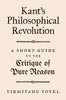
A short, clear, and authoritative guide to one of the most important and difficult works of modern philosophyPerhaps the most influential work of modern philosophy, Immanuel Kant's Critique of Pure...
Ben-Yami shows how the technology of Descartes' time shapes his conception of life, soul and mind-body dualism; how Descartes' analytic geometry helps him develop his revolutionary conception of...
This book has been considered by academicians and scholars of great significance and value to literature. This forms a part of the knowledge base for future generations. So that the book is never...