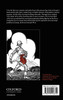
A fifth of West Germany's post-1945 population consisted of ethnic German refugees expelled from Eastern Europe, a quarter of whom came from Silesia. As the richest territory lost inside Germany's interwar borders, Silesia was a leading objective for territorial revisionists, many of whom were themselves expellees. The Lost German East examines how and why millions of Silesian expellees came to terms with the loss of their homeland. Applying theories of memory and nostalgia, as well as recent studies on ethnic cleansing, Andrew Demshuk shows how, over time, most expellees came to recognize that the idealized world they mourned no longer existed. Revising the traditional view that most of those expelled sought a restoration of prewar borders so they could return to the east, Demshuk offers a new answer to the question of why, after decades of violent upheaval, peace and stability took root in West Germany during the tense early years of the Cold War.
Diplomarbeit aus dem Jahr 2012 im Fachbereich Medien / Kommunikation - Journalismus, Publizistik, Note: 1,3, Otto-Friedrich-Universität Bamberg (Lehrstuhl für Kommunikationswissenschaft), Sprache:...
For roughly the first decade after the demise of the GDR, professional and popular interpretations of East German history concentrated primarily on forms of power and repression, as well as on...
In this seminal work of European history, Evans Lewin examines the political and social factors that led to Germany's eastward expansion during the late 19th and early 20th centuries. Full of...