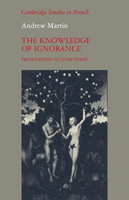
This highly original study is concerned with the theory of knowledge. It approaches the subject in a new way by exploring the recurrent paradox which equates pure ignorance with perfect knowledge, twin ideals free from the impurities and imperfections of discourse. The author combines the techniques of literary criticism and intellectual history in order to examine the literary, philosophical, theological, and political ramifications of this anxiety about, and ambition to transcend, the limits of the text. Dr Martin begins by tracing a network of interlocking motifs and images - beginning and end, nescience and omniscience, genesis and renascence, savagery and civilization - across a broad spectrum of texts from the Book of Genesis through the Renaissance (in particular the works of Nicholas of Cusa and Erasmus) to Rousseau. The central section of the book translates these temporal oppositions into the spatial antithesis of East and West in the Orientalism of Hugo, Napoleon and Chateaubriand. A final chapter draws together these apparently disparate themes in a consideration of the dichotomy of science and literature in Jules Verne's Voyages Extraordinaires.
The volume critically looks at various aspects: Epistemological Issues; Understanding Community Perspectives and the State; Natural Resources, Power and Ignorance; Media and Production of...
The fourth US president elected into office was James Madison. It was during his term that the War of 1812 took place. Despite that, he went on to serve two terms. In this book, you will read about...
In this book, the Bible passage that really pointed out the main problem faced by humanity was quoted; Hosea 4:6 says, "My people are destroyed for lack of knowledge . . . ." Here, God is actually...