Many people believe that globalization and its key components have made matters worse for humanity and the environment. Indur M. Goklany exposes this as a complete myth and challenges people to consider how much worse the world would be without them. Goklany confronts foes of globalization and demonstrates that economic growth, technological change and free trade helped to power a cycle of progress that in the last two centuries enabled unprecedented improvements in every objective measurement of human well-being. His analysis is accompanied by an extensive range of charts, historical data, and statistics. The Improving State of the World represents an important contribution to the environment versus development debate and collects in one volume for the first time the long-term trends in a broad array of the most significant indicators of human and environmental well-being, and their dependence on economic development and technological change. While noting that the record is more complicated on the environmental front, the author shows how innovation, increased affluence and key institutions have combined to address environmental degradation. The author notes that the early stages of development can indeed cause environmental problems, but additional development creates greater wealth allowing societies to create and afford cleaner technologies. Development becomes the solution rather than the problem. He maintains that restricting globalization would therefore hamper further progress in improving human and environmental well-being, and surmounting future environmental or natural resource limits to growth. **Key points from the book** * The rates at which hunger and malnutrition have been decreasing in India since 1950 and in China since 1961 are striking. By 2002 China's food supply had gone up 80%, and India's increased by 50%. Overall, these types of increases in the food supply have reduced chronic undernourishment in developing countries from 37 to 17%, despite an overall 83% growth in their populations. * Economic freedom has increased in 102 of the 113 countries for which data is available for both 1990 and 2000. * Disability in the older population of such developed countries as the U.S., Canada, France, are in decline. In the U.S. for example, the disability rate dropped 1.3 % each year between 1982 and 1994 for persons aged 65 and over. * Between 1970 and the early 2000s, the global illiteracy rated dropped from 46 to 18 percent. * Much of the improvements in the United States for the air and water quality indicators preceded the enactment of stringent national environmental laws as the Clean Air Act of 1970, Clean Water Act of 1972, and the Safe Drinking Water Act of 1974. * Between 1897-1902 and 1992-1994, the U.S. retail prices of flour, bacon and potatoes relative to per capita income, dropped by 92, 85, and 82 percent respectively. And, the real global price of food commodities has declined 75% since 1950.
Many people believe that globalization and its key components have made matters worse for humanity and the environment. Indur M. Goklany exposes this as a complete myth and challenges people to consider how much worse the world would be without them. Goklany confronts foes of globalization and demonstrates that economic growth, technological change and free trade helped to power a cycle of progress that in the last two centuries enabled unprecedented improvements in every objective measurement of human well-being. His analysis is accompanied by an extensive range of charts, historical data, and statistics. The Improving State of the World represents an important contribution to the environment versus development debate and collects in one volume for the first time the long-term trends in a broad array of the most significant indicators of human and environmental well-being, and their dependence on economic development and technological change. While noting that the record is more complicated on the environmental front, the author shows how innovation, increased affluence and key institutions have combined to address environmental degradation. The author notes that the early stages of development can indeed cause environmental problems, but additional development creates greater wealth allowing societies to create and afford cleaner technologies. Development becomes the solution rather than the problem. He maintains that restricting globalization would therefore hamper further progress in improving human and environmental well-being, and surmounting future environmental or natural resource limits to growth. **Key points from the book** * The rates at which hunger and malnutrition have been decreasing in India since 1950 and in China since 1961 are striking. By 2002 China's food supply had gone up 80%, and India's increased by 50%. Overall, these types of increases in the food supply have reduced chronic undernourishment in developing countries from 37 to 17%, despite an overall 83% growth in their populations. * Economic freedom has increased in 102 of the 113 countries for which data is available for both 1990 and 2000. * Disability in the older population of such developed countries as the U.S., Canada, France, are in decline. In the U.S. for example, the disability rate dropped 1.3 % each year between 1982 and 1994 for persons aged 65 and over. * Between 1970 and the early 2000s, the global illiteracy rated dropped from 46 to 18 percent. * Much of the improvements in the United States for the air and water quality indicators preceded the enactment of stringent national environmental laws as the Clean Air Act of 1970, Clean Water Act of 1972, and the Safe Drinking Water Act of 1974. * Between 1897-1902 and 1992-1994, the U.S. retail prices of flour, bacon and potatoes relative to per capita income, dropped by 92, 85, and 82 percent respectively. And, the real global price of food commodities has declined 75% since 1950.
This work has been selected by scholars as being culturally important, and is part of the knowledge base of civilization as we know it. This work was reproduced from the original artifact, and...
Race Improvement in the United States is a book published by the American Academy of Political and Social Science in 1909. The book provides a comprehensive analysis of race relations in the United...
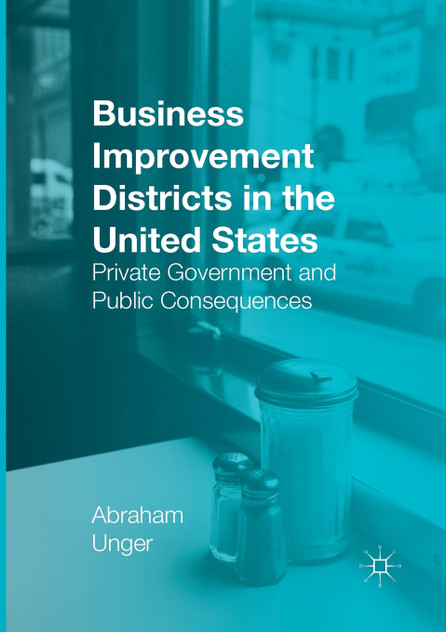
This book examines how privatization has transformed cities, particularly through the role of Business Improvement Districts (BIDs) in the revitalization of America's downtown. These public-private...
Discover your next great read at BookLoop, Australiand online bookstore offering a vast selection of titles across various genres and interests. Whether you're curious about what's trending or searching for graphic novels that captivate, thrilling crime and mystery fiction, or exhilarating action and adventure stories, our curated collections have something for every reader. Delve into imaginative fantasy worlds or explore the realms of science fiction that challenge the boundaries of reality. Fans of contemporary narratives will find compelling stories in our contemporary fiction section. Embark on epic journeys with our fantasy and science fiction titles,
Shop Trending Books and New Releases
Explore our new releases for the most recent additions in romance books, fantasy books, graphic novels, crime and mystery books, science fiction books as well as biographies, cookbooks, self help books, tarot cards, fortunetelling and much more. With titles covering current trends, booktok and bookstagram recommendations, and emerging authors, BookLoop remains your go-to local australian bookstore for buying books online across all book genres.
Shop Best Books By Collection
Stay updated with the literary world by browsing our trending books, featuring the latest bestsellers and critically acclaimed works. Explore titles from popular brands like Minecraft, Pokemon, Star Wars, Bluey, Lonely Planet, ABIA award winners, Peppa Pig, and our specialised collection of ADHD books. At BookLoop, we are committed to providing a diverse and enriching reading experience for all.
Sign In
your cart
Your cart is empty
Menu
Search
PRE-SALES
If you have any questions before making a purchase chat with our online operators to get more information.