The idea of cultural heritage has become widespread in many countries, justifying government regulation and providing the background to disputes over valuable works of art and architecture. In this book, Derek Gillman uses several well-known cases from Asia, Europe, and the United States to review the competing claims that works of art belong either to a particular people and place, or, from a cosmopolitan perspective, to all of humankind. He looks at the ways in which the idea of heritage has been constructed. He focuses first on Britain and the writings of Edmund Burke and then on China and its medieval debate about the nature of 'our culture'. Drawing on a range of sources, including the work of Ronald Dworkin, Will Kymlicka, and Joseph Raz, Gillman relates debates about heritage to those in contemporary political philosophy and offers a liberal approach to moral claims and government regulation.
The idea that the heritage of nature is fundamentally cultural is provocative to many, but it is becoming increasingly accepted in the context of heritage preservation. It is argued here that a...
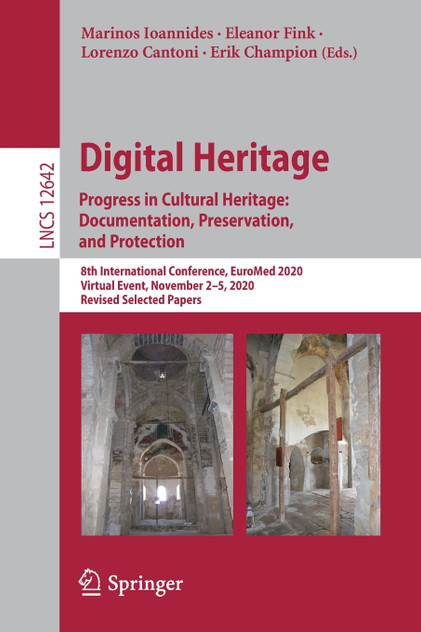
This book constitutes the refereed post-conference proceedings of the 8th International Conference on Digital Heritage, EuroMed 2020, held virtually in November 2020.The 37 revised project papers and...
Communities and Cultural Heritage explores the relationship between communities, their cultural heritage and the global forces that control most of the world's wealth and resources in today's world...