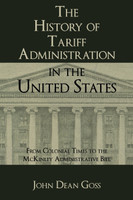
A Comprehensive History of the Tariff System in the United StatesGoss traces the tariff system through three avatars that often existed simultaneously: protective, preventive and punitive. From an ineffective colonial system that allowed importers to avoid payment through extended credit arrangements, to a somewhat less troubled system that demanded immediate cash payments in the early 1840s, to a punitive system designed to stymie smugglers during the Civil War, the collection of tariff duties was always problematic. This problem was enhanced in the wake of industrialization and protectionism when direct taxes began to supplant indirect taxation as the major source of government finance. Reviewing the history of American tariff regulation, Goss discerns a gradual process towards "more stringent supervision, regulation and control" (88). Originally published in the series Studies in History, Economics and Public Law edited by the Political Science Faculty of Columbia University.John Dean Goss (1869-?) served as a judge in Wisconsin. He later moved to Oregon, where he practiced law.Contents IntroductionCHAPTER I. The Colonial Period 1. Virginia customs administration 2. Massachusetts customs administration 3. New York customs administration CHAPTER II. The National Tariff Administration of the Eighteenth Century1. Customs officers 2. Entry of goods and collection of duties 3. System established by act of 1799 CHAPTER III. The Development of the System Established by the Act of 1799 up to the Civil War 1. Prevention of undervaluation 2. The auction system 3. Appraisement reforms of 1830 4. Payment of duties in cash 5. The "similitude section" and the warehouse system 6. The administrative remedy by appeal to the Secretary of the Treasury CHAPTER IV. Tariff Administration from the Civil War to 18901. Attack on the warehouse system 2. Triplicate invoices 3. Dutiable value 4. Appraisement at the port of New York5. Transportation in bond 6. Special agents and general orders 7. Searches and seizures 8. Compensation of customs officers 9. Repeal of the moieties clause 10. Repeal of discrimination against goods from the far East 11. Dutiable value and similitude section under the act of 1883 12. Classification of sugars under the act of 1883 13. Passengers' baggage CHAPTER V. The McKinley Administrative Bill of 1890 1. General purposes of the late tariff acts 2. Increased stringency of provisions to prevent fraud 3. Remedies against appraisement and classification 4. Abolition of damage allowances 5. Manufacturing in bond and drawbacks 6. Abolition of fees CONCLUSION. General Tendencies of Tariff Administration in the United States
The History of Tariff Administration in the United States
RRP:
$26.00
Description
A Comprehensive History of the Tariff System in the United StatesGoss traces the tariff system through three avatars that often existed simultaneously: protective, preventive and punitive. From an ineffective colonial system that allowed importers to avoid payment through extended credit arrangements, to a somewhat less troubled system that demanded immediate cash payments in the early 1840s, to a punitive system designed to stymie smugglers during the Civil War, the collection of tariff duties was always problematic. This problem was enhanced in the wake of industrialization and protectionism when direct taxes began to supplant indirect taxation as the major source of government finance. Reviewing the history of American tariff regulation, Goss discerns a gradual process towards "more stringent supervision, regulation and control" (88). Originally published in the series Studies in History, Economics and Public Law edited by the Political Science Faculty of Columbia University.John Dean Goss (1869-?) served as a judge in Wisconsin. He later moved to Oregon, where he practiced law.Contents IntroductionCHAPTER I. The Colonial Period 1. Virginia customs administration 2. Massachusetts customs administration 3. New York customs administration CHAPTER II. The National Tariff Administration of the Eighteenth Century1. Customs officers 2. Entry of goods and collection of duties 3. System established by act of 1799 CHAPTER III. The Development of the System Established by the Act of 1799 up to the Civil War 1. Prevention of undervaluation 2. The auction system 3. Appraisement reforms of 1830 4. Payment of duties in cash 5. The "similitude section" and the warehouse system 6. The administrative remedy by appeal to the Secretary of the Treasury CHAPTER IV. Tariff Administration from the Civil War to 18901. Attack on the warehouse system 2. Triplicate invoices 3. Dutiable value 4. Appraisement at the port of New York5. Transportation in bond 6. Special agents and general orders 7. Searches and seizures 8. Compensation of customs officers 9. Repeal of the moieties clause 10. Repeal of discrimination against goods from the far East 11. Dutiable value and similitude section under the act of 1883 12. Classification of sugars under the act of 1883 13. Passengers' baggage CHAPTER V. The McKinley Administrative Bill of 1890 1. General purposes of the late tariff acts 2. Increased stringency of provisions to prevent fraud 3. Remedies against appraisement and classification 4. Abolition of damage allowances 5. Manufacturing in bond and drawbacks 6. Abolition of fees CONCLUSION. General Tendencies of Tariff Administration in the United States
This work has been selected by scholars as being culturally important, and is part of the knowledge base of civilization as we know it. This work was reproduced from the original artifact, and...
This work has been selected by scholars as being culturally important, and is part of the knowledge base of civilization as we know it. This work was reproduced from the original artifact, and...
This work has been selected by scholars as being culturally important, and is part of the knowledge base of civilization as we know it. This work was reproduced from the original artifact, and...
This is a reproduction of a book published before 1923. This book may have occasional imperfections such as missing or blurred pages, poor pictures, errant marks,...
The Tariff Controversy in the United States - 1789-1833 - with a summary of the period before the adoption of the Constitution is an unchanged, high-quality reprint of the original edition of 1892...
Discover your next great read at BookLoop, Australiand online bookstore offering a vast selection of titles across various genres and interests. Whether you're curious about what's trending or searching for graphic novels that captivate, thrilling crime and mystery fiction, or exhilarating action and adventure stories, our curated collections have something for every reader. Delve into imaginative fantasy worlds or explore the realms of science fiction that challenge the boundaries of reality. Fans of contemporary narratives will find compelling stories in our contemporary fiction section. Embark on epic journeys with our fantasy and science fiction titles,
Shop Trending Books and New Releases
Explore our new releases for the most recent additions in romance books, fantasy books, graphic novels, crime and mystery books, science fiction books as well as biographies, cookbooks, self help books, tarot cards, fortunetelling and much more. With titles covering current trends, booktok and bookstagram recommendations, and emerging authors, BookLoop remains your go-to local australian bookstore for buying books online across all book genres.
Shop Best Books By Collection
Stay updated with the literary world by browsing our trending books, featuring the latest bestsellers and critically acclaimed works. Explore titles from popular brands like Minecraft, Pokemon, Star Wars, Bluey, Lonely Planet, ABIA award winners, Peppa Pig, and our specialised collection of ADHD books. At BookLoop, we are committed to providing a diverse and enriching reading experience for all.
Sign In
your cart
Your cart is empty
Menu
Search
PRE-SALES
If you have any questions before making a purchase chat with our online operators to get more information.