
Trending Bestseller

The Great Enterprise
No reviews yet Write a Review
Hardback
278 Pages
$194.66
Ships in 3-5 business days
Hurry up! Current stock:

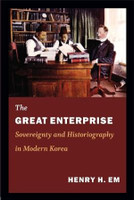
In The Great Enterprise, Henry H. Em examines how the project of national sovereignty shaped the work of Korean historians and their representations of Korea's past. The goal of Korea attaining validity and equal standing among sovereign nations, Em shows, was foundational to modern Korean politics in that it served a pedagogical function for Japanese and Western imperialisms, as well as for Korean nationalism. Sovereignty thus functioned as police power and political power in shaping Korea's modernity, including anticolonial and postcolonial movements toward a radically democratic politics.

Surveying historical works written over the course of the twentieth century, Em elucidates the influence of Christian missionaries, as well as the role that Japan's colonial policy played in determining the narrative framework for defining Korea's national past. Em goes on to analyze postcolonial works in which South Korean historians promoted national narratives appropriate for South Korea's place in the U.S.-led Cold War system. Throughout, Em highlights equal sovereignty's creative and productive potential to generate oppositional subjectivities and vital political alternatives.

Book Details
ISBN-13
9780822353577
Author
Henry Em
Format
Hardback
Pages
278

This product hasn't received any reviews yet. Be the first to review this product!

$194.66
Ships in 3-5 business days
Hurry up! Current stock:

The Great Enterprise

$194.66

Description

In The Great Enterprise, Henry H. Em examines how the project of national sovereignty shaped the work of Korean historians and their representations of Korea's past. The goal of Korea attaining validity and equal standing among sovereign nations, Em shows, was foundational to modern Korean politics in that it served a pedagogical function for Japanese and Western imperialisms, as well as for Korean nationalism. Sovereignty thus functioned as police power and political power in shaping Korea's modernity, including anticolonial and postcolonial movements toward a radically democratic politics.

Surveying historical works written over the course of the twentieth century, Em elucidates the influence of Christian missionaries, as well as the role that Japan's colonial policy played in determining the narrative framework for defining Korea's national past. Em goes on to analyze postcolonial works in which South Korean historians promoted national narratives appropriate for South Korea's place in the U.S.-led Cold War system. Throughout, Em highlights equal sovereignty's creative and productive potential to generate oppositional subjectivities and vital political alternatives.