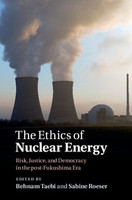
Despite the nuclear accident at the Fukushima Daiichi plant in Japan, a growing number of countries are interested in expanding or introducing nuclear energy. However, nuclear energy production and nuclear waste disposal give rise to pressing ethical questions that society needs to face. This book takes up this challenge with essays by an international team of scholars focusing on the key issues of risk, justice, and democracy. The essays consider a range of ethical issues, including radiological protection, the influence of gender in the acceptability of nuclear risk, and environmental, international, and intergenerational justice in the context of nuclear energy. They also address the question of when, and under which conditions, nuclear energy should play a role in the world's future supply of electricity, looking at both developing and industrialized countries. The book will interest readers in ethics and political philosophy, social and political sciences, nuclear engineering, and policy studies.
Nuclear energy will inevitably become an important issue worldwide in the 21st century. It pollutes the environment, with consequences that are highly controversial; and it generates plutonium -- the...
In mid-1980 a second conference for the review of the Non-Proliferation Treaty (NPT) would take place in Geneva. Given the importance of preventing, or at least slowing down, nuclear weapon...