Does God sovereignly elect some individuals for salvation while passing others by? Do human beings possess free will to embrace or reject the gospel? Did Christ die equally for all people or only for some? These questions have long been debated in the history of the Christian church. Answers typically fall into one of two main categories, popularly known as Calvinism and Arminianism.The focus of this book is to establish how one nineteenth-century evangelical group, the Brethren, responded to these and other related questions. The Brethren produced a number of colorful leaders whose influence was felt throughout the evangelical world. Although many critics have assumed the movement's theology was Arminian, this book argues that the Brethren, with few exceptions, advocated Calvinistic positions. Yet there were some twists along the way! The movement's radical biblicism, passionate evangelism, and strong aversion to systematic theology and creeds meant they refused to label themselves as Calvinists even though they affirmed Calvinism's soteriological principles--the so-called doctrines of grace.""Mark Stevenson's groundbreaking study offers a challenging and richly resourced reminder of what many Brethren, and historians of evangelicalism, have forgotten--that the movement that gave birth to dispensationalism was a movement of vigorous and emphatic Calvinists.""--Crawford Gribben, Queen's University Belfast ""With no official creed or confession, the Brethren movement presents a daunting challenge to those interested in inquiring into its original beliefs. From the writings of the movement's earliest leaders, Dr. Stevenson has produced a first-rate study of their soteriological convictions--specifically, their views on what are commonly known as the doctrines of grace. While his conclusions might surprise some, his scholarly insight will prove edifying to all.""--J. Stephen Yuille, The Southern Baptist Theological Seminary""Stevenson provides a fascinating narrative strewn with ironies. The Brethren 'fathers' charted a doctrinal course that they believed to lie somewhere between Calvinism and Arminianism, the formal study of which they eschewed. Spurning doctrinal articles, they supposed (mistakenly) that their own periodic writings could suffice to guard the form of the gospel as they preached it. They lived to see their own mildly Calvinistic teaching undermined by new emphases traceable to the 1859 Revival and the Moody campaigns. Here, in microcosm, is the story of nineteenth-century evangelical Protestantism.""--Kenneth J. Stewart, Covenant College""The Brethren, the vigorous Evangelical movement that sprang into existence in the years around 1830, repudiated systematic Calvinism as mere human speculation. They were insistent that they embraced the teaching of the Bible alone. But, as Stevenson shows clearly in this volume, nineteenth-century Brethren leaders normally professed beliefs that are recognizably Calvinistic. He has indeed demonstrated the existence of the doctrines of grace in an unexpected place.""--David Bebbington, University of Stirling""Stevenson demonstrates irrefutably by the abundance of evidence he accumulates that the early Brethren were Calvinists. He lucidly explicates the nuances present in their convictions about salvation that enabled them to maintain the doctrines of grace while remaining passionate evangelists. His work succeeds in both filling a gap in Brethren historiography and being a thought-provoking work of historical theology with implications for contemporary developments in evangelicalism.""--Neil Dickson, Editor, Brethren Historical ReviewMark R. Stevenson (PhD, University of Wales) is Professor of Bible and Theology at Emmaus Bible College in Dubuque, Iowa.
Does God sovereignly elect some individuals for salvation while passing others by? Do human beings possess free will to embrace or reject the gospel? Did Christ die equally for all people or only for some? These questions have long been debated in the history of the Christian church. Answers typically fall into one of two main categories, popularly known as Calvinism and Arminianism.The focus of this book is to establish how one nineteenth-century evangelical group, the Brethren, responded to these and other related questions. The Brethren produced a number of colorful leaders whose influence was felt throughout the evangelical world. Although many critics have assumed the movement's theology was Arminian, this book argues that the Brethren, with few exceptions, advocated Calvinistic positions. Yet there were some twists along the way! The movement's radical biblicism, passionate evangelism, and strong aversion to systematic theology and creeds meant they refused to label themselves as Calvinists even though they affirmed Calvinism's soteriological principles--the so-called doctrines of grace.""Mark Stevenson's groundbreaking study offers a challenging and richly resourced reminder of what many Brethren, and historians of evangelicalism, have forgotten--that the movement that gave birth to dispensationalism was a movement of vigorous and emphatic Calvinists.""--Crawford Gribben, Queen's University Belfast ""With no official creed or confession, the Brethren movement presents a daunting challenge to those interested in inquiring into its original beliefs. From the writings of the movement's earliest leaders, Dr. Stevenson has produced a first-rate study of their soteriological convictions--specifically, their views on what are commonly known as the doctrines of grace. While his conclusions might surprise some, his scholarly insight will prove edifying to all.""--J. Stephen Yuille, The Southern Baptist Theological Seminary""Stevenson provides a fascinating narrative strewn with ironies. The Brethren 'fathers' charted a doctrinal course that they believed to lie somewhere between Calvinism and Arminianism, the formal study of which they eschewed. Spurning doctrinal articles, they supposed (mistakenly) that their own periodic writings could suffice to guard the form of the gospel as they preached it. They lived to see their own mildly Calvinistic teaching undermined by new emphases traceable to the 1859 Revival and the Moody campaigns. Here, in microcosm, is the story of nineteenth-century evangelical Protestantism.""--Kenneth J. Stewart, Covenant College""The Brethren, the vigorous Evangelical movement that sprang into existence in the years around 1830, repudiated systematic Calvinism as mere human speculation. They were insistent that they embraced the teaching of the Bible alone. But, as Stevenson shows clearly in this volume, nineteenth-century Brethren leaders normally professed beliefs that are recognizably Calvinistic. He has indeed demonstrated the existence of the doctrines of grace in an unexpected place.""--David Bebbington, University of Stirling""Stevenson demonstrates irrefutably by the abundance of evidence he accumulates that the early Brethren were Calvinists. He lucidly explicates the nuances present in their convictions about salvation that enabled them to maintain the doctrines of grace while remaining passionate evangelists. His work succeeds in both filling a gap in Brethren historiography and being a thought-provoking work of historical theology with implications for contemporary developments in evangelicalism.""--Neil Dickson, Editor, Brethren Historical ReviewMark R. Stevenson (PhD, University of Wales) is Professor of Bible and Theology at Emmaus Bible College in Dubuque, Iowa.
In this powerful work of Christian theology, John Watson explores the concept of divine grace and its implications for human salvation. Drawing on Scripture and centuries of theological thought,...
This work has been selected by scholars as being culturally important, and is part of the knowledge base of civilization as we know it. This work was reproduced from the original artifact, and...
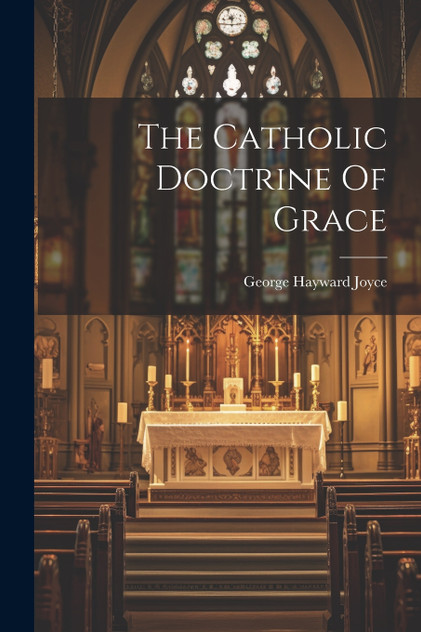
George Hayward Joyce's The Catholic Doctrine of Grace provides an in depth look at the Catholic Church's doctrine on Grace.This work has been selected by scholars as being culturally important, and...
The book Prophecy and the Doctrines of Grace attempts to connect the two great biblical themes of God's sovereign grace and His divine plan for the future. It compares the views of both the reformed...
Discover your next great read at BookLoop, Australiand online bookstore offering a vast selection of titles across various genres and interests. Whether you're curious about what's trending or searching for graphic novels that captivate, thrilling crime and mystery fiction, or exhilarating action and adventure stories, our curated collections have something for every reader. Delve into imaginative fantasy worlds or explore the realms of science fiction that challenge the boundaries of reality. Fans of contemporary narratives will find compelling stories in our contemporary fiction section. Embark on epic journeys with our fantasy and science fiction titles,
Shop Trending Books and New Releases
Explore our new releases for the most recent additions in romance books, fantasy books, graphic novels, crime and mystery books, science fiction books as well as biographies, cookbooks, self help books, tarot cards, fortunetelling and much more. With titles covering current trends, booktok and bookstagram recommendations, and emerging authors, BookLoop remains your go-to local australian bookstore for buying books online across all book genres.
Shop Best Books By Collection
Stay updated with the literary world by browsing our trending books, featuring the latest bestsellers and critically acclaimed works. Explore titles from popular brands like Minecraft, Pokemon, Star Wars, Bluey, Lonely Planet, ABIA award winners, Peppa Pig, and our specialised collection of ADHD books. At BookLoop, we are committed to providing a diverse and enriching reading experience for all.
Sign In
your cart
Your cart is empty
Menu
Search
PRE-SALES
If you have any questions before making a purchase chat with our online operators to get more information.