This book provides empirical evidence that all States have a universally binding obligation to adopt national laws and international treaties to protect the marine environment, including the designation of Marine Protected Areas. Chapter by chapter this obligation is detailed, providing the foundation for holding States responsible for fulfilling this obligation. The fundamentals are analysed in a preliminary chapter, which examines the legally binding sources of the Law of the Sea as well as its historical development to help readers understand the key principles at hand. The Law of the Sea provides more than 1000 instruments and more than 300 regulations concerning marine protection. While the scope of most treaties is limited either regarding species, regions or activities, one regulation addresses States in all waters: the obligation to protect and preserve the marine environment as stipulated under Art. 192 of the 1982 United Nations Convention on the Law of the Sea (UNCLOS). As this 'Constitution of the Ocean' not only contains conventional laws but also very broadly reflects pre-existing rules of customary international law, an extensive analysis of all statements made by States in the UN General Assembly, their practices, national laws and regulations as well as other public testimonials demonstrates that Art. 192 UNCLOS indeed binds the whole community of States as a rule of customary international law with an erga omnes effect. Due to the lack of any objections and its fundamental value for humankind, this regulation can also be considered a new peremptory norm of international law (ius cogens). While the sovereign equality of States recognises States' freedom to decide if and how to enter into a given obligation, States can also waive this freedom. If States accepted a legally binding obligation, they are thus bound to it. Concerning the specific content of Art. 192 UNCLOS, a methodical interpretation concludes that only the adoption of legislative measures (national laws and international agreements) suffices to comply with the obligation to protect and preserve the marine environment, which is confirmed by the States' practices and relevant jurisprudence. When applied to a specific geographical area, legislative measures to protect the marine environment concur with the definition of Marine Protected Areas. Nonetheless, as the obligation applies to all waters, the Grotian principle of the freedom of the sea dictates that the restriction of activities through the designation of Marine Protected Areas, on the one hand, must be weighed against the freedoms of other States on the other. To anticipate the result: while all other rights under the UNCLOS are subject to and contingent on other regulations of the UNCLOS and international law, only the obligation to protect and preserve the marine environment is granted absolutely - and thus outweighs all other interests.
This book provides empirical evidence that all States have a universally binding obligation to adopt national laws and international treaties to protect the marine environment, including the designation of Marine Protected Areas. Chapter by chapter this obligation is detailed, providing the foundation for holding States responsible for fulfilling this obligation. The fundamentals are analysed in a preliminary chapter, which examines the legally binding sources of the Law of the Sea as well as its historical development to help readers understand the key principles at hand. The Law of the Sea provides more than 1000 instruments and more than 300 regulations concerning marine protection. While the scope of most treaties is limited either regarding species, regions or activities, one regulation addresses States in all waters: the obligation to protect and preserve the marine environment as stipulated under Art. 192 of the 1982 United Nations Convention on the Law of the Sea (UNCLOS). As this 'Constitution of the Ocean' not only contains conventional laws but also very broadly reflects pre-existing rules of customary international law, an extensive analysis of all statements made by States in the UN General Assembly, their practices, national laws and regulations as well as other public testimonials demonstrates that Art. 192 UNCLOS indeed binds the whole community of States as a rule of customary international law with an erga omnes effect. Due to the lack of any objections and its fundamental value for humankind, this regulation can also be considered a new peremptory norm of international law (ius cogens). While the sovereign equality of States recognises States' freedom to decide if and how to enter into a given obligation, States can also waive this freedom. If States accepted a legally binding obligation, they are thus bound to it. Concerning the specific content of Art. 192 UNCLOS, a methodical interpretation concludes that only the adoption of legislative measures (national laws and international agreements) suffices to comply with the obligation to protect and preserve the marine environment, which is confirmed by the States' practices and relevant jurisprudence. When applied to a specific geographical area, legislative measures to protect the marine environment concur with the definition of Marine Protected Areas. Nonetheless, as the obligation applies to all waters, the Grotian principle of the freedom of the sea dictates that the restriction of activities through the designation of Marine Protected Areas, on the one hand, must be weighed against the freedoms of other States on the other. To anticipate the result: while all other rights under the UNCLOS are subject to and contingent on other regulations of the UNCLOS and international law, only the obligation to protect and preserve the marine environment is granted absolutely - and thus outweighs all other interests.
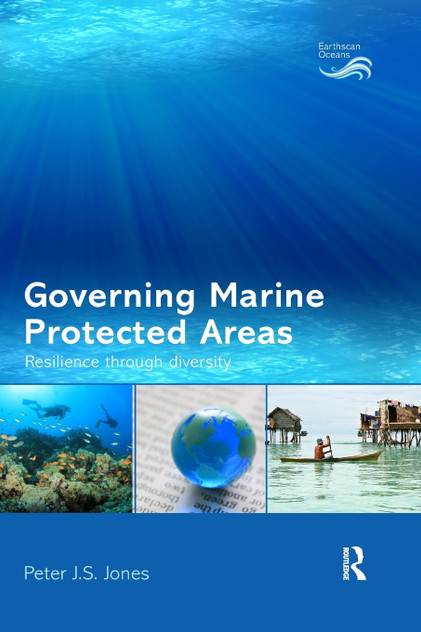
In this innovative volume, the author addresses some important challenges related to the effective and equitable governance of marine protected areas (MPAs). These challenges are explored...
Tourism inflows continue to significantly contribute to the Belizean economy despite the global economic downturn and financial crisis facing the world economy.This in and of its own reveals the ...
Discover your next great read at BookLoop, Australiand online bookstore offering a vast selection of titles across various genres and interests. Whether you're curious about what's trending or searching for graphic novels that captivate, thrilling crime and mystery fiction, or exhilarating action and adventure stories, our curated collections have something for every reader. Delve into imaginative fantasy worlds or explore the realms of science fiction that challenge the boundaries of reality. Fans of contemporary narratives will find compelling stories in our contemporary fiction section. Embark on epic journeys with our fantasy and science fiction titles,
Shop Trending Books and New Releases
Explore our new releases for the most recent additions in romance books, fantasy books, graphic novels, crime and mystery books, science fiction books as well as biographies, cookbooks, self help books, tarot cards, fortunetelling and much more. With titles covering current trends, booktok and bookstagram recommendations, and emerging authors, BookLoop remains your go-to local australian bookstore for buying books online across all book genres.
Shop Best Books By Collection
Stay updated with the literary world by browsing our trending books, featuring the latest bestsellers and critically acclaimed works. Explore titles from popular brands like Minecraft, Pokemon, Star Wars, Bluey, Lonely Planet, ABIA award winners, Peppa Pig, and our specialised collection of ADHD books. At BookLoop, we are committed to providing a diverse and enriching reading experience for all.
Sign In
your cart
Your cart is empty
Menu
Search
PRE-SALES
If you have any questions before making a purchase chat with our online operators to get more information.