Bachelor Thesis from the year 2009 in the subject English Language and Literature Studies - Linguistics, grade: 1.0, University of Siegen, language: English, abstract: Would you say you '...gave a good friend a scarf' or would you rather say you '...gave a scarf to a good friend'? The grammatical phenomenon underlying the two syntactic variants - the double object dative [a good friend] [a scarf] and the prepositional object dative [a scarf] [to a good friend] - is the so-called 'dative alternation' (DA). The latter term captures this general ability in English to express the same event of giving with two distinct syntactic structures. DA has been researched extensively for native speakers of English. Most of the scientific attention was directed at identifying the semantic and informational variables that give rise to the respective variants. Also, a number of corpus studies have revealed an interesting phenomenon commonly referred to as "lexical bias" (e.g. Wasow 2002). More precisely, researchers have found some dative verbs to occur more frequently in a prepositional dative variant (POD), whereas other dative verbs seem to favor the double object variant (DOD) (e.g. Davidse 1996; Stallings et al. 1998; Wasow 2002; Arnoldet al. 2003; Bresnan & Nikitina 2003). For example, Wasow (2002) found 'give' to occur in a DOD shape in 85% of his data, while Davidse (1996) found the verb 'throw' to occur in a POD shape in 90% of her data.While DA has been widely explored for native speakers of English, relatively little is known about it in contexts of SLA. This study investigates how DA is reflected in the IL of German learners of English and, additionally, whether German learners exhibit similar lexical biases in their choice of dative syntax. Raw data of early research on the acquisition of English DA by French native speakers (Mazurkevich 1984; Hawkins 1987) show similar lexical biases as observed for native speakers. This trend suggests that lexical biases are ac
The Dative Alternation in the Interlanguage of German Learners of English
RRP:
$96.00
Description
Bachelor Thesis from the year 2009 in the subject English Language and Literature Studies - Linguistics, grade: 1.0, University of Siegen, language: English, abstract: Would you say you '...gave a good friend a scarf' or would you rather say you '...gave a scarf to a good friend'? The grammatical phenomenon underlying the two syntactic variants - the double object dative [a good friend] [a scarf] and the prepositional object dative [a scarf] [to a good friend] - is the so-called 'dative alternation' (DA). The latter term captures this general ability in English to express the same event of giving with two distinct syntactic structures. DA has been researched extensively for native speakers of English. Most of the scientific attention was directed at identifying the semantic and informational variables that give rise to the respective variants. Also, a number of corpus studies have revealed an interesting phenomenon commonly referred to as "lexical bias" (e.g. Wasow 2002). More precisely, researchers have found some dative verbs to occur more frequently in a prepositional dative variant (POD), whereas other dative verbs seem to favor the double object variant (DOD) (e.g. Davidse 1996; Stallings et al. 1998; Wasow 2002; Arnoldet al. 2003; Bresnan & Nikitina 2003). For example, Wasow (2002) found 'give' to occur in a DOD shape in 85% of his data, while Davidse (1996) found the verb 'throw' to occur in a POD shape in 90% of her data.While DA has been widely explored for native speakers of English, relatively little is known about it in contexts of SLA. This study investigates how DA is reflected in the IL of German learners of English and, additionally, whether German learners exhibit similar lexical biases in their choice of dative syntax. Raw data of early research on the acquisition of English DA by French native speakers (Mazurkevich 1984; Hawkins 1987) show similar lexical biases as observed for native speakers. This trend suggests that lexical biases are ac
Project Report from the year 2019 in the subject English Language and Literature Studies - Linguistics, Justus-Liebig-University Giessen, language: English, abstract: The phenomenon under...
Variation in Datives collects new research on the nature of syntactic micro-variation in datives. The papers in this volume examine different aspects of internal variation in dative marking, such as...
A detailed analysis of a specific aspect of language syntax in the context of the Indo-European language family. The book focuses on the dative case, which indicates the indirect object of a...
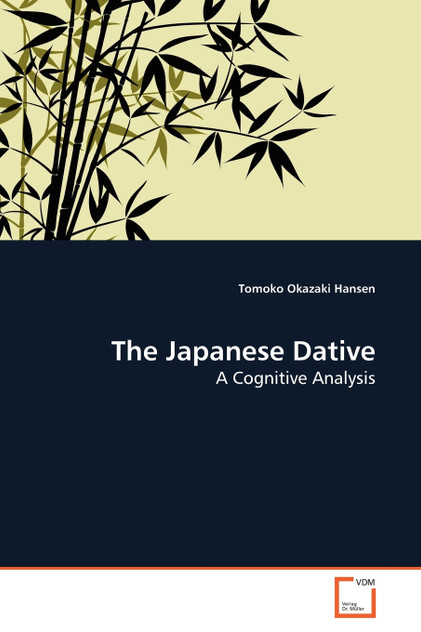
Of all the particles in Japanese, the dative particle ni is perhaps the one whose meaning is most difficult to pin down. It denotes, among many other things, location, goal, source, cause, purpose,...
Discover your next great read at BookLoop, Australiand online bookstore offering a vast selection of titles across various genres and interests. Whether you're curious about what's trending or searching for graphic novels that captivate, thrilling crime and mystery fiction, or exhilarating action and adventure stories, our curated collections have something for every reader. Delve into imaginative fantasy worlds or explore the realms of science fiction that challenge the boundaries of reality. Fans of contemporary narratives will find compelling stories in our contemporary fiction section. Embark on epic journeys with our fantasy and science fiction titles,
Shop Trending Books and New Releases
Explore our new releases for the most recent additions in romance books, fantasy books, graphic novels, crime and mystery books, science fiction books as well as biographies, cookbooks, self help books, tarot cards, fortunetelling and much more. With titles covering current trends, booktok and bookstagram recommendations, and emerging authors, BookLoop remains your go-to local australian bookstore for buying books online across all book genres.
Shop Best Books By Collection
Stay updated with the literary world by browsing our trending books, featuring the latest bestsellers and critically acclaimed works. Explore titles from popular brands like Minecraft, Pokemon, Star Wars, Bluey, Lonely Planet, ABIA award winners, Peppa Pig, and our specialised collection of ADHD books. At BookLoop, we are committed to providing a diverse and enriching reading experience for all.
Sign In
your cart
Your cart is empty
Menu
Search
PRE-SALES
If you have any questions before making a purchase chat with our online operators to get more information.