Trending Bestseller

The Color of Modernity

Barbara Weinstein

No reviews yet Write a Review
Hardback
472 Pages
$250.00
Ships in 3-5 business days
Hurry up! Current stock:
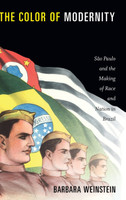
In The Color of Modernity, Barbara Weinstein focuses on race, gender, and regionalism in the formation of national identities in Brazil; this focus allows her to explore how uneven patterns of economic development are consolidated and understood. Organized around two principal episodes-the 1932 Constitutionalist Revolution and 1954's IV Centenario, the quadricentennial of Sao Paulo's founding-this book shows how both elites and popular sectors in Sao Paulo embraced a regional identity that emphasized their European origins and aptitude for modernity and progress, attributes that became-and remain-associated with "whiteness." This racialized regionalism naturalized and reproduced regional inequalities, as Sao Paulo became synonymous with prosperity while Brazil's Northeast, a region plagued by drought and poverty, came to represent backwardness and Sao Paulo's racial "Other." This view of regional difference, Weinstein argues, led to development policies that exacerbated these inequalities and impeded democratization.

This product hasn't received any reviews yet. Be the first to review this product!

$250.00
Ships in 3-5 business days
Hurry up! Current stock:

The Color of Modernity

$250.00

Description

In The Color of Modernity, Barbara Weinstein focuses on race, gender, and regionalism in the formation of national identities in Brazil; this focus allows her to explore how uneven patterns of economic development are consolidated and understood. Organized around two principal episodes-the 1932 Constitutionalist Revolution and 1954's IV Centenario, the quadricentennial of Sao Paulo's founding-this book shows how both elites and popular sectors in Sao Paulo embraced a regional identity that emphasized their European origins and aptitude for modernity and progress, attributes that became-and remain-associated with "whiteness." This racialized regionalism naturalized and reproduced regional inequalities, as Sao Paulo became synonymous with prosperity while Brazil's Northeast, a region plagued by drought and poverty, came to represent backwardness and Sao Paulo's racial "Other." This view of regional difference, Weinstein argues, led to development policies that exacerbated these inequalities and impeded democratization.

Customers Also Viewed